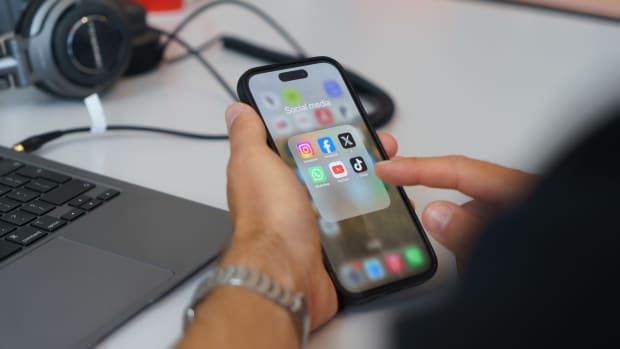
The TikTok generation is fed up with TikTok: UvA investigates how social media could be different
What is your screen time? Young people would like to spend less time on their phones, but addictive apps don’t make it easy for them. Through the SpaceTeen research project, UvA researchers are working with school pupils to find alternatives that actually work.
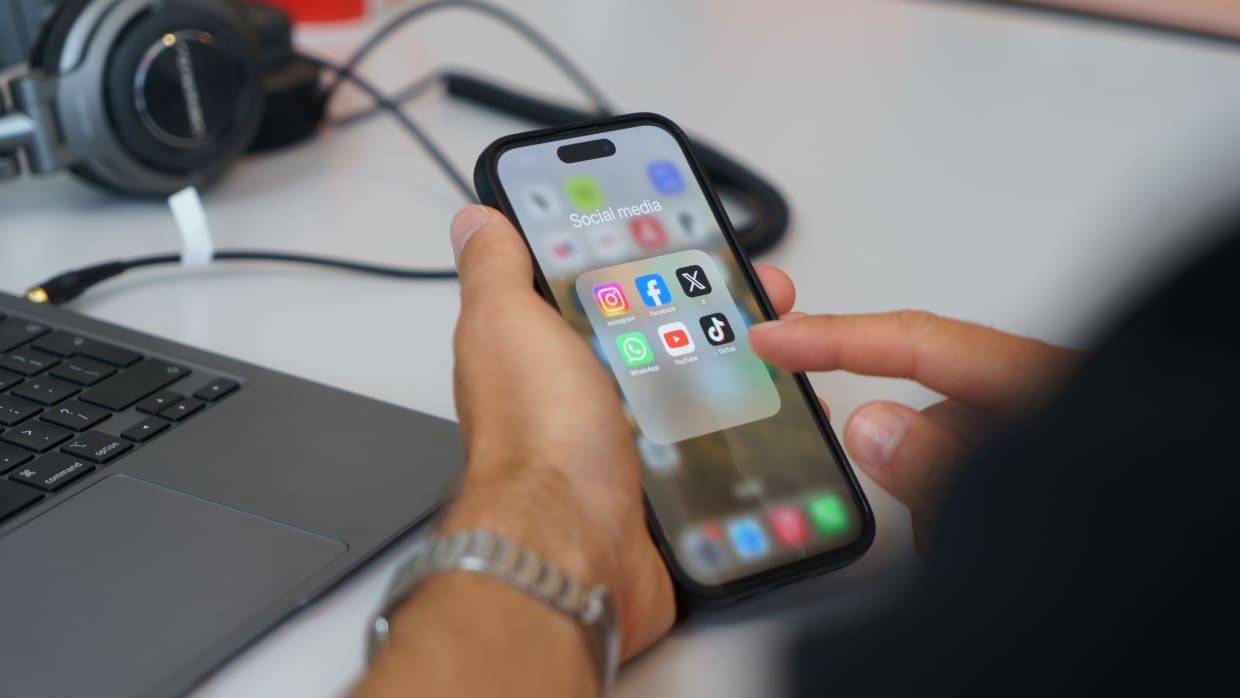
Brain rot, doomscrolling and sensory overload. The TikTok generation gets its name from the addictive and often negative effects of the social media platforms it has grown up with. The apps are designed to keep you hooked, scrolling endlessly and isolating yourself. Young people themselves agree that this needs to change.
There is a growing understanding of the problems associated with social media, says UvA communication scientist Sindy Sumter. She is one of the researchers involved in the SpaceTeen project, in which UvA scientists are working alongside young people to find solutions for better use of social media. “There is increasing talk of addictive design and dark patterns.” She is referring to the way in which many apps are deliberately designed to be addictive. The flow of content is relentless, notifications are automatically enabled, and the apps tap into the dopamine system. Every like, comment or fun new video triggers the release of the happiness hormone.
Taking control of social media
Last week was Media Literacy Week. We are collectively doing a lot to raise awareness of the dangers of social media. But it is not enough, argues Sumter. “In today’s digital world, many choices have been made that work very much against young people. The question then is how much you can achieve through media literacy if the environment makes it as difficult as possible for them to put it into practice.” Time limits don’t work, says Sumter. They’re too easy to click away. “That requires just as much self-regulation as stopping without a pop-up. The problem is self-regulation itself, so that can’t be the solution.”
Young people have little control over their social media use, but would very much like to have it. This emerged from a survey completed by around a thousand school pupils. In particular, apps centred on short videos and endless scrolling, such as TikTok, are perceived as “too much”. Apps focused on maintaining social connections, such as WhatsApp, are less problematic. “Snapchat is also about social interactions, but there’s an extra layer on top. It’s disrupted by elements such as streaks. It’s all about the reward and distracts from the content of conversations,” says Sumter.
The positive side
What is often overlooked in the debate surrounding social media is the positive side: it also connects young people with one another, argues Sumter. “If you haven’t grown up with social media, it’s hard to realise that a WhatsApp conversation with a best friend can be very valuable to a child, even if it doesn’t take place in the school playground. Children are perfectly capable of saying for themselves what they want to keep from social media.” That is why, she believes, it is important to involve the young target group in deciding what does work. “Children have the right to have a say in their digital environment.”

Alternatives
As part of the SpaceTeen project, we are collaborating with creative design agencies which are developing various prototypes in consultation with young people. These prototypes are intended to make the most of what social media has to offer, whilst at the same time filling the gaps in the current media landscape. Three proposals are currently on the table.
In the Pauze Party app, the stream of videos is interspersed with spontaneous video calls with friends. And in the CLUB app, pupils can suggest activities and get-togethers. However, this latter app is only accessible with a physical card on someone else’s phone. Both concepts aim to connect the online and offline worlds and respond to young people’s need to use social media to maintain their social connections.
A final initiative aims to build a small shelter with a picnic table for young people in Amsterdam-Noord. Discussions revealed that not everyone feels equally welcome at existing meeting places, such as football pitches. “Girls said they didn’t feel welcome there,” explains Sumter. The proposal therefore centres on creating accessible spaces where young people can meet offline. What is needed to achieve this must be reassessed for each neighbourhood and region. “It’s not one-size-fits-all,” says Sumter.
In the next phase of the project, all these ideas will be implemented and scientifically evaluated. Does it really work? What else needs to be changed?
Report
The initial research findings and prototypes were presented last week to Willemijn Aerts, the Dutch State Secretary for Digital Economy and Sovereignty. When asked what she hopes the report will achieve, Sumter replies: “I hope it will attract more attention and that people will realise that change is possible. We shouldn’t just be thinking about restricting access to current, potentially problematic social media platforms. We need to look at what we can do to ensure that more alternatives emerge, based on different design choices.”