In just one day, these students are trying to solve our country’s major water problems
How can we prevent water pollution or stop Amsterdam from flooding? Twelve student teams have just one day to come up with solutions to these water-related challenges. The winners will walk away with a cash prize and perhaps even new career opportunities.
“Students are often underestimated,” says UvA student Marko Papic (21), who studies Economics and Business Economics and is involved in organising the AI for Water hackathon on behalf of AISO (AI Student Society).
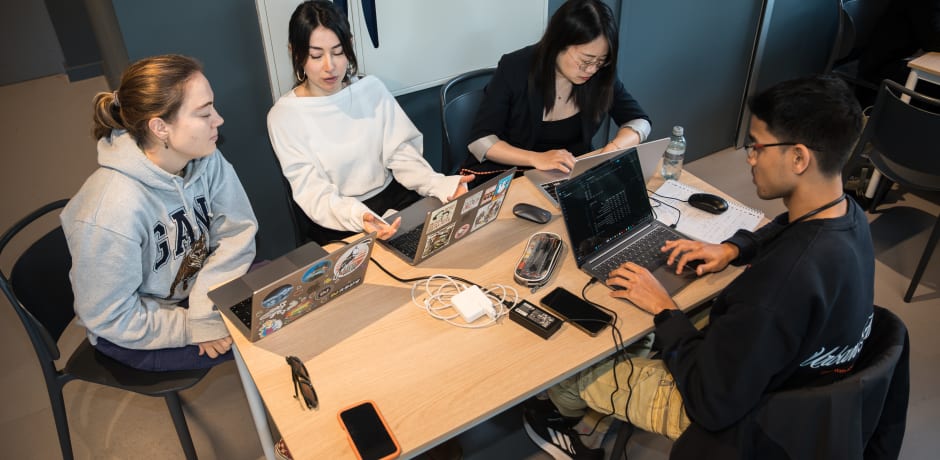
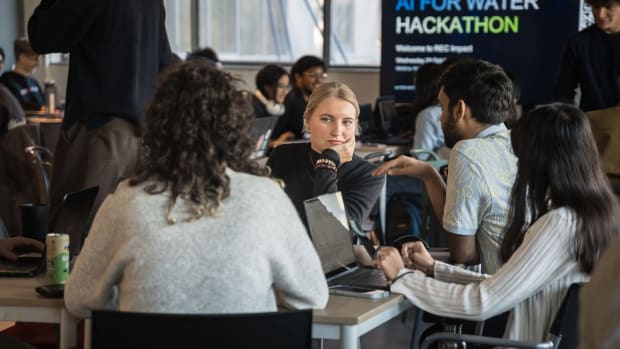
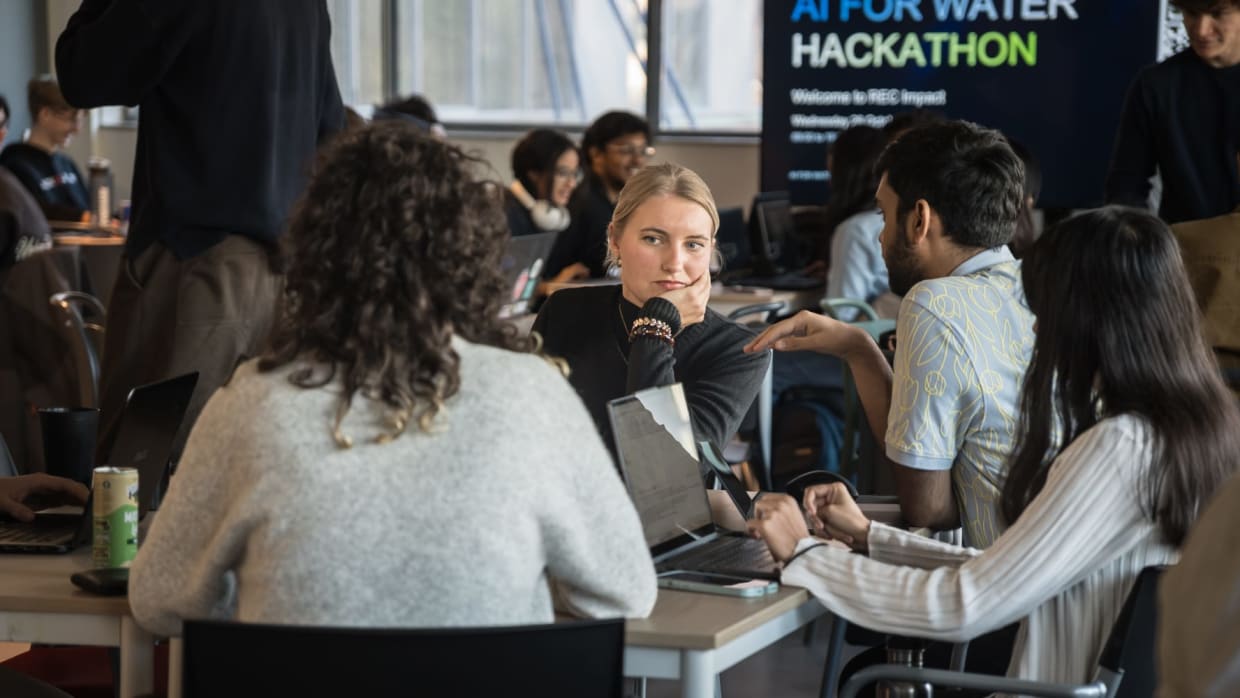
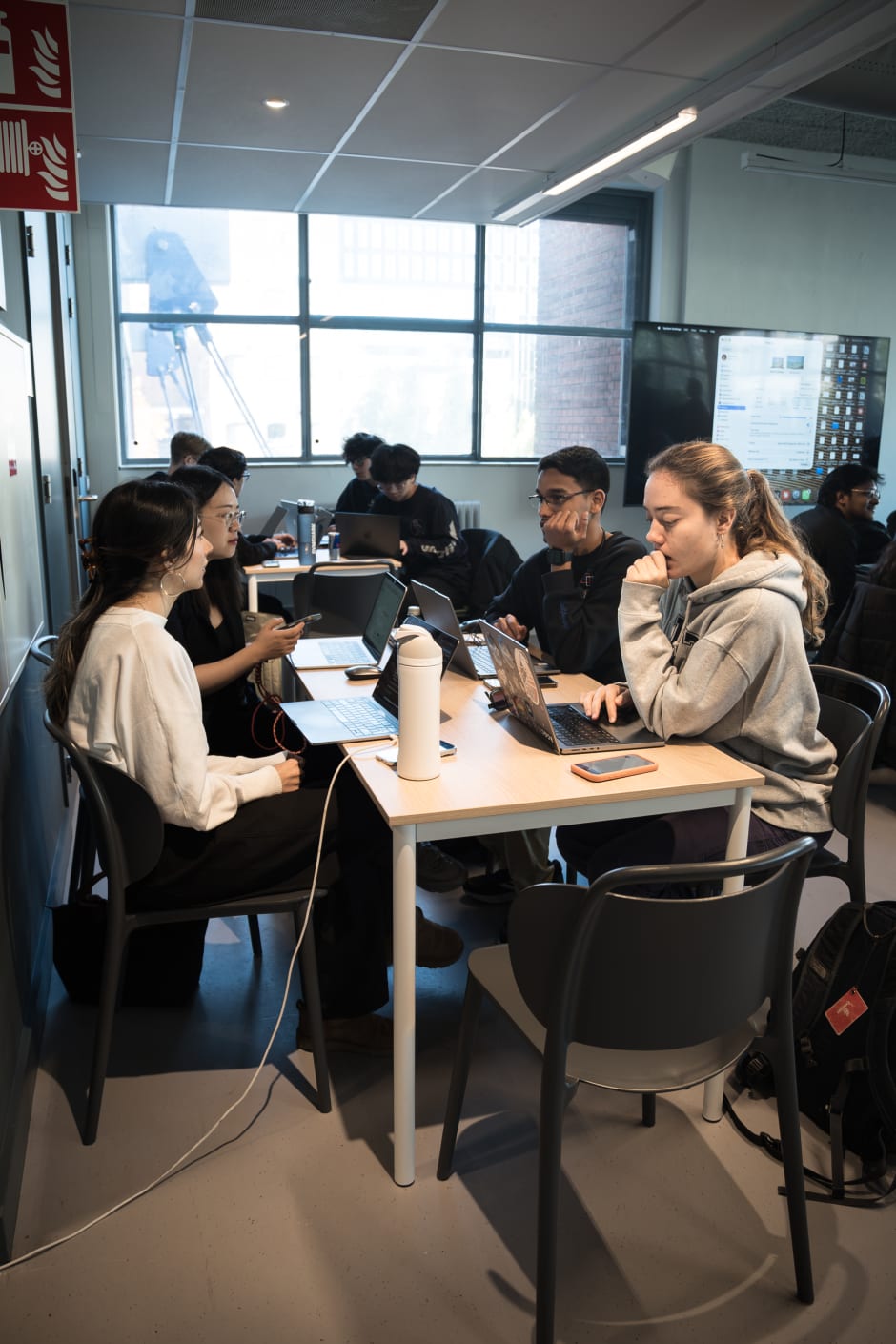
On Wednesday, 28 October, twelve student teams gather around the lecture tables in the REC Impact space, in the J/K building. During the hackathon, the students work on solutions to water-related challenges, using AI in a responsible way. The three teams that deliver the best pitches at the end of the day will win a cash prize.
Laptops are opened, and the first datasets and AI models appear on the screens as representatives from three different companies explain the problems the students will be tackling. One of these organisations is Amstel, Gooi and Vecht Water Authority (AGV), the public body responsible for treating and pumping away water in, among other areas, the Amsterdam region.
The hackathon is funded by EIT Water, a new European initiative that aims to invest in innovation and education focused on water protection. The University of Amsterdam receives €15,000 to organise the event, explains Suzanne Hansen, who is involved in organising it on behalf of the university. The money goes towards “prizes, infrastructure and catering”, Papic says. The three winning teams will share a total prize pool of €3,000.
Water in the Netherlands
“Water is something that many Dutch people take for granted. It’s clean, you can swim in it, you drink it,” says former UvA student Jim Oldenhoven (31), who studied Politics, Psychology, Law and Economics (PPLE) and is presenting the water-related challenges facing the Amsterdam region on behalf of AGV. Few people think about water pollution or other problems affecting water, Oldenhoven believes.
Oldenhoven asks the students how water management and water quality can be improved. Climate change means the Netherlands is increasingly facing extreme drought. “We know very well how to pump water back into the ocean, but we don’t know how to be flexible,” he says. During periods of drought, saltwater threatens to intrude into low-lying areas, with adverse consequences for farmers, among others. Oldenhoven adds: “We need to get smarter about storing water. Can we start storing water somewhere in advance?”
Team MEDS
The teams can choose which challenge to work on and are given access to real datasets from the companies involved. The student team MEDS, whose name is an acronym formed from the initials of its four members, decides to focus on AGV’s challenge. They have never met before, but spend the day working together to answer one question: when is water pollution at its worst? They have no clear idea yet how to approach the problem. First, they dive into the data.
University of Amsterdam student and MEDS team member Eveline Kuperus (24), who studies marine biology, only decided to sign up for the hackathon yesterday. “I often forget that not everyone has the same knowledge,” she says. Kuperus knows little about AI and coding, but has extensive knowledge of water-related challenges.
“We’re very lucky to have her on our team,” says Dima Soud (27), who studies econometrics and data science. “We could spend all our time coding, but then we’d have no idea what we’re actually building. She understands the context.”
(Text continues below the image)
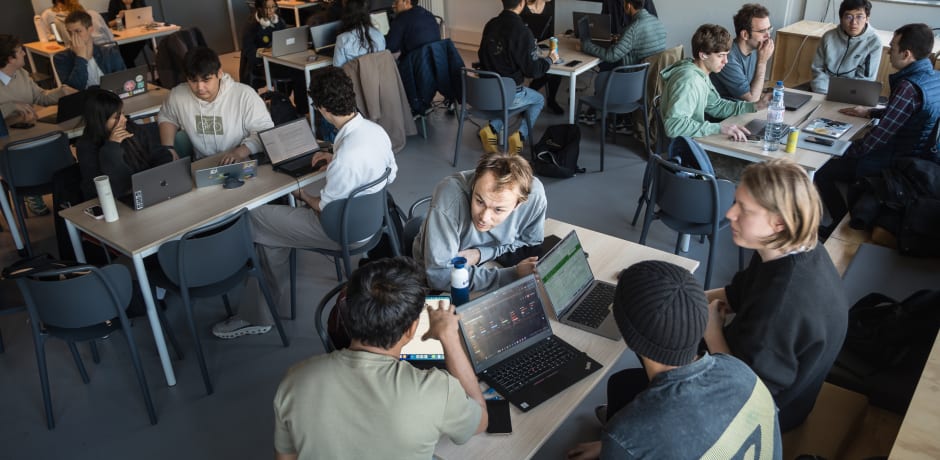
However, a few hours later, the team’s different areas of expertise also prove to be a challenge. “It’s like we’re speaking different languages,” says Soud. The extensive Excel file they receive from the water authority contains more than sixty years’ worth of water quality data. Not every laptop can handle the volume of data, so the students fall back on what they already know. Physics student Shubham Apte tries to make the data easier to understand by creating colourful graphs and maps, while Soud, whose background is in econometrics, starts working with the AI model GradeBoost. But they still have no idea how this approach will help them answer their research question.
Career prospects
Unlike other hackathons, this event is not led by a commercial partner. “When companies organise events like these, their goal is very clear: they want more visibility or greater access to talented students. It’s more of a recruitment event,” says Papic. He believes students should have the opportunity to work on real-world problems.
Although the hackathon is not specifically designed to do so, it could give students an advantage in their future careers. Oldenhoven explains that when AGV organised a similar event last year, two projects emerged from the ideas presented. One of the participants was even hired by the organisation. He hopes the students will come up with ideas that the organisers themselves had not yet considered. “It’s always nice when you can achieve something like that in just one day.”
The best solution
The moment of truth: which team has come up with the best solution? “I’ve always really liked creativity, and I think it’s important,” says Oldenhoven, who is also a member of the judging panel. “But I also look at whether the project has progressed beyond a PowerPoint presentation. I’d like the pitch to include something that resembles a prototype.”
The project Simon Simulations, which also worked with AGV’s data, takes home the top prize. Students Thijmen and Finn Simon developed a dashboard that combines weather forecasts with information about water levels and the characteristics of the polders. Their solution addresses climate change and increasingly frequent droughts by predicting where flooding or water shortages may occur and helping water managers adjust pumping operations accordingly.
Teams O2 and SuperCleaners finish in second and third place, respectively. O2 managed to distinguish suspicious readings from sea buoys from genuine water quality problems, while SuperCleaners decided to use AI to detect anomalies in wastewater data at an earlier stage.
Team MEDS does not win a prize. According to Kuperus, the team experiences “a bit of stress” during the pitch because they have not managed to identify a clear research topic. Working separately in their own areas of expertise, the team members each produce something different: a PowerPoint presentation, a report on algae data in the water, and a dashboard featuring interactive maps showing pesticide use.
“It wasn’t as good as the projects presented by the finalists either,” Kuperus says. “I found it an educational day, but I don’t think I’ll be taking part in another hackathon anytime soon.”