
These scientists came to the UvA through special fund: “It’s difficult to build something in the US”
Unpaid funding, cancelled vacancies and censorship: the research climate in the United States is becoming increasingly challenging. Through the Tulp Fund, the Netherlands has attracted 29 leading scientists from the US. Two of them are joining the UvA.

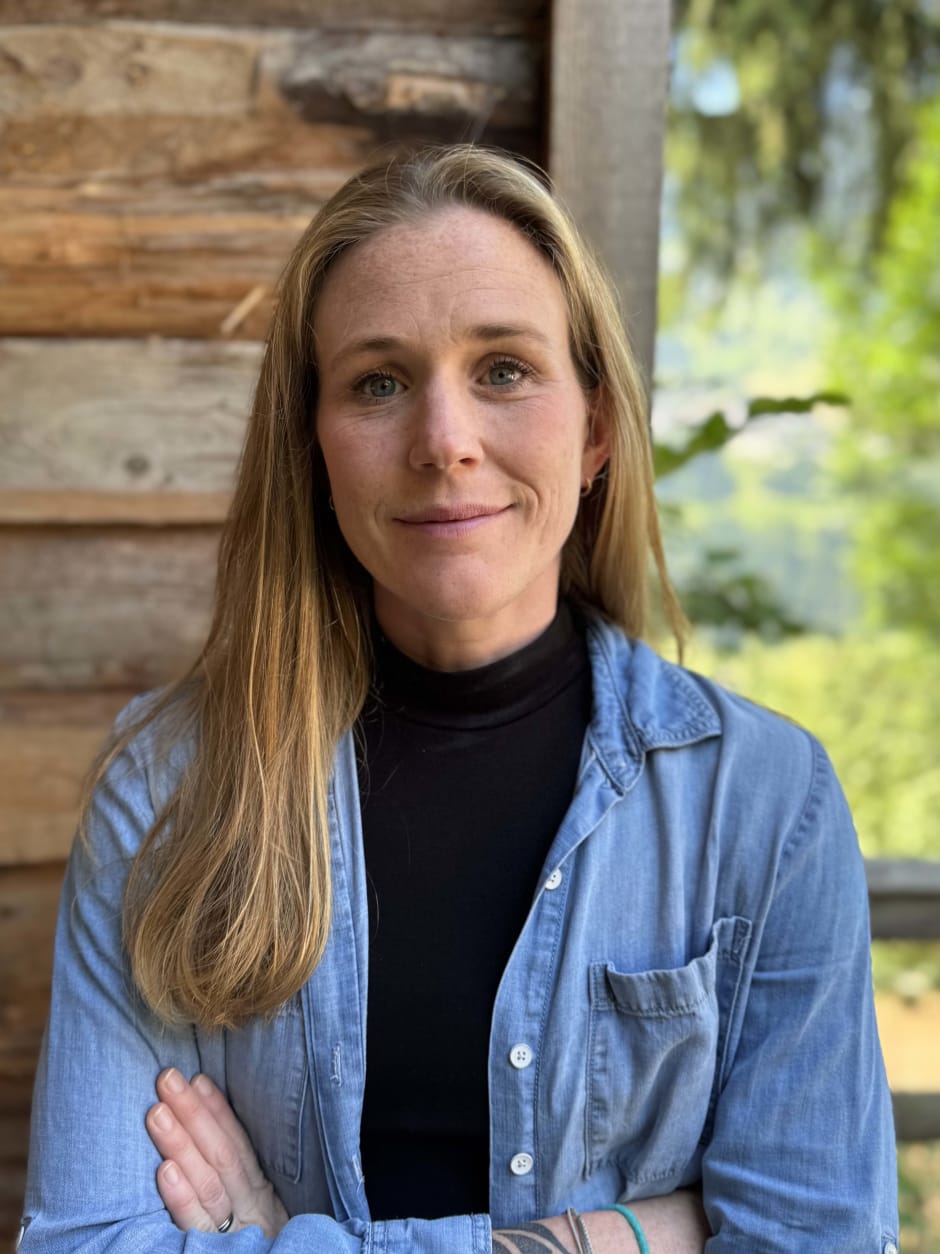
When Trump launched his attack on science in February 2025, public health researcher Brooke Nichols found herself on the front line. Working from 2016-2019 as a public health researcher on US Agency for International Development (USAID)-funded work, she had developed mathematical models to study the spread of infectious diseases across Southern Africa. Overnight, the second Trump administration pulled the plug on all foreign aid.
“From infectious diseases and African countries to marginalised groups, our work was being attacked from every direction,” says Nichols, who is affiliated with Boston University and Amsterdam UMC. “From one day to the next, you no longer knew the rules. Could you still collaborate with international groups? Which words were you still allowed to use? It created a great deal of uncertainty.”
In response to growing pressure on academic freedom in the US, European countries established funds to attract leading researchers from abroad. In the Netherlands, this took the form of the Tulp Fund. The fund enables leading scientists with their own research programmes to continue their research in the Netherlands for five years. The Ministry of Education, Culture and Science made €25 million available, with the Dutch Research Council (NWO) doubling that amount.
Before the summer, the first 34 researchers who would come to the Netherlands through the fund were announced. They were predominantly American, newspapers reported: 29 of the researchers came from the US. Two of them took up positions at the UvA, one at the Faculty of Science and the other at Amsterdam UMC. How had they experienced developments in the US, and what had brought them to the Netherlands?
Unpredictable
“I saw roughly two things happening in global health,” says Nichols, says Nichols, who will begin building her own research programme at Amsterdam UMC in January 2027. “Researchers are looking for alternative sources of funding, such as the Gates Foundation (a private foundation established by Microsoft founder Bill Gates and his then-wife Melinda, ed.). Or they are switching to other areas of research for which they can secure funding. So the research continues, but it has changed, and everything takes longer.”
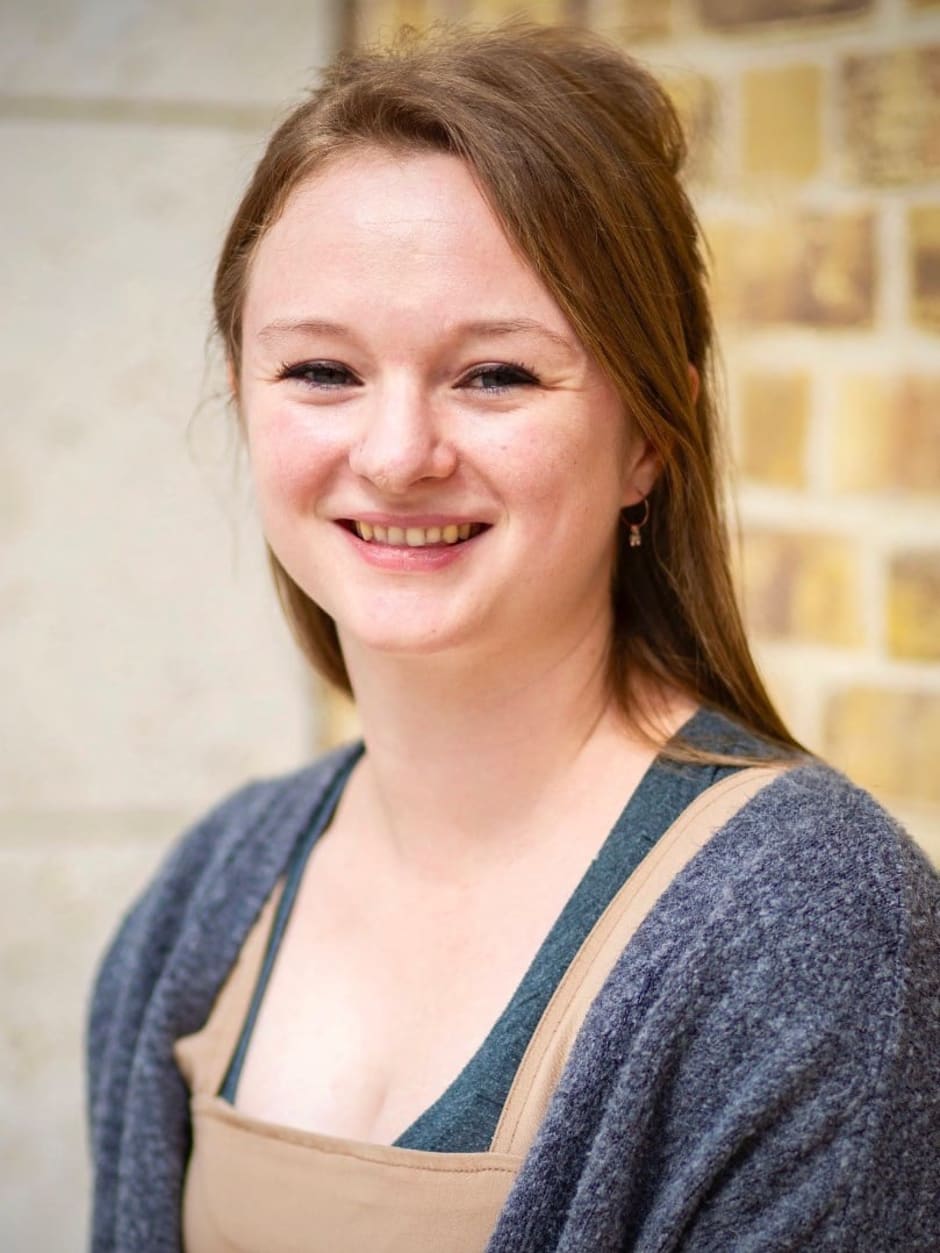
Even in quantum science — a field not directly affected by Trump's measures — the consequences were noticeable. So says British quantum scientist Tamara Kohler, who spent three years as a postdoctoral researcher at Stanford and has been working at the UvA through the Tulp Fund since 1 October. “Funding policy became less predictable. Vacancies were sometimes taken offline before the recruitment process had even begun. Brilliant colleagues were turned down for positions in the faculty that, in a normal year, they would almost certainly have been offered.”
Faculties in the US became more cautious about long-term decisions, such as hiring staff. Kohler says: “That seemed like an additional source of stress I would rather not have to deal with. The research environment in Europe offered greater stability and better funding opportunities, and it was also closer to home for me.”
A unique opportunity
Kohler had already been interested in moving to the Netherlands. “Simply because quantum research here is so strong.” She was also already in contact with researchers at the UvA, who applied to the Tulp Fund on her behalf. She did not have to think for long about the decision to move to the Netherlands. “The fund is a fantastic way to start in a position at the university.”
For Nichols, the Tulp Fund offers a “unique opportunity” to investigate precisely what she wants to study and establish her own research programme at Amsterdam UMC, where she has had an ongoing research collaboration since 2020. Nichols says: “In the US, it is difficult to build something at the moment. You have to secure your own funding to cover 90 percent of your salary, and building a team on top of that has become much harder.”
Academic freedom
Neither Nichols nor Kohler felt that their academic freedom was under threat, despite this being one of the original reasons for establishing the Tulp Fund. This was true even for Nichols, who attracted the attention of the US government with her Impact Counter, an online tool she used over the course of a year to count the victims resulting from the suspension of all foreign aid. “I received tens of thousands of hate emails, my address was leaked, and the U.S. Congress’s Foreign Affairs Committee wrote a letter to Boston University claiming that I was spreading misinformation.”
Even so, this was not a reason for her to leave. “Boston University stood by me. I quite enjoy a bit of a fight, too. I wasn't necessarily looking to leave; the Tulp Fund was simply a very good opportunity.”
Academic freedom was ultimately not used as a selection criterion either, because it was not legally feasible to include pressure on academic freedom as an official criterion. NWO chair Marcel Levi explained this to NRC. The fund had already faced criticism from De Jonge Akademie (DJA), the Young Academy of the Netherlands, which called for the money to be used exclusively for researchers whose academic freedom was under threat.
Leading researchers
The other reason for establishing the Tulp Fund was to attract top talent to Dutch science. Nichols sees real value in that ambition, but thinks the reality is more nuanced than it is sometimes portrayed. “It’s a great signal that the Netherlands is investing in bringing researchers here,” she says. “But the idea that senior US professors will relocate overnight does not quite match how these decisions work.”
For an established professor, moving countries means uprooting a family, a team and a career, and salaries in the US are often considerably higher. “Funding like this makes the move possible, but it’s rarely the only factor.”
Nor are all researchers of the Tulp Fund American. An NWO spokesperson estimates that around ten researchers supported by the Tulp Fund hold American nationality. The majority are European researchers who spent several years working in the US.
Vicarious embarrassment
Neither Kohler nor Nichols was unaware of the outrage the Tulp Fund had previously provoked among Dutch academics, who argued that it would give foreign researchers preferential treatment in an already highly competitive job market. “That is a valid point. There are outstanding researchers everywhere; they certainly don't all come from America. But I do think this is the time to bring people who want to leave America to Europe. Besides, the fund comes on top of the existing funding procedures. Those can simply continue as before.”
Nichols also understands the criticism, which is why she was initially reluctant to talk about the Tulp Fund. “Personally, I'm glad to have the funding, but I do feel a degree of vicarious embarrassment that I can now carry out my research here. That's why I particularly want to use the money to collaborate with other research groups, so that others can benefit from it too.”
Nichols also sees value in bringing different research cultures together. “Americans can be enthusiastic to a fault. That energy, mixed with other cultures and perspectives, could shake things up and hopefully spark new ideas.”
For Kohler, the situation facing American research has not really been a topic of conversation during her first few weeks. “The AI debate has taken over everything. How is it changing the way we conduct research, teach and assess students? We have more influence over those things than we do over government policy. In that respect, it feels more productive to talk about AI.”