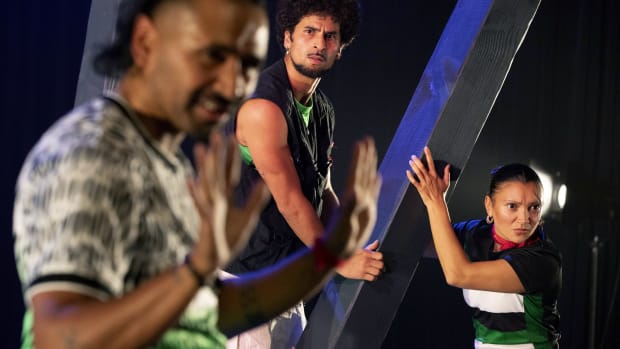
On stage, UvA alumna Tara Hetharia explores what it means to be Moluccan in the Netherlands
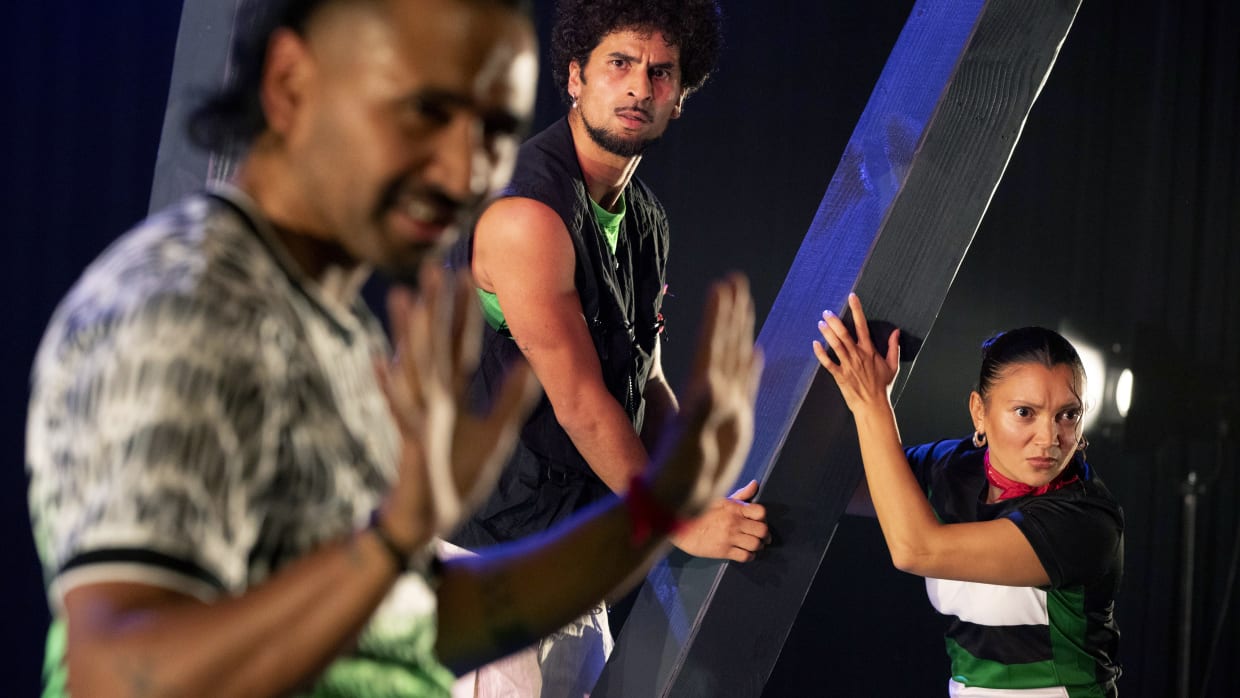
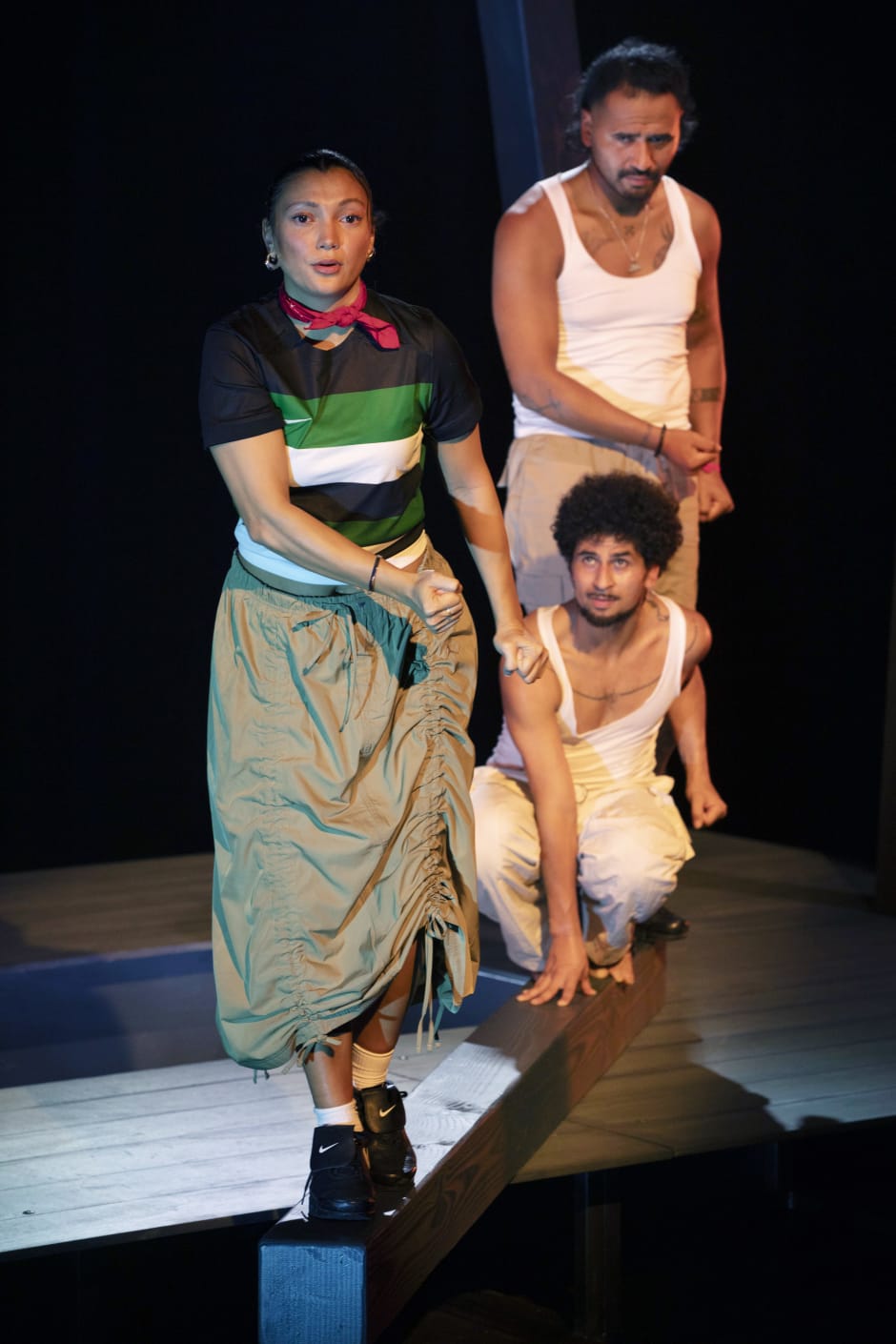
What does it mean to navigate a Moluccan identity in the Netherlands? Three Moluccan theatre makers, including UvA alumna and actress Tara Hetharia, explore this question in the play Kelapa Muda, marking 75 years of Moluccans in the Netherlands. “We want to look beyond the colonial past.”
Tara, why did you want to make this production?
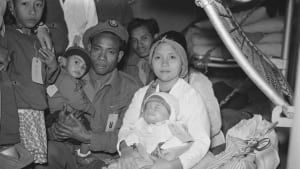
“The production was initiated by Joenoes Polnaija. This year marks 75 years since the first KNIL soldiers (members of the Royal Netherlands East Indies Army, ed.) arrived in the Netherlands. That has always been the dominant narrative about Moluccans in the Netherlands. And understandably so: they were the largest group of Moluccans to arrive all at once. But there are other stories, too. At Joenoes’s family home, for example, the suitcases were always packed and ready because his family believed they would eventually return. My grandma and dad did not arrive in the Netherlands until 1961. With this production, we want to show these different perspectives.”
How did you approach the production?
“The production began with the question: when are you Moluccan enough? During rehearsals, we quickly let go of that question – you are Moluccan, period. Since each of us as theatre-makers has a different starting point, we shifted our focus to the question: how do we navigate that identity? We drew on personal stories, and the writer Maarten van Hinte has woven them into a fictional narrative – drawing also on conversations with the Moluccan community.”
Where does the question “Are you Moluccan enough?” come from?
“It was a question that many third- and fourth-generation Moluccan Dutch people struggled with. I have struggled with it myself. I did not grow up in a Moluccan neighbourhood, and we never talked about it at home, so am I really entitled to call myself Moluccan?”
“At the Maastricht Theatre Academy, I discovered for the first time that there was a whole world hidden behind my surname. A Moluccan woman who was new to the canteen addressed me by my surname, pronouncing it “Hetha-rí-a”. She stressed the í, whereas I had always heard my surname pronounced “Heth-á-ria”. Had I always been pronouncing my own surname incorrectly? And was “Heth-á-ria” the Dutchified version? That was a pivotal moment. It prompted me to start asking questions about my heritage and delve into my family tree. There was also a sense of judgement behind it: why had I never learned any of this?”
“Last year, I travelled to the Moluccas on my own. Since then, my doubts about whether I am truly Moluccan have disappeared – I’d wish that on anyone. I can now make more sense of things I used to struggle with. For example, I never plan my life too far ahead; I prefer to drop by and visit people spontaneously. I also sometimes struggle with the performance-driven culture in the Netherlands. Here, you are taught to develop yourself as an individual, whereas in the Moluccan community, togetherness comes before the individual. I am now much more able to embrace my Moluccan heritage.”
How would you describe the Moluccan community?
“The production is called Kelapa Muda, which means ‘young coconut’. It symbolises the Moluccan community: hard on the outside, soft on the inside. A coconut can take root on a beach, a place where little else can grow. Young coconuts fall from the tree and travel across the water to other places, where they take root again. I think that is a beautiful metaphor for the Moluccan diaspora. It teaches us to see our history and migration as a source of strength, rather than solely as a story of uprooting.”
Tara Hetharia (born in 1995) grew up in Hilversum and has appeared in films and musicals from a young age, including The Lion King and Les Misérables. She began a bachelor’s degree in Media and Culture at the UvA but left after completing her first year when she was offered a role in her first television series SpangaS. In 2021, she graduated from the Maastricht Theatre Academy. Since then, she has appeared in numerous films, television series and theatre productions, including the television serie Dertigers and the TV film Met Oprechte Deelneming, in which she plays the lead role.
Researchers at the UvA are studying how the colonial past continues to affect the Moluccan community in the Netherlands. Have you been in touch with them?
“Not that I know of. Unless they suddenly turn up at one of our performances and include it in their research – that would be wonderful.”
“With this production, we also want to look beyond the colonial past, without denying it. We go back to the moment when Europeans arrived in the Moluccas. And even further back, to a time when Bahasa Tanah, the original language of the islands, was still spoken. We do not want to constantly define ourselves in relation to the West. Instead, we want to talk about the knowledge, wealth and traditions that already existed in the Moluccas back then and are still there today.”
How do you envision the future of Moluccans in the Netherlands?
“What I hope is that everyone with Moluccan roots can put down roots both in the Netherlands and in the Moluccas. A new perspective on history can help make that possible. We have already received positive feedback from young people in the Moluccan community in Venlo. They were worried that the production would only focus on trauma and the past. They found it refreshing that this was not the case.”
The premiere of Kelapa Muda will take place on Saturday, 17 October, at the Stadsschouwburg in Utrecht. The production will tour the Netherlands until the end of December. Tickets are available here.