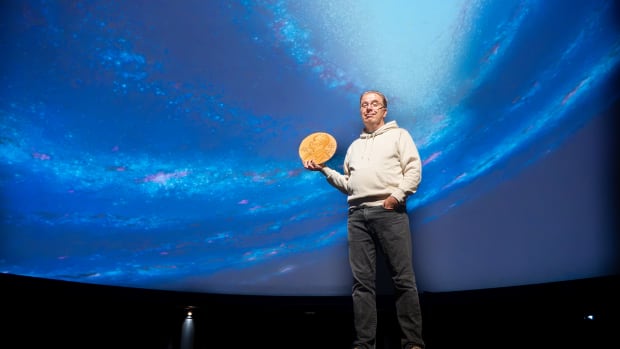
Later When I Grow Up | “If I had followed my heart, I would have studied mathematics”
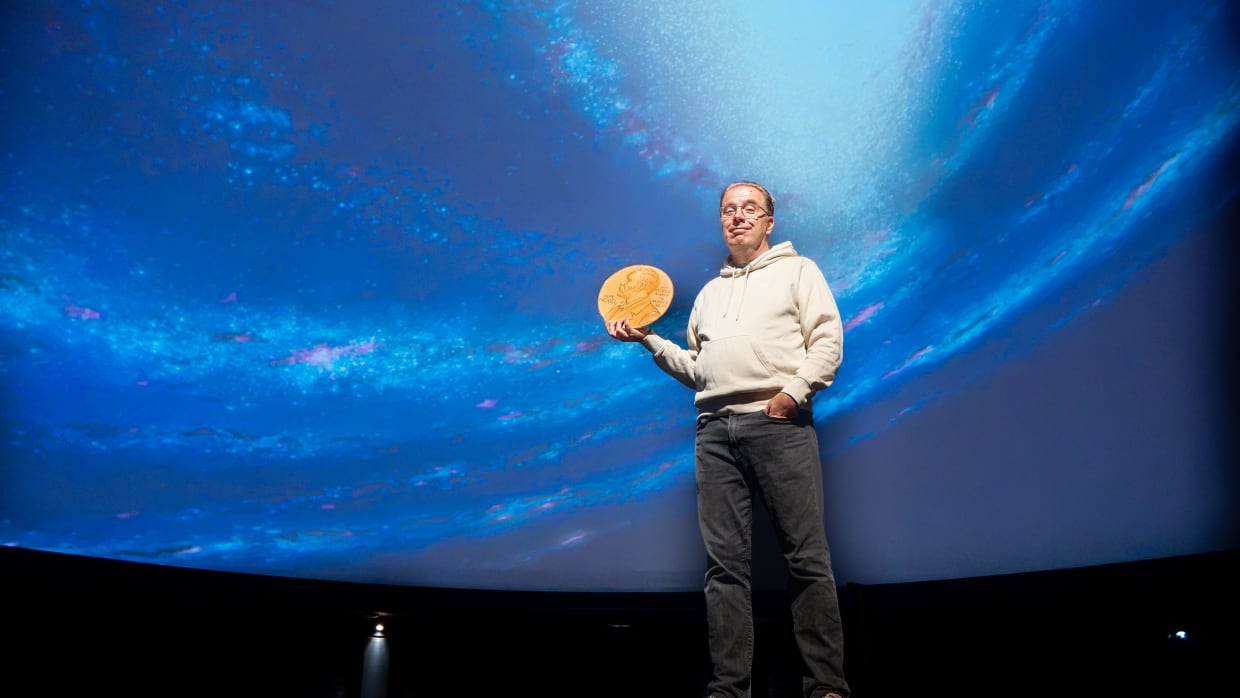
As a teenager, Marcel Vonk dreamed of winning the Nobel Prize. By now, he considers that chance virtually nil. The mathematical physicist at the University of Amsterdam has, however, already won numerous poker tournaments, where his aptitude for mathematics comes in handy. “If I had followed my heart, I would have studied mathematics.”
What was your childhood dream?
“The first thing I can remember is wanting to work as a zookeeper. Although I think I came up with that answer just so I would have something to say: I was five years old and really just wanted to play with Lego and read Donald Duck comics.”
“Real dreams came later. I was good at maths and wanted to become really good at something. At Leiden’s Old Observatory I discovered my fascination with science. I was about 14 or 15 when I joined the Leiden branch of the Youth Astronomy Group and realised that I enjoyed organising camps and explaining things to people.”
In When I Grow Up, Folia talks to UvA academics from all walks of life about their careers, memorable moments in their professional lives and what they wanted to be when they were younger. Did their childhood dreams come true, or is it perhaps better that they ended up doing something else?
“Around that time, I also had a paper round – and therefore plenty of time to think. That’s when I decided I wanted to win the Nobel Prize, the highest achievement you can attain in science. Not because I wanted to be famous, but because I wanted to use that fame to make the world a better place. It was the 1980s, towards the end of the Cold War. There were all sorts of things wrong with the world – just as there are now. As a naïve teenager, you think: if only I become famous enough, I can solve it.”
What did you go on to study?
“If I had followed my heart at the time, I would have studied mathematics. In the end, I chose physics because I thought it had more to do with everyday life. Since then, I’ve increasingly sought out the mathematics within physics. I suppose you can’t escape your roots.”
As well as being a mathematical physicist, you’re also a tournament poker player. How did that come about?
“That only happened much later, in 2004. I was 30 at the time and working as a postdoc at Uppsala University in Sweden. An American called Chris Moneymaker – a wonderful name – won the World Series of Poker that year. Poker was being broadcast on television for the first time, and you could see the players’ cards. Playing poker became a huge craze in America, which then spread to Europe. My colleagues in Sweden persuaded me to play a game.”
What was that like?
“The first little tournament was simply at someone’s house, playing for loose change. It was mainly just for fun. Afterwards, three colleagues and I went to the casino in Stockholm, where I played my first proper casino tournament – and happened to win it straight away. Pure luck; I certainly wasn’t very good yet. I remember it well. Uppsala is about half an hour from Stockholm by train, and we still had to get home that evening. Because I kept making it further in the tournament, it got later and later. When we were finally able to leave, we ran out of the casino with the money still in our hands to catch the last train.”
By now, you’ve played in many poker tournaments. Do you see yourself as a physicist or a poker player?
“At a birthday party, I introduce myself as a physicist, although the conversation soon turns to poker. If I had to choose? Physics, first and foremost.”
Marcel Vonk (14 January 1974) grew up in Leiderdorp. He obtained his PhD in physics under the supervision of theoretical physicists Erik Verlinde and Robbert Dijkgraaf. Vonk writes popular science books on topics such as String Theory (2010) and Black Holes (2017). For the book From Number to Universe (2023), he won the Cosmos Book Prize, the award for the best Dutch-language popular science book. Vonk lives in Amersfoort with his partner Petra. They don’t have any children or pets, but they do have a large telescope in the back garden.
Have your childhood dreams come true?
“Yes and no. The chances of me winning the Nobel Prize are negligible. But I did end up in the field I wanted to work in. Whereas I used to want to change the whole world, I now place more value on changing things on a smaller scale. I’m also involved in the world outside the university. Through my former PhD supervisor, Spinoza Prize winner Erik Verlinde, I returned to the UvA 2012, in a position as a physicist and science communicator.”
And do you still have dreams for the future?
“The highest rung on the academic career ladder is becoming a professor, so I do aspire to make it that far one day. At the same time, I’m in no hurry: I’m not much of a lobbyist. If a position comes up that appeals to me, I’ll apply for it, but I don’t want to force it.”
Looking back, is there anything you would have done differently?
“I certainly have no regrets. But in hindsight, I might have liked to have gone down the mathematics route earlier. The path I’ve taken might have been a little more direct as a result.”
Marcel Vonk’s career tip
“You don’t have to know exactly what you want to spend the rest of your life doing straight away. You can study physics and eventually end up working in biology or finance. And even if you have a clear dream, don’t force yourself to stick to it for fifty years.”