When I grow up | “As a ballet dancer, I missed the intellectual challenge right from the start”
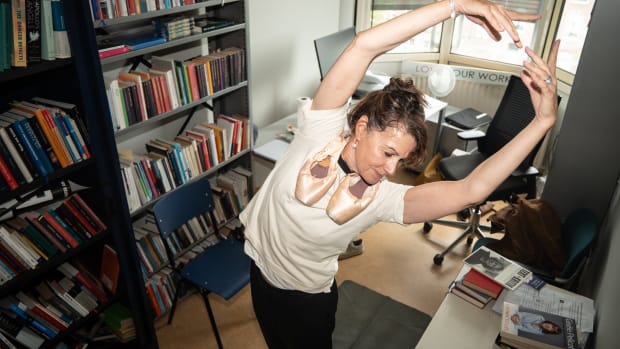
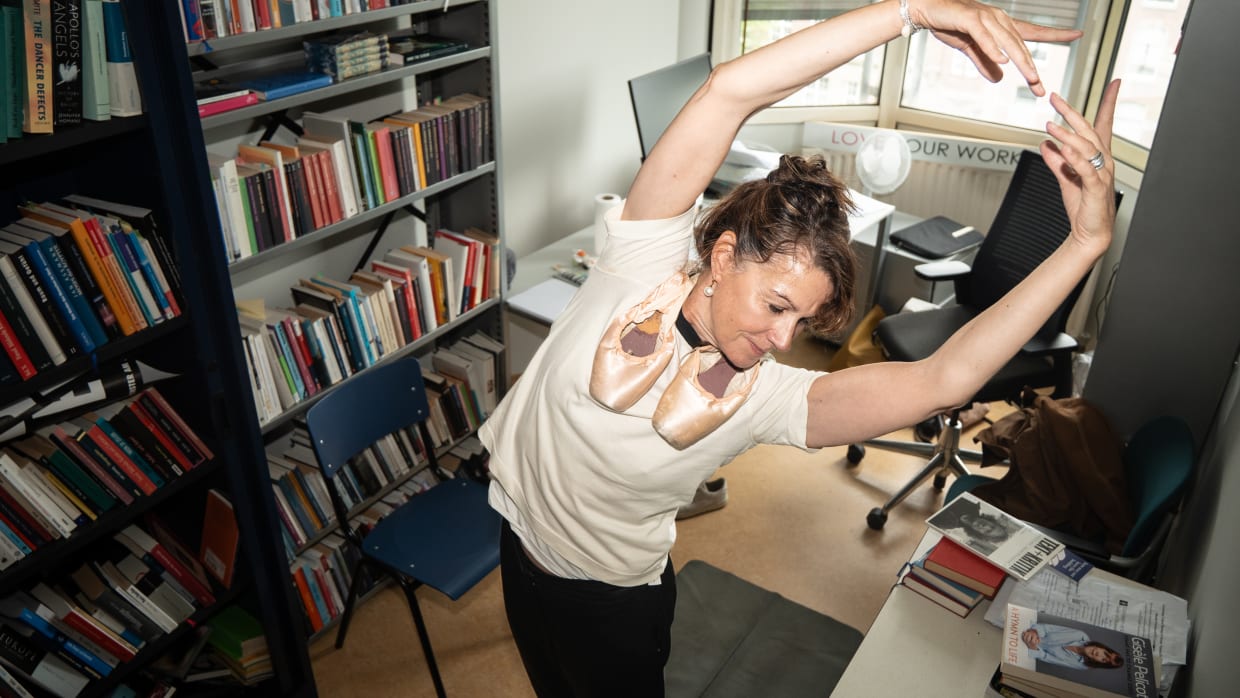
In her first career, Anna Seidl (60) danced as a principal soloist with the Dutch National Ballet. She is now a researcher in German language and culture at the UvA. “My work has always been my passion.”
What was your childhood dream?
“To become a ballet dancer. During a ballet performance at the grand National Theatre in Munich, with lots of red, gold and huge chandeliers, I thought, that has to be my home one day. I also knew that if I became a ballet dancer, it wouldn’t be in the corps de ballet (the dancers who dance together as a group – ed.), but as a soloist.”
In When I Grow Up, Folia talks to UvA academics from all walks of life about their careers, memorable moments in their professional lives and what they wanted to be when they were younger. Did their childhood dreams come true, or is it perhaps better that they ended up doing something else?
What was life like as a ballet dancer?
“I found the dancing itself – expressing yourself without words and becoming one with the music – very appealing. I always found everything else surrounding it difficult. I loved dancing but also felt I was missing out on other aspects of life. Like the intellectual challenge. There was hardly any time to do anything besides dancing, because you’re so physically exhausted.”
“I was also very obsessive and strict. For example, I always demanded of myself that I be in top form; I thought you’re only ever as good as your last performance. I’ve never been able to let go of that strict inner voice. Even when I was on holiday, the first thing I’d do was look around the hotel room to see if there was anywhere I could do my exercises at the barre.”
How did you end up at university?
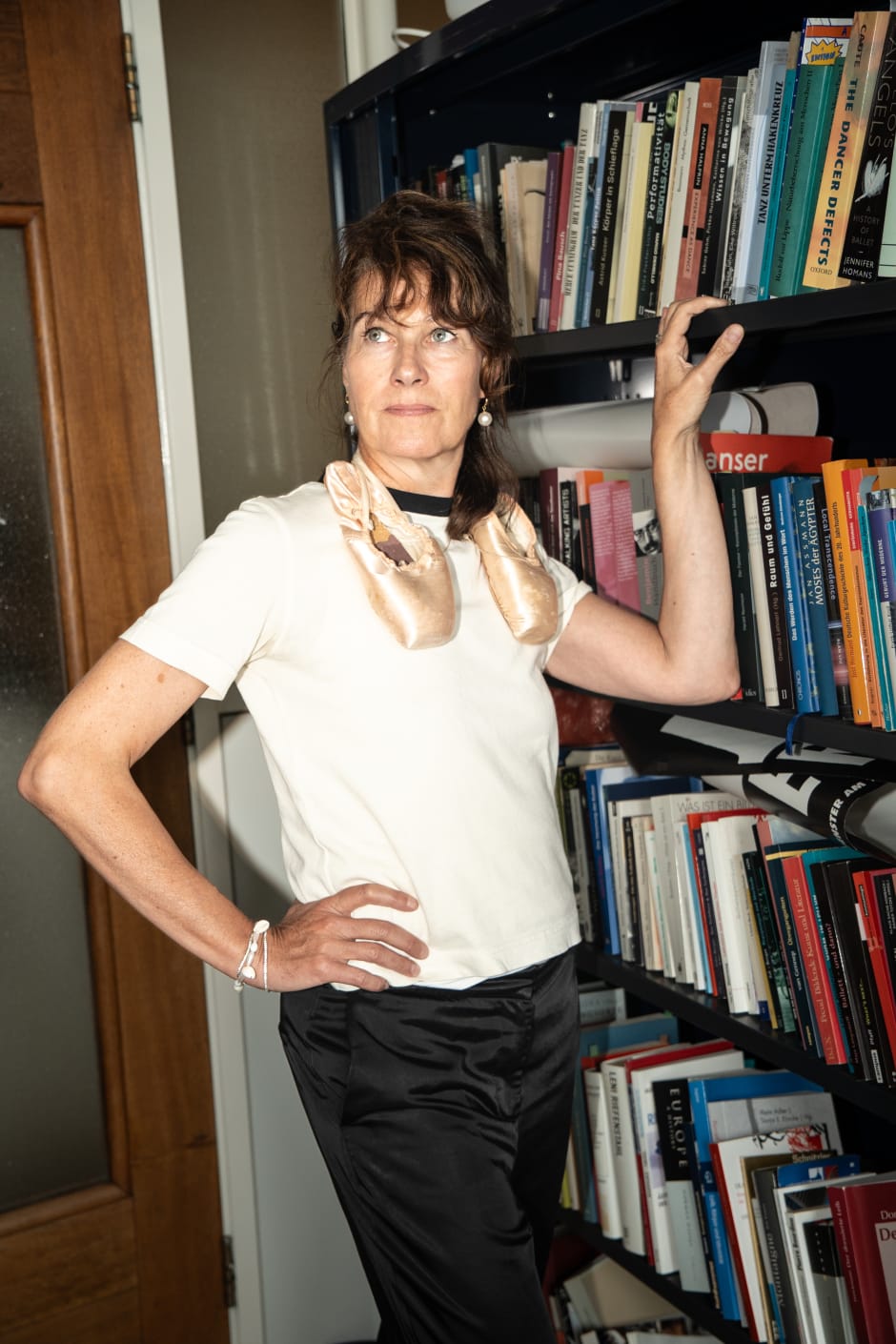
“When I was 36 or 37, the question first arose of what I’d like to do next and what I was capable of. I was at Café de Pels in Amsterdam, because I also wanted to talk to people from backgrounds other than ballet. There I met journalists and writers, which I found really exciting. A whole new world opened up to me. I spoke to a philosophy student there and thought, wow, couldn’t I go to university too?”
“During a sponsors’ dinner at the Amstel Hotel, I was sitting next to someone who worked at the UvA. I told her then that it would be my dream to go to university, and the following year I was able to start. Not in my first choice philosophy – I only spoke German and English – but on the German Language and Culture course. My life at that time revolved between the ballet studio and the lecture theatres.”
“After the birth of my son – by caesarean section; within three months I was back on stage – I looked at the programme for the new season and thought, there’s actually nothing I really want to dance anymore. The director wanted me to complete my twenty years with the Dutch National Ballet, but suddenly I was suffering from pain and injuries; I just couldn’t keep going any longer. After my farewell performance in London, I gave a short speech to the audience in Amsterdam, and that was it. Lots of people said I’d miss it. But it was over; it was finished.”
How did you find the transition from the world of ballet to university?
“I did my PhD and that went quite smoothly – that’s probably down to the discipline. Apart from that, I didn’t find it all that different. I love my work here just as much as I loved my work at the National Ballet. In that sense, I was lucky – my work could always be my passion as well.”
“I do miss the movement, though. After a few hours at my computer, I often roll out my yoga mat and do a few exercises. Sometimes I go dancing on Friday evenings. I go to
De Kring, a social club on Leidseplein, to dance with people from other cultural sectors, such as writers and artists.”
What do you bring from your experience as a ballet dancer to your research?
“In both my research and my teaching, I need an element of performance, something creative. If it gets too dry, I get anxious. I also try to get my students genuinely engaged and encourage them to think for themselves about their own stance on the subject, and what personally moves them about it. That makes it more personal and more vibrant.”
Anna Seidl was born in Munich on 2 September 1966. She began taking ballet lessons at the age of 7 and was selected for the National Ballet Academy in Germany two years later. In 1987, she moved to Amsterdam to dance with the Dutch National Ballet, where she became a principal dancer in 1994. In 2012, she obtained her PhD in German language and culture from the UvA. Seidl lives in Amsterdam and has a son.
Is there anything you would have done differently?
“I don’t even want to entertain that thought. I find it so sad to regret something. Things happen the way they’re meant to. The choices I’ve made all have their significance and have made me who I am.”
“Looking back, though, I do see how exclusive and elitist classical ballet is. It’s based on a white aesthetic, which I now find problematic. I wasn’t aware of that at the time.”
What do you want to be when you grow up?
“I used to always want to reach a new peak. I was always on my way to a new summit, but I didn’t really see anything to the left or right. Now I don’t feel that so strongly. I don’t have any big dreams at the moment; the dream is actually to enjoy the moment more and be a bit less hard on myself. Less is good enough too – that’s really it.”
Career tip from Anna Seidl
“Look for a subject that really fascinates you. Academic skills can sometimes feel like a straitjacket, but even there you can develop your own creativity. Life, and the academic world too, is too difficult if you don’t really engage with it. You have to throw yourself into it; that makes it much more exciting.”