Han van der Maas | The self-imposed silo mentality in academia continues to surprise me

Columnist Han van der Maas will become director of the Institute for Advanced Study (IAS) in September. The institute is known as an elite stronghold, but that reputation is not entirely accurate: it actually offers ample room for collaboration. “True breakthroughs often arise from the use of techniques and models from other disciplines.”
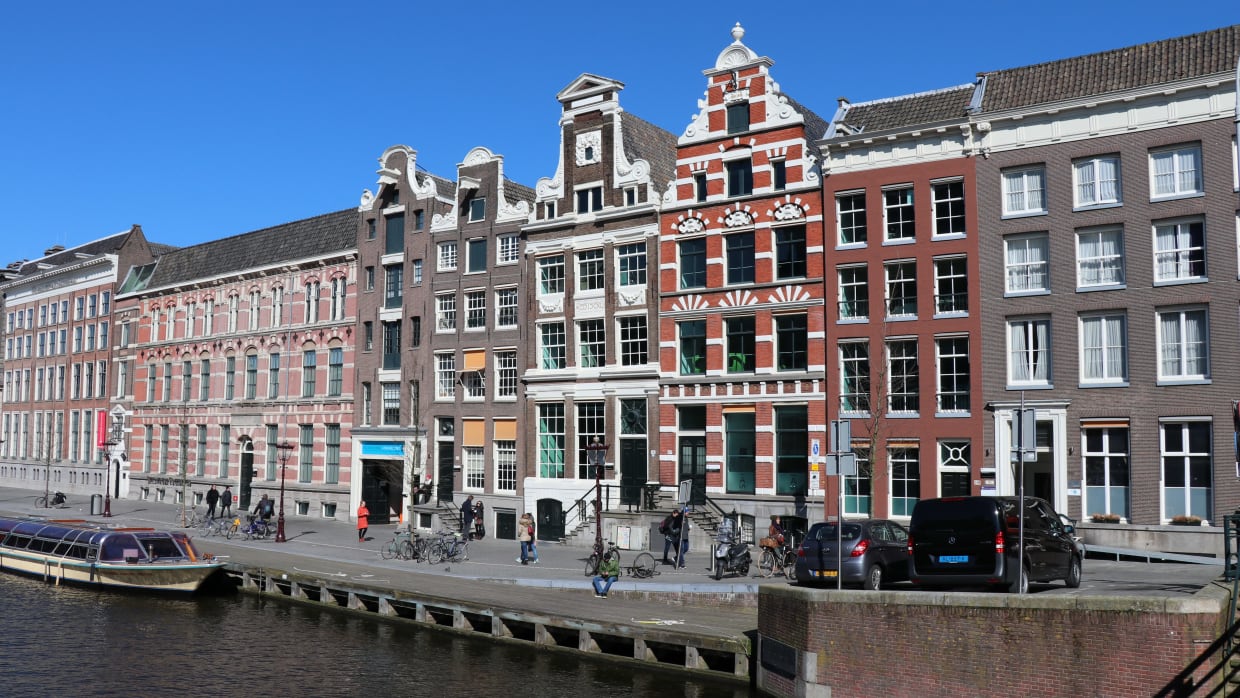
The UvA is this week celebrating the tenth anniversary of the Institute for Advanced Study (IAS). Its founder, Peter Sloot, modelled the IAS on famous examples such as the Institute for Advanced Study in Princeton and the Santa Fe Institute in New Mexico. I have been involved with the institute since its inception and will succeed Huub Dijstelbloem as director in September.
What makes institutes like this so interesting and valuable? The best way to explain that is through the balance between exploration (tinkering and wandering) and exploitation (refining and scaling up), concepts that are now central in many fields of research. In reinforcement learning—one of the pillars of modern AI—the balance between exploration and exploitation is even crucial. But the same holds true for scientific work more broadly. Too much emphasis on either exploration or exploitation has clear drawbacks, yet finding the right balance is difficult.
In general, disciplinary research groups tend to lean toward exploitation: the pressure is on to produce. Scientific papers and graduated students are our bread and butter. We have to keep the system running—data must be collected, exams designed, grant proposals written—and there is nothing wrong with that. Bread needs to be put on the table.
Silo mentality
But the space for exploration is often under pressure. Attendance at lectures is typically modest, and continuing education among academics is rare. Interdisciplinary exploration is even more difficult. The self-imposed silo mentality in academia continues to surprise me. Even within my own Psychology department, with its six programme groups, people rarely attend talks on other floors.
Of course, there can be good reasons for a strong focus on exploitation and a firmly disciplinary approach. Sometimes a field is riding a wave: there are new breakthroughs, new techniques, and a clearly defined research agenda. And then there is international competition—so speed matters. Current AI research is a clear example. But in many fields, there is a kind of impasse when it comes to fundamental questions, as well as their application to societal problems.
It is precisely then that exploration—and especially interdisciplinary exploration—becomes essential. True breakthroughs often arise from applying techniques and models from other disciplines. Personally, I have spent considerable time studying mathematical ecology and statistical physics. That has led to a number of publications in psychology. Whether this will lead to real breakthroughs remains to be seen, but without the IAS and my affiliation with the Santa Fe Institute, this kind of exploration would not have been possible.
Surprising conversations
The right balance is not only a scientific matter, but also a personal one. Depending on the stage of an academic career, that balance can shift considerably. The IAS, for example, is also open to fellowships for UvA staff, whether or not as part of a sabbatical. With young children, spending time abroad is often difficult, and the IAS offers a flexible alternative.
There is ample room to organise workshops and bring together scholars—and non-scholars—with very different backgrounds. I am aware that the name of the institute may sound somewhat elitist, but that is not how it functions in practice. The IAS is a free space for interdisciplinary exploration. Over lunch, you meet researchers from a wide range of fields, leading to unexpected conversations about all kinds of scientific topics.
So, if you experience an acute attack of interdisciplinary exploratory drive: call the IAS.