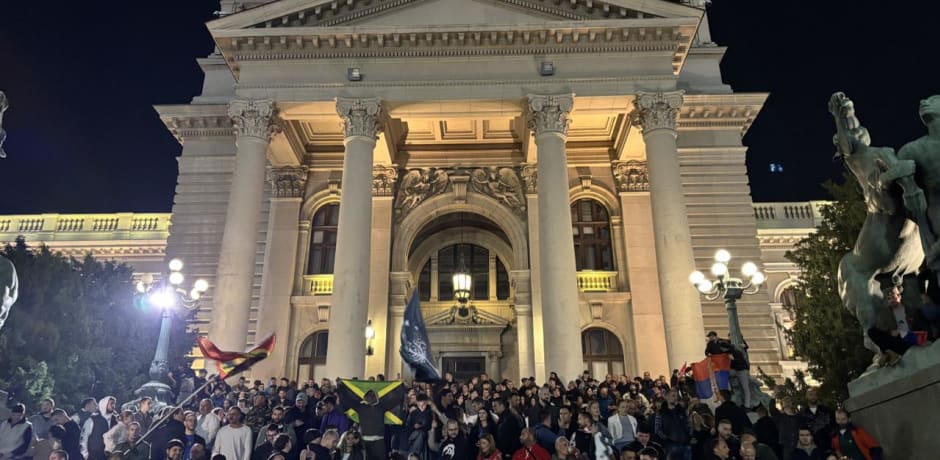
How do you seize power as a student? Lessons from Serbia

In Serbia, large-scale student protests led to a change of government, in which the students put together their own list of candidates and won the most votes. Journalist Max Smedes followed the students right through to their victory and wrote a book about it. Why, in his view, were the Serbian students so successful?
The long-running student protests in Serbia reached their climax last month with the resounding victory of the Student List in the parliamentary elections. This list of candidates, drawn up by students, aims to tackle corruption in the country.
Max Smedes, a journalist and University of Amsterdam alumnus, followed the protests closely and has written a book about his experiences, due to be published in January. How, in his view, did the Serbian students manage to win 140 of the 250 seats in parliament? And are there any lessons to be learnt from this for students here who want to bring about change?
Collapsed railway station
The protests in Serbia were triggered by the collapse of a canopy at the railway station in Novi Sad, Serbia’s second city, in which sixteen people lost their lives. The disaster became a symbol of the corruption of President Vučić and his SNS, who preferred to strike deals with contractors they were friends with rather than taking responsibility for sound infrastructure. This situation sowed disillusionment amongst Serbian students. Smedes sums up the prevailing sentiment at the time: ‘What’s the point of continuing to study if your future doesn’t depend on how good you are, but on whether you have the right connections?’.
Driven by that despair, students began to demonstrate in the aftermath of the accident. ‘Three weeks after the incident, students from the theatre faculty occupied the street in front of their faculty building, at exactly the same time that the canopy in Novi Sad had collapsed. At the time, there were people who were annoyed that they couldn’t drive past, including Milija Koldžić, a local councillor for the SNS. He then punched a student in the face.’
That was the last straw: ‘Those students thought: “Fuck this, we’ve had enough”,’ says Smedes. They occupied their faculty and announced their demand on a placard: an end to all corruption. Slowly but surely, the spark spread to other faculties, until eventually almost every university in Serbia was occupied.
Lessons from Serbia
According to Smedes, the success of the protests is down to the students’ attitude: ‘What characterises those students in Serbia is their staying power. They didn’t let themselves be pushed around, and they kept going for a very long time. They also adopted a very constructive approach. They drew up their own plans rather than simply criticising existing ones.’
‘What also worked very well – and what you often don’t see here in student protests – is that they remained very broad-based in order to build the widest possible coalition. For a long time, they did not take specific positions on issues that lay outside their immediate focus, namely the fight against corruption.’ To achieve this, some students had to set their principles aside. For example, Smedes attended a protest with a trans boy who confided in him that although ‘many other protesters here are against gender-affirming care and some might even wish me dead’, he had come to demonstrate nonetheless. ‘This is about the greater good,’ he explained to Smedes.
Occupation Cookbook
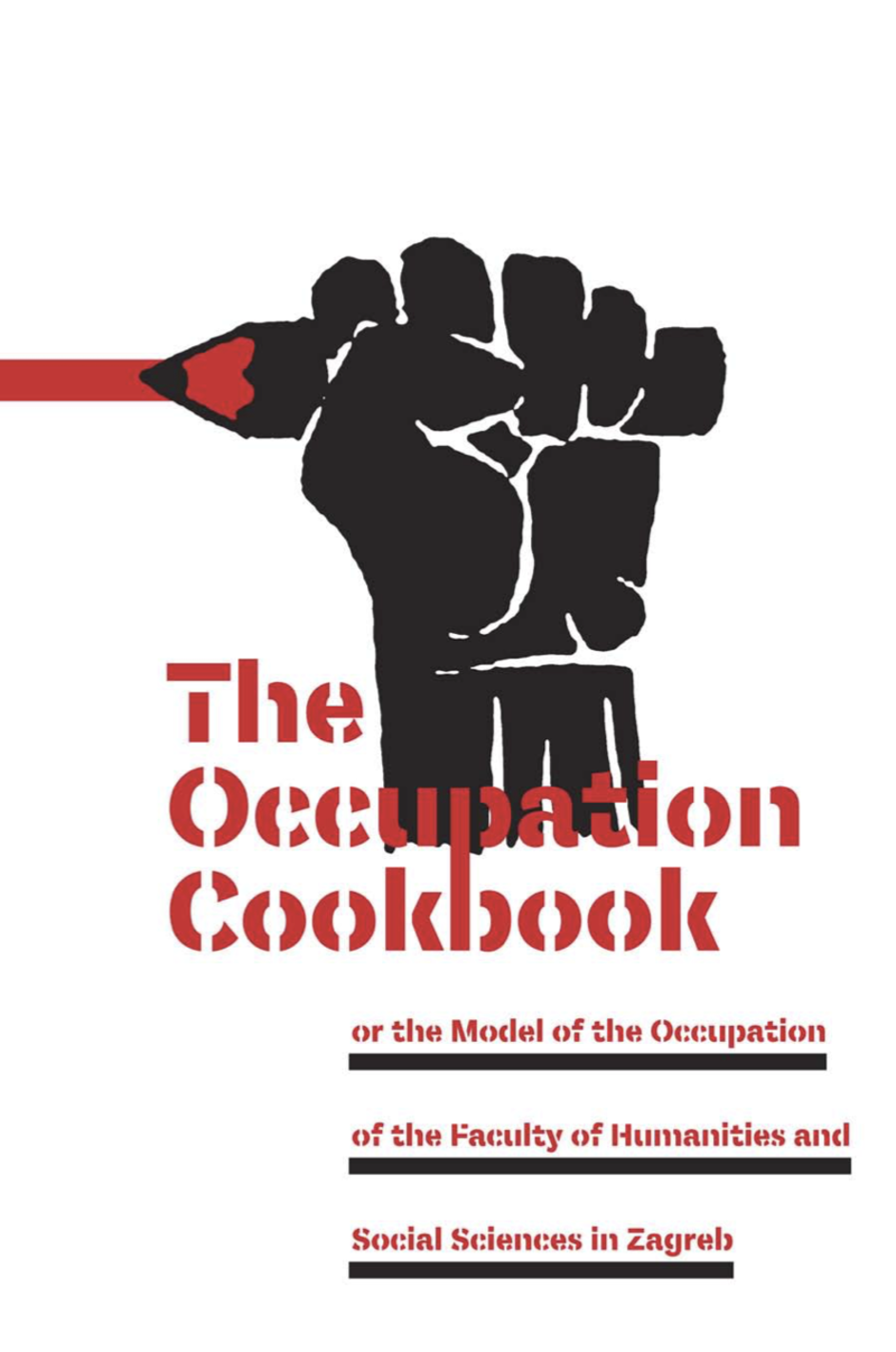
Smedes claims that the Serbian students drew inspiration for their protest from a Croatian handbook on demonstrating. ‘In Croatia, there were student protests in 2009 over cuts to education funding. The Croatians also occupied their universities at that time. When that occupation – which lasted much shorter than the one in Serbia – came to an end, they wrote a handbook which has been translated into English as Occupation Cookbook.’
The handbook, which includes tips on dealing with the police and democratic decision-making, certainly proved useful to the Serbs, particularly in the early days of the occupation. ‘For example, it states that it is most effective to protest peacefully and not to vandalise property, as this wins over public opinion.’
Student List
The Serbian students, however, have elevated the tips and strategies from the Cookbook to an art form: ‘They’ve expanded on them considerably’. A key difference compared with the Croatians is that they have taken the step into politics, having concluded that politics is necessary for lasting change. ‘They wanted to move from the streets to the state,’ says Smedes, ‘and came up with the idea of drawing up a list of candidates for that purpose. Not a political party, then, because they wanted to stay outside the normal political arena, given that Serbs have had enough of the political establishment’.
Because the students themselves did not want to be accused of a lust for power, they drew up a list of lecturers, well-known academics, artists and even a famous basketball player. They explicitly did not want any politicians on the list. ‘The students see their candidates as a sort of clean-up crew tasked with putting things in order, tackling corruption and creating a healthier democracy.’
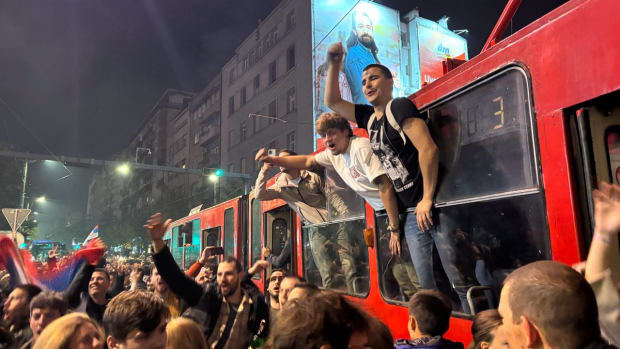
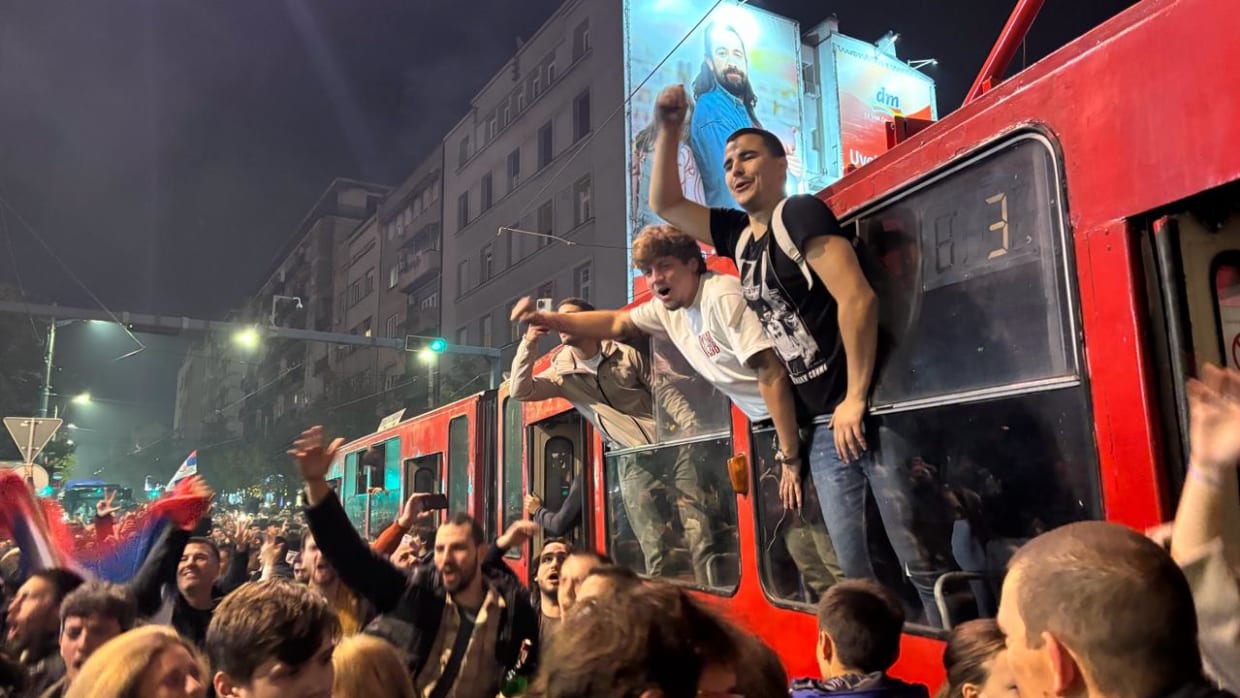
This ‘Student List’ turned out to be a masterstroke: the students won the elections. Smedes was in Belgrade when it happened: ‘It just turned into one big party in the streets, so big that all the kiosks and supermarkets in the city centre had sold out of alcohol. You couldn’t get a beer anywhere. And it just carried on all night, with music and everything’.
Inspiration
It is too early to say whether the ‘clean-up crew’ from the Student List can really bring about change. After all, they were only sworn in to parliament last Tuesday. However, according to Smedes, the Serbian students can serve as an inspiration to students worldwide: ‘What I’ve seen is that if, as a group of young people, you simply do your own thing and don’t conform at all to the existing way of doing things – and you organise it all a bit properly – you can turn the whole thing on its head. I think that could serve as an example for places where young people are dissatisfied with the world, such as in France, Albania and also in the Netherlands.’