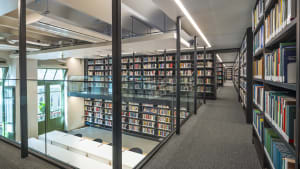
Will the weeding of the FGw book collection lead to irreversible losses?

Experts are concerned about the losses to the book collection of the Faculty of Humanities (FGw). Last week, it was announced that the faculty is disposing of a fifth of its collection. According to the University Library and the faculty itself, the library will continue to function effectively, but experts are not so sure about that.
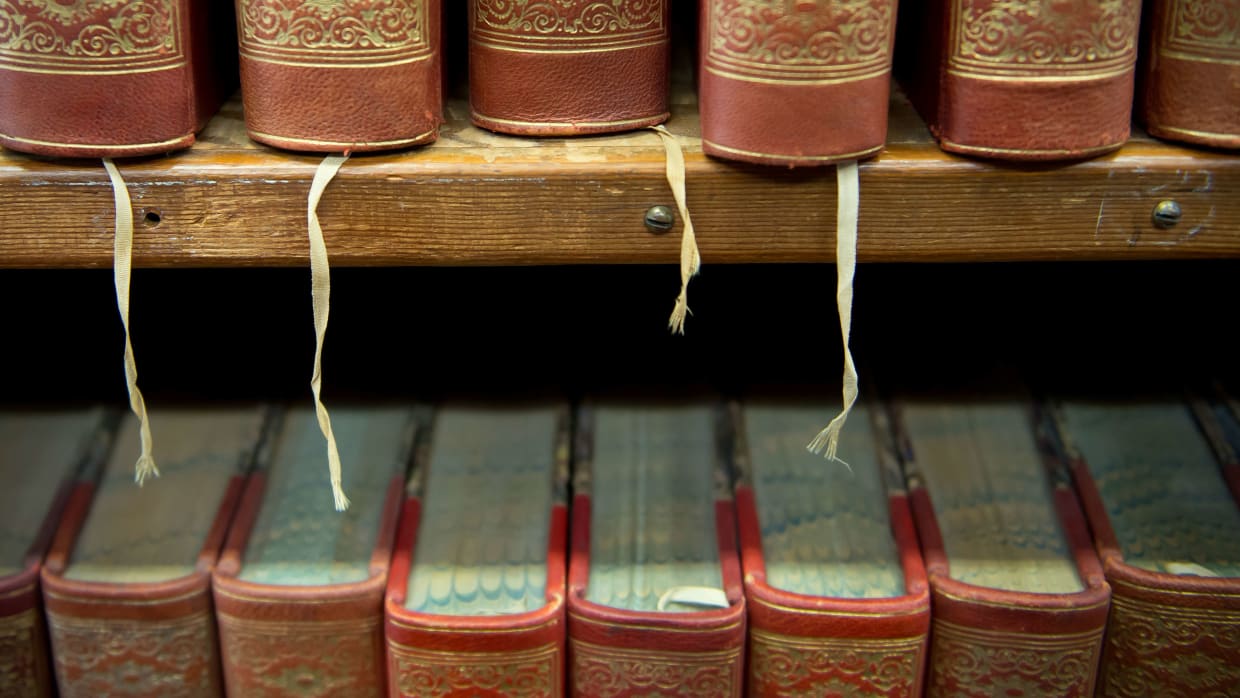
Last week it emerged that the Faculty of Humanities intends to dispose of a fifth of its book collection. This forthcoming ‘de-selection’ is reportedly driven by a lack of space in the stacks and financial considerations. The Faculty of Humanities expects to gain some breathing space in its budget, but specialists are concerned about the consequences of this rigorous de-selection for the library collection.
Material loss
Whilst library users are unlikely to notice the disappearance of titles – any gaps in the collection should be filled through inter-library loans – librarian Jos Damen warns of the intrinsic losses to the university. Damen, who has previously been affiliated with Leiden University Library, points out that there may well be special copies amongst those 200,000 books.
In 2005, Damen conducted research into doctoral theses in Dutch university collections and discovered that the University of Amsterdam (UvA) had previously made a mistake by carrying out too thorough a clear-out. According to Damen, around the year 2000, the Amsterdam University Library shredded approximately 2 kilometres’ worth of European doctoral theses, which may have included rare titles such as Einstein’s thesis. Not only is this a shame, Damen argues, but it is also a waste of money: ‘If they had sold that collection,’ Damen claims, ‘Einstein’s thesis alone would have fetched a five-figure sum.’
Carlos Reijnen, Director of the University Library, has stated that the University Library will first investigate ‘whether there are any organisations interested in the titles’. If no such interest is shown, the books will be ‘disposed of sustainably via a paper recycling company’.
This potential depletion of the collection is also a cause for concern for Marita Mathijsen, professor emeritus of Modern Dutch Literature at the University of Amsterdam. She points out that, whilst the deselection criteria protect Dutch-language books from being removed, for example, they offer no protection to German literature or international studies in literary theory if nobody has borrowed them over the past ten years. Mathijsen does not mince her words: “This euphemistic term ‘deselection’ brings to mind, among other things, the book burnings in the Third Reich.”
Control
The University Library Advisory Committee, which oversees the deselection process, bears the responsibility for preventing such missteps. During a trial run, the committee had already noticed that, under its de-selection criteria, more books than was desirable were being considered for removal. For instance, the list also included ‘a few source editions and reference works’ which, in the committee’s view, should not be removed.
For this reason, ‘the lists of titles to be deselected on the basis of the criteria should be checked by subject matter experts from the relevant disciplines before final deselection takes place’. These ‘subject matter experts’ are the members of the Advisory Committee, seven academics from the Faculty of Humanities (FGw).
Waste of time
The concerns extend beyond mere material losses. Saskia Scheltjens, library director at the Rijksmuseum, points out on LinkedIn the vast amount of work that will be undone by the deselection. According to her calculations, 200,000 books equate to around thirty years’ worth of acquisitions: ‘Add to that all the work involved in acquiring, storing, cataloguing, making these items available – and now, too, disposing of them. An extremely frustrating realisation’, says Scheltjens.
Reijnen, however, emphasises how much the coming and going of books is part and parcel of library practice. ‘The periodic review and updating of collections is part of regular collection management,’ he states.
The fact that the ‘current deaccessioning is an initiative of the FGw’, and therefore falls outside the scope of regular collection management, has, according to Reijnen, no negative impact on the deaccessioning process: ‘It has been an extremely meticulous process’.