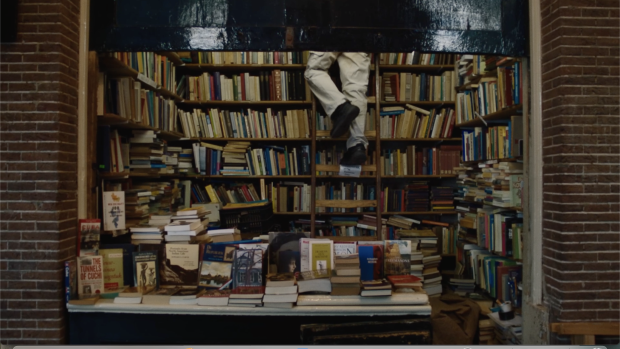
Filmmaker captures the Oudemanhuispoort: “A tribute to observing with care”
In the documentary Poort, filmmaker Veere van Gent portrays the Oudemanhuispoort, where she rents a studio. The timeless quality of the place – which for most students is simply a corridor to the lecture theatre – inspired Van Gent to capture this unique passageway on film.
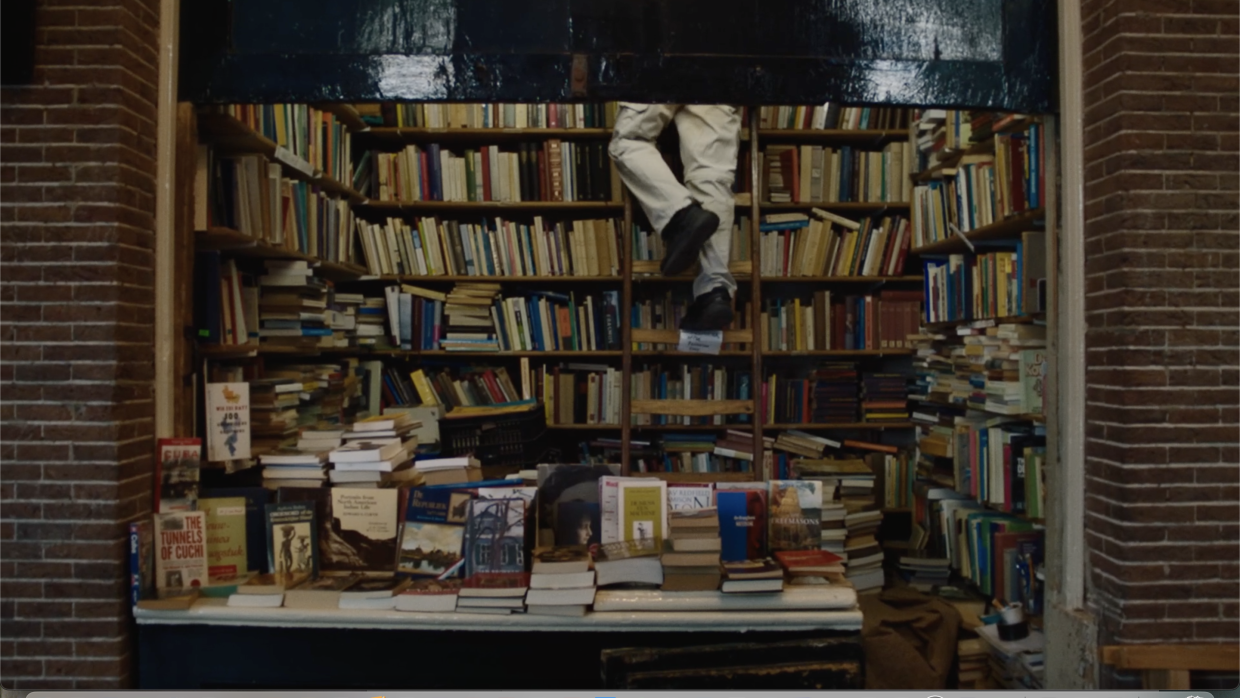
It takes a bit of manoeuvring to weave your way through the throng of smoking students when you want to enter the Oudemanhuispoort from the Kloveniersburgwal. Once inside, the effort is rewarded with a cosy second-hand book market. Filmmaker Veere van Gent made a documentary for the VPRO about this special place, for which she delved into the world of the archway and its many booksellers. “Poort hasn’t turned out to be Andere tijden,” Van Gent observes. The film is, in fact, more of a poetic reflection on the iconic passageway, which UvA students know primarily as the entrance to the university building of the same name.
Studio in the archway
Van Gent knows the Oudemanhuispoort literally from the inside out. For eight years now, she has been renting a studio in the building that once housed the large antiquarian bookshop of Henk Pfann, an eccentric bookseller who had planted a tree on his roof. Before it became a studio, the premises were home to the Belastingwinkel Amsterdam, the letters “twinkelster” from which still remain on Van Gent’s window.
A few years ago, Van Gent became intrigued by one of the book sellers in the gateway, who always displayed his stock in her shop window (beneath the twinkling star). The man struck Van Gent as “someone who is a little out of step with the times”, as he sat selling books in the same chair outside her door day in, day out. That sense of timelessness came to an abrupt end when, one day, he had vanished. “I found his chair and his books by the roadside, and his bookshop was closed and remained so,” Van Gent recalls.
After his disappearance, Van Gent set out in search of that mysterious bookseller, which became the inspiration for her film. During the process, the search turned into a poetic fascination with the strange location. “To me, the archway with its booksellers is a slow, analogue world,” explains Van Gent, “through which all manner of passers-by rush at the same time. I found that contrast between the passers-by and the booksellers sitting there quietly to be rather beautiful.”
Occupation
An example of that contrast was the occupation of the Oudemanhuispoort by pro-Palestine demonstrators two years ago, which is briefly touched upon in Poort. A momentous event for the university, but Van Gent was particularly struck by how quickly the Oudemanhuispoort returned to the status quo: “I happened to be away from the arch for a few days just as the occupation took place, but I did see all the videos. When I came back, everything was exactly as it had been before the occupation. Absurd, really.”
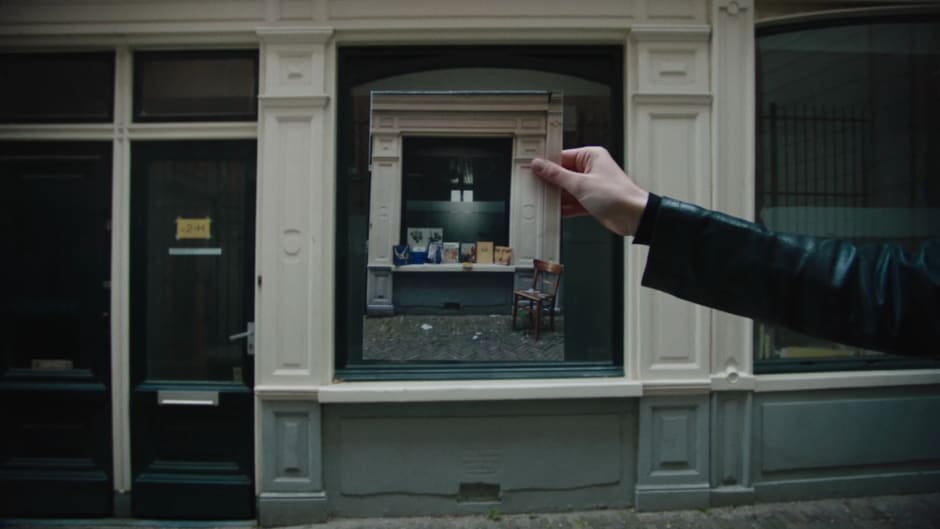
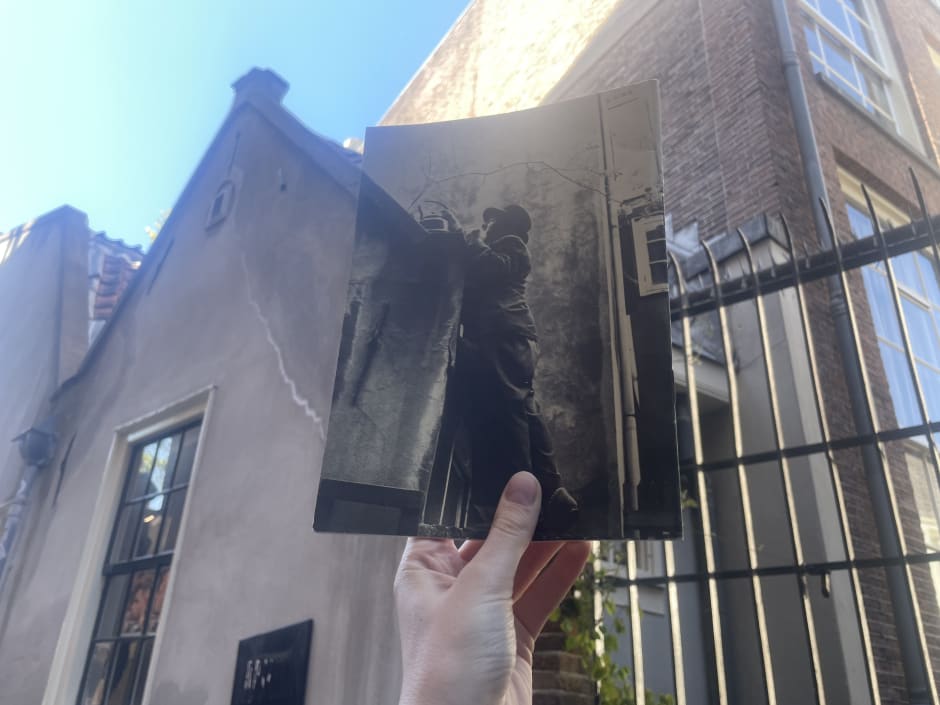
After occupation the book market continued as before, although a few awnings had indeed disappeared into the barricades. Van Gent highlights the market’s continuous existence – it has been running for well over 150 years – by combining historical photographs with contemporary footage. At times in Poort, you only realise you are looking at a photograph from the past when Van Gent pulls it out of the frame.
Decline
At the same time, Van Gent is also aware that the book market is a fragile thing: “When the mysterious bookseller was gone, I thought: oh yes, so this really could disappear.” A dark cloud of impending change therefore hangs over the entire documentary. For example, one of the booksellers’ shops was not taken over after his death and was left empty. “The University of Amsterdam has plans for a major refurbishment,” says Van Gent. “The question is whether the market will return afterwards.”
According to Van Gent, it won’t be for lack of enthusiasm on the part of the booksellers: “There are certainly booksellers at the market who would love to expand, but that needs to be facilitated. I think the UvA could play an important role in preserving this piece of cultural heritage.” She recognises that traditional market forces may play a role here: “Of course, the question is also: will people continue to buy old books?”
Tribute
Whatever the future holds, Van Gents Poort is, at the very least, a testament to the Oudemanhuispoort as it stands today. “The film is a tribute to looking at something very closely, and a plea to look carefully at your surroundings,” she says. She fully understands that students don’t always have time for that: “I’m lucky that I can pause in this special place and take it all in at my own pace.” Through her film, she shares that perspective with the world.
And did she ever manage to track down that mysterious bookseller who used to stand outside her door?
“I never saw him again, but of course I asked everyone where he’d gone. The answer isn’t actually that spectacular. He simply stopped.”
Poort can, among other places, be seen on NPODOC as part of the documentary series Ongeschreven regels.