According to UvA guest speaker Martin Shaw Israel has exhibited genocidal tendencies for decades

Martin Shaw is giving a guest lecture at the Amsterdam Centre for Middle Eastern Studies on Tuesday. According to the sociologist, who was among the first to describe the situation in Gaza as a genocide, Israel had already been exhibiting genocidal behaviour at different times over the past few decades. How does he view the way the UvA has dealt with this issue in the past years?
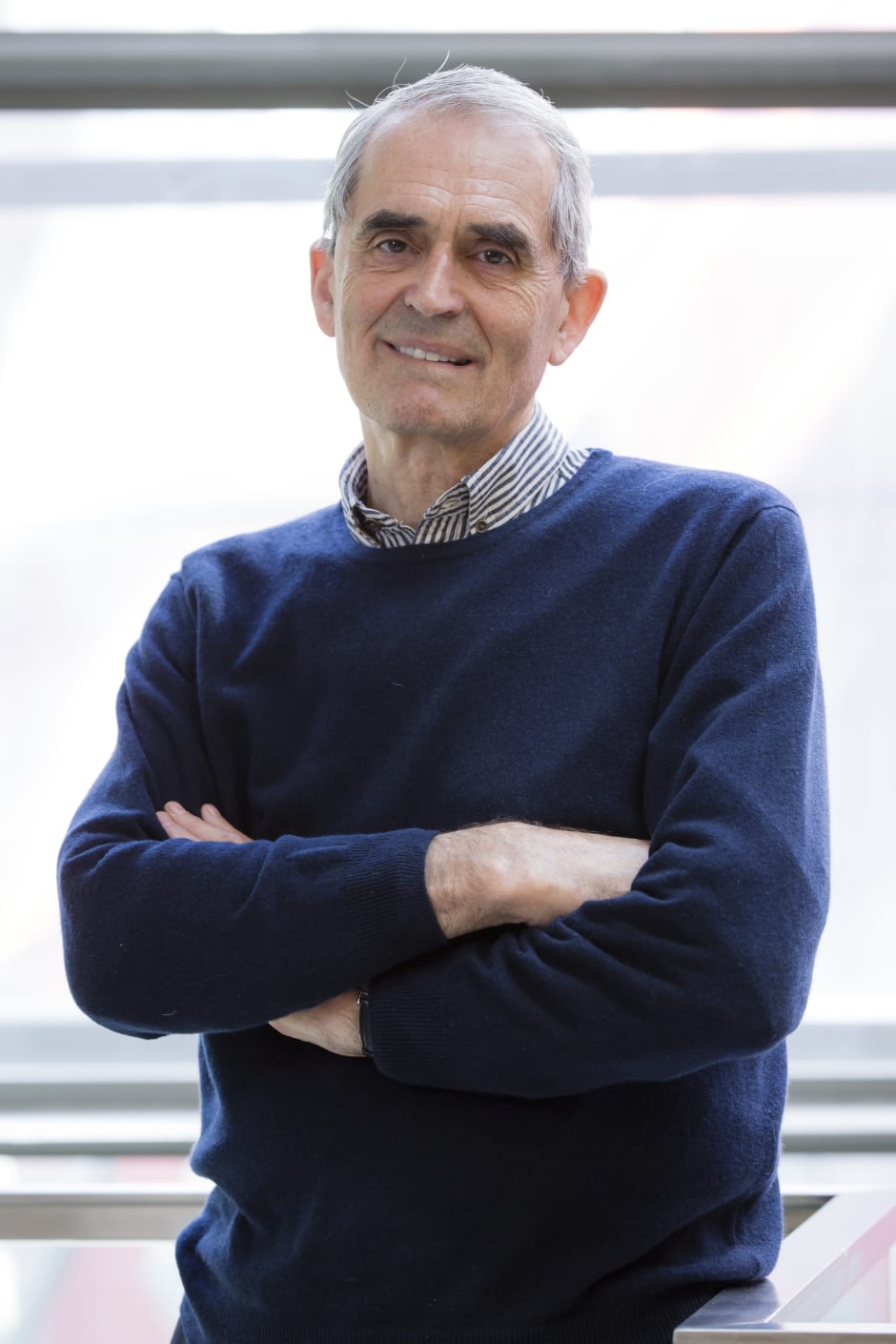
“One of the first scholars to recognise the destruction of Palestinian society in Gaza as genocide.” This is how Martin Shaw, Emeritus Professor of International Relations and Politics at the University of Sussex, is introduced on the website of the UvA’s Amsterdam Centre for Middle Eastern Studies (ACMES). This Tuesday, 3 November, the sociologist will deliver the annual guest lecture organised by ACMES at the Lutherse Kerk.
You were one of the first scholars to describe the situation in Gaza as a genocide. From that position, how do you view the difficulties universities such as the UvA have faced in recent years when it comes to taking a position?
“I am a guest at the UvA and I do not know the precise details of how this issue has played out at the university. So I would rather not comment too directly on the UvA’s actions. But, more generally, I have been struck by how reluctant universities have been over the past three years to acknowledge the genocide. Critical researchers have often found it difficult to speak out about it. I have also experienced pro-Israeli forces within universities treating my lectures as controversial and wanting to cancel them.”
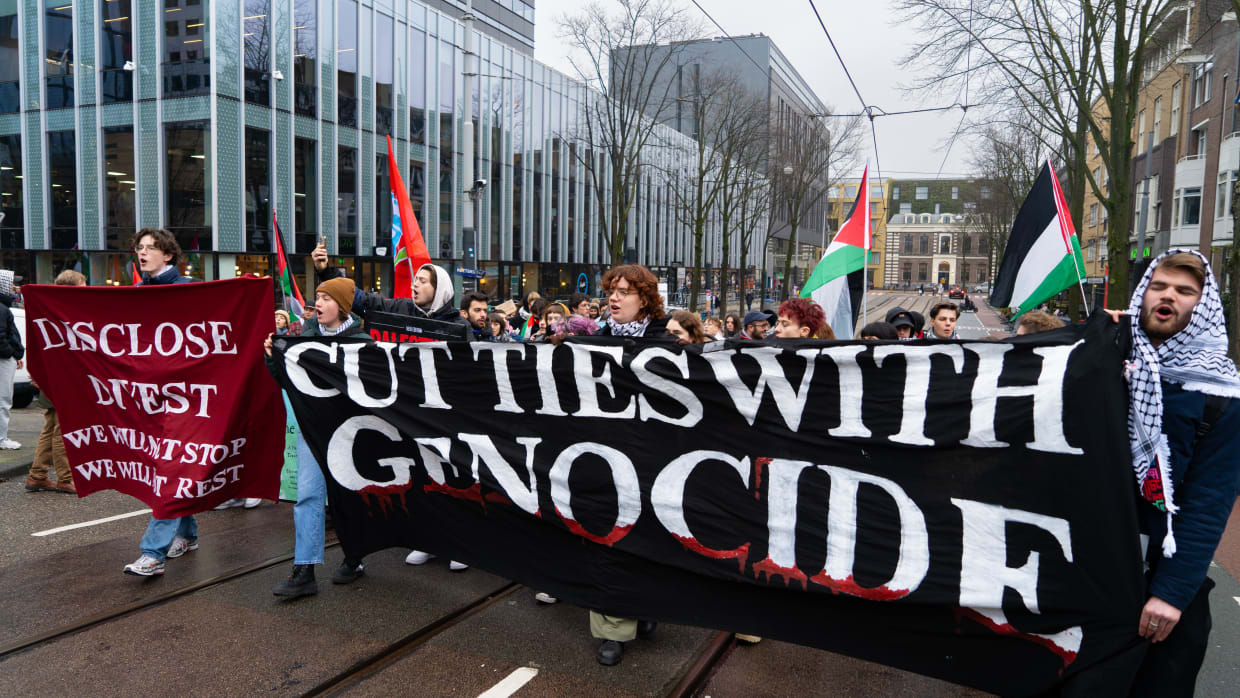
To give a concrete example of the situation at the UvA: in February 2024, the university said it did not want to sever its ties with Israel because doing so would also mean “severing relations with researchers who represent the critical voice in Israel”. What do you make of that argument?
“I would prefer to answer this in somewhat broader terms too. The accusation against Israel is that it is attempting to destroy the Palestinian community in Gaza as a whole. This accusation is now widely supported by organisations such as Amnesty International and the vast majority of genocide scholars. This means that institutions, including universities, must respond seriously. Genocide is such a serious and fundamental crime that you cannot maintain ties with genocidal states. A complete boycott, in line with what Palestinian organisations are asking for, is therefore the best solution.”
The UvA moved towards such a boycott in October 2025, when the university announced that it wanted to end all collaborations with Israeli institutions, stating that it had “concluded that there is increasing evidence that a genocide is taking place in Gaza”. Did the UvA act in time?
“Even if I thought the decision had come too late, I could only welcome it. Perhaps it could have happened earlier, but I think we should primarily see this as a learning process for institutions. Ultimately, it is a step forward.”
In June 2025, then-chair of the Executive Board Peter-Paul Verbeek referred to “genocidal violence”. What do you make of that term?
“If we look at the legal definition of genocide, it refers to acts committed with the intention of destroying an ethnic or national group. Legally speaking, genocidal violence is therefore, by definition, genocide, and there is no difference. Sociologically, however, there is a difference. Genocidal violence generally refers to more limited incidents, which take place on a smaller scale or over a shorter period. What is happening in Gaza is therefore a full-blown genocide and should be described as such.”
Why is that so important?
“Genocide is the internationally recognised term for what is happening there. Scholars and the United Nations have concluded that this is the correct word to use.”
You have been describing the situation as genocide for much longer, and argue that it did not begin in 2023. Is that right?
“Yes, I argue that genocide was already taking place in Palestine before then. The Zionist project has, more or less since the foundation of Israel, been aimed at partially or entirely eliminating the Palestinian community there. Before 2023, of course, this had not happened on such a destructive scale, so there has certainly been a serious escalation since then. But you could absolutely argue that the Nakba The mass displacement of Palestinians in 1948.of 1948 was already a genocide of mass expulsion.”
Are you saying, then, that there has been an uninterrupted genocide since 1948?
“That is not quite how I would put it. It is not the case that this entire history constitutes one continuous genocide, but there is a continuous genocidal element in Israel’s actions: the tendency to eliminate Palestinian communities. This happened on a large scale in 1948, and continued afterwards at a local level and on a much smaller scale. Now it is happening again on a very large scale in Gaza.”
Someone who travels the world to put forward this message will inevitably face accusations of antisemitism. How do you respond to such accusations?
“I have indeed been accused of that. In such cases, I respond by explaining that my position has nothing to do with Jewish people. I am simply opposed to genocide, whoever commits it, and I support human rights. I also speak out against the genocide in Sudan and Myanmar.”
Your lecture at ACMES next Tuesday will focus on this very subject. What will be the main message of your lecture?
“Two years ago, I gave a lecture at the NIOD Institute for War, Holocaust and Genocide Studies. At the time, my main aim was to make clear that a genocide was indeed taking place in Gaza. This time, there is room for a different approach, because the consensus now is closer to what I was trying to explain then. So I will focus on how the ongoing genocide relates to the history of Palestine over the past century.”