These catering businesses are leaving the campus: “We feel very much pushed aside by the UvA”

Anatolia’s Foodtruck, Coffee Star and the South Korean food stall Kimbab will no longer have a place at the UvA from January 2027. The businesses, amongst others, failed to score enough points in the tender process for the UvA’s new catering plans. Business owners still have questions about that process.
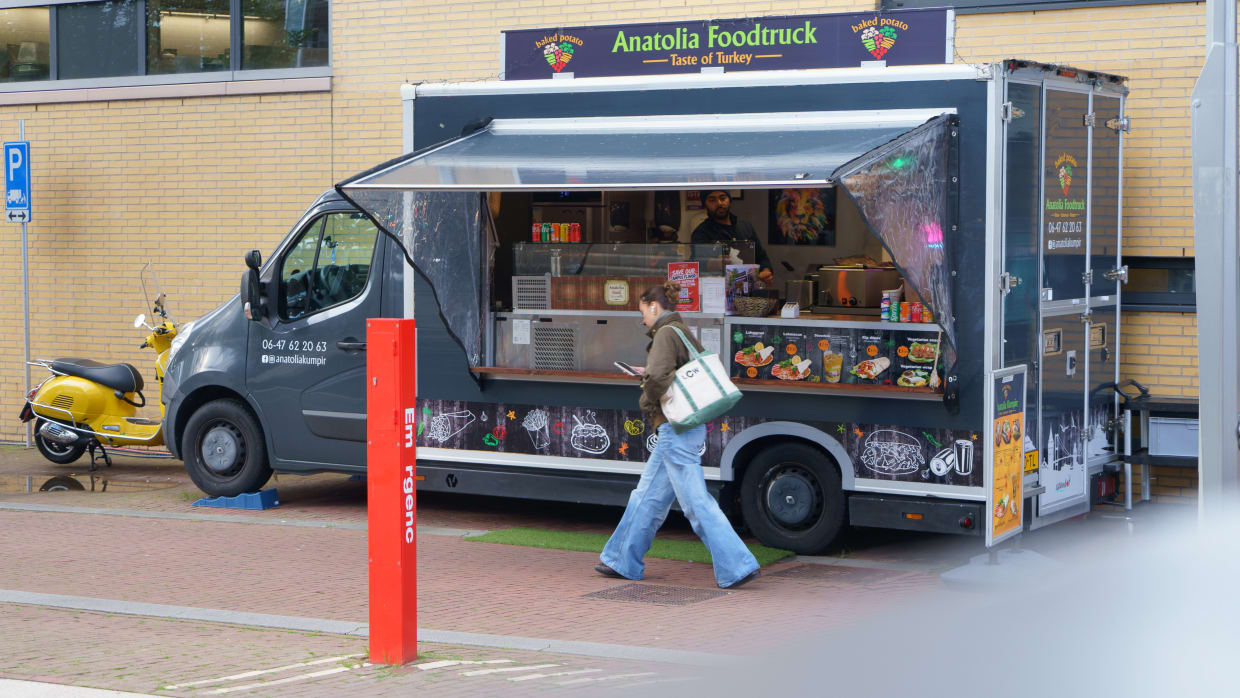
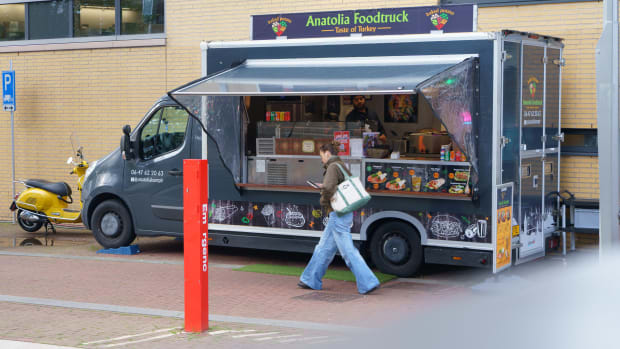
From next year, students and staff at the Roeterseiland campus will no longer be able to enjoy a kumpir, a baked potato stuffed with fillings and wrapped in aluminium foil. Kuzey Türk, who has been selling Turkish fast food from Anatolia’s Foodtruck for four years, is one of the business owners who will no longer be awarded a place under the UvA’s new catering plan from 1 January 2027. The new catering arrangements were announced last week.
Türk is not the only business owner leaving the UvA campuses. Coffee Star, located in the J/K building on the Roeterseiland campus, and the South Korean food stall Kimbab at the Science Park, amongst others, will also leave the university at the end of 2026. The UvA spokesperson declined to say exactly how many businesses would be affected.
The most popular food stall
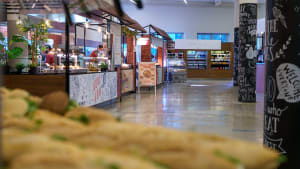
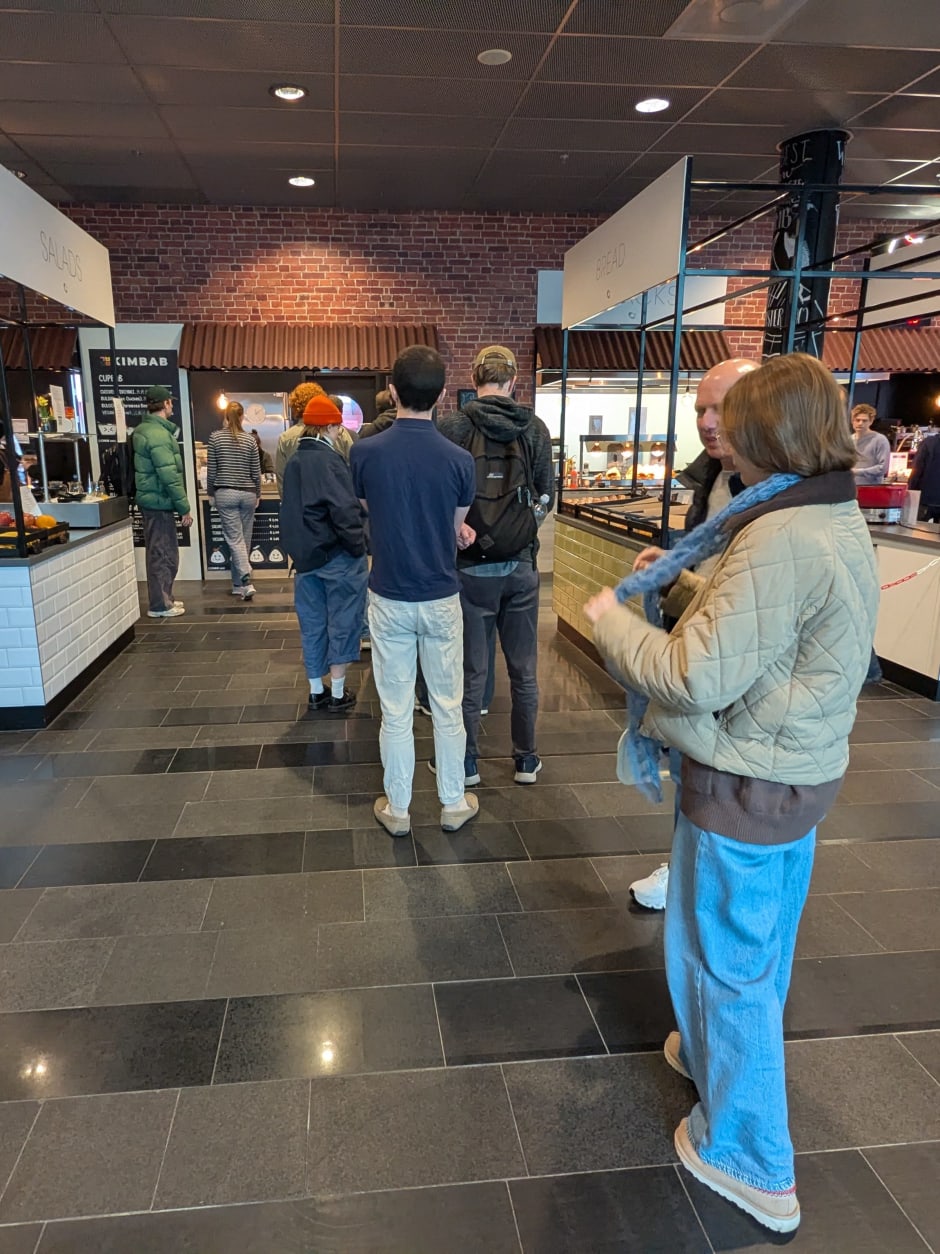
That is not the case for Anna Rzepiela, who works at a biotech start-up at the Science Park. She visits the South Korean food stall Kimbab in the canteen of the Science Park’s main building almost every day. Kim Julie, who is Korean, sells rice dishes with vegetables, chicken, beef, or other options including vegetarian dumplings.
Kimbab does not offer the cheapest meals in the canteen, even though price was one of the criteria used to assess businesses. Nevertheless, Rzepiela is happy to pay a little extra. “The food is really good and freshly prepared. I can imagine students complaining about the prices. But people like coming here: Kimbab is the most popular food stall in the canteen. There’s always a queue. That is something that gets lost in the tender process.”
Assessment criteria
Last year, all catering businesses at the UvA had to compete to retain their places through a tender process. That tender followed on from the new management model, which the UvA introduced at the start of this year, under which catering is no longer managed by Cirfood but by the UvA itself. Businesses from outside the university were also allowed to submit proposals. These were assessed using a points system based on a set of criteria established in advance. There were 25 criteria in total, divided into four themes: concept (including pricing, appearance and marketing), collaboration, sustainability and inclusivity, and community and programming.
Sustainability carried particular weight, with no fewer than five criteria, including the range of vegetarian options, reducing CO₂ emissions and encouraging customers to make healthy choices. According to the UvA, the new catering offer has become “more affordable, healthier and more sustainable”. As well as providing food and drink, businesses will also organise workshops, tastings and pilot projects on campus.
Latte art
Business owners who were not awarded a place in the tender process still have questions about how it was conducted. Türk says: “The feedback we received was that we didn’t offer a vegetarian option. But we do. We also buy our potatoes directly from the farmer. If there’s any food left over, I take it to the refugee shelter. We throw nothing away. If there are things we need to do differently, tell us, and we can do something about it.”
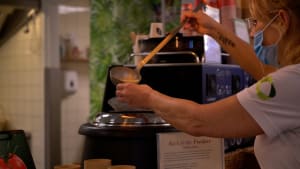
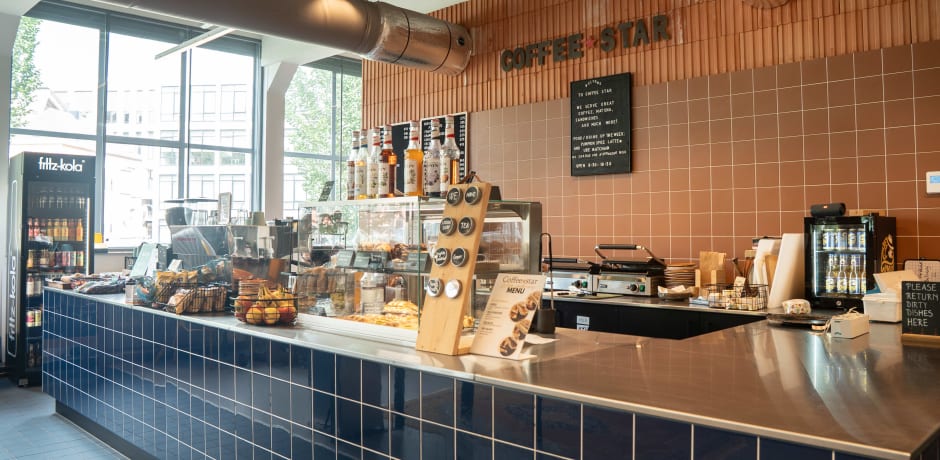
Jan Willem Keus, owner of Coffee Star, also does not know where he lost points in the tender process. He spent evening after evening working on his proposal, writing ten pages about sustainability, marketing, pricing and tastings. Keus says: “My coffee is Fairtrade and organic. I had planned a latte art workshop for 15 people on the last Thursday of every month. I would have taught people for free how to pour a swan or a heart into a cappuccino.”
But it was not enough. Coffee Star came fourth. The Amsterdam-based coffee company Wakuli, whose name means “coffee farmer” in Swahili, will move into the J/K building, where university executives are due to relocate from the Maagdenhuis during 2027. Wakuli buys its beans directly from farmers.
(Text continues below the image.)
Feedback
According to the UvA spokesperson, there was an opportunity to provide feedback. The tender process took place in two rounds. “The high-traffic locations were awarded first. After the provisional awards were announced, all bidders were given the opportunity to ask Facility Services questions about how their proposals had been assessed and to request feedback on their submissions. They could also challenge the outcome. Once this period had ended, the awards were made final. Businesses were then also given the opportunity to bid for a mid-traffic location.”
The UvA says it will not reverse the decisions made during the tender process. In response to questions from staff member Rzepiela about why building users had not been asked for input on the catering offer, Facility Services wrote: “The selection process took place at the outset. We conducted surveys and customer satisfaction studies. We incorporated the results into the tender specifications, which give us insight into the needs of each campus.”
Building relationships
According to Türk of Anatolia’s Foodtruck, the business is about more than “just selling food”. “Over the past four years, we’ve also built a relationship with UvA students and staff, as well as people from the neighbourhood.” At the end of September, he launched a petition, which he presented to the UvA’s executive board, in an attempt to keep his place at the university. The petition received almost 600 signatures.
Keus also emphasises the importance of these relationships. “Over the past three years, we’ve really built something: a welcoming place with regular customers, for whom we also regularly provide breakfast, lunch and drinks receptions. The UvA knows exactly where it wants to go, but I wonder whether it fully understands what it is leaving behind. We feel very much pushed aside by the UvA.”
Julie Kim agrees. “The whole process feels rushed. Everything that has been built up on site is being abandoned. You can’t simply replace customers’ trust in the same way you replace caterers.” According to Kim, students and staff are barely aware that a change is taking place. “That contributes to the lack of clarity and transparency surrounding the process.”
A hard exit
What frustrates Keus most is the “hard exit”. “Nothing has been planned for what happens next. Who will take over the staff? What are we supposed to do with the espresso machine?”
The uncertainty about the future is also affecting other catering staff at the UvA and the Amsterdam University of Applied Sciences (HvA). According to the educational institutions, Cirfood is responsible for finding new positions for the staff when its contract expires on 1 January 2027. Cirfood, however, believes the new catering businesses should take on the staff. The catering company therefore went to court in early October. It is not yet known when that court case will take place.