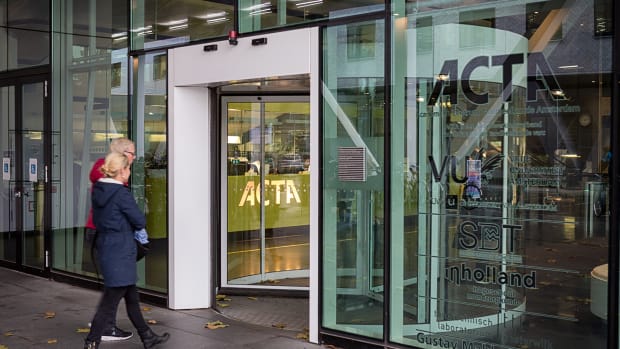
No additional places for dental students at ACTA: “The Netherlands as a whole will pay the price”
Despite the shortage of dentists, no additional training places for dentists are being created. This poses particular problems for provinces such as Zeeland, which are furthest away from the dental training programmes in Amsterdam, Groningen and Nijmegen. “An Acta in Middelburg would be a solution.”
The shortage of dentists in the Netherlands is growing. As the population ages, more and more dentists are retiring, while dental care is becoming increasingly complex. For years, the Advisory Committee on Medical Manpower Planning (Capaciteitsorgaan), an independent organisation that, among other things, calculates how many dentists will be needed in the future, has therefore recommended training more dentists. The organisation believes that the number of training places should increase from 270 to 386 in the 2027–2028 academic year.
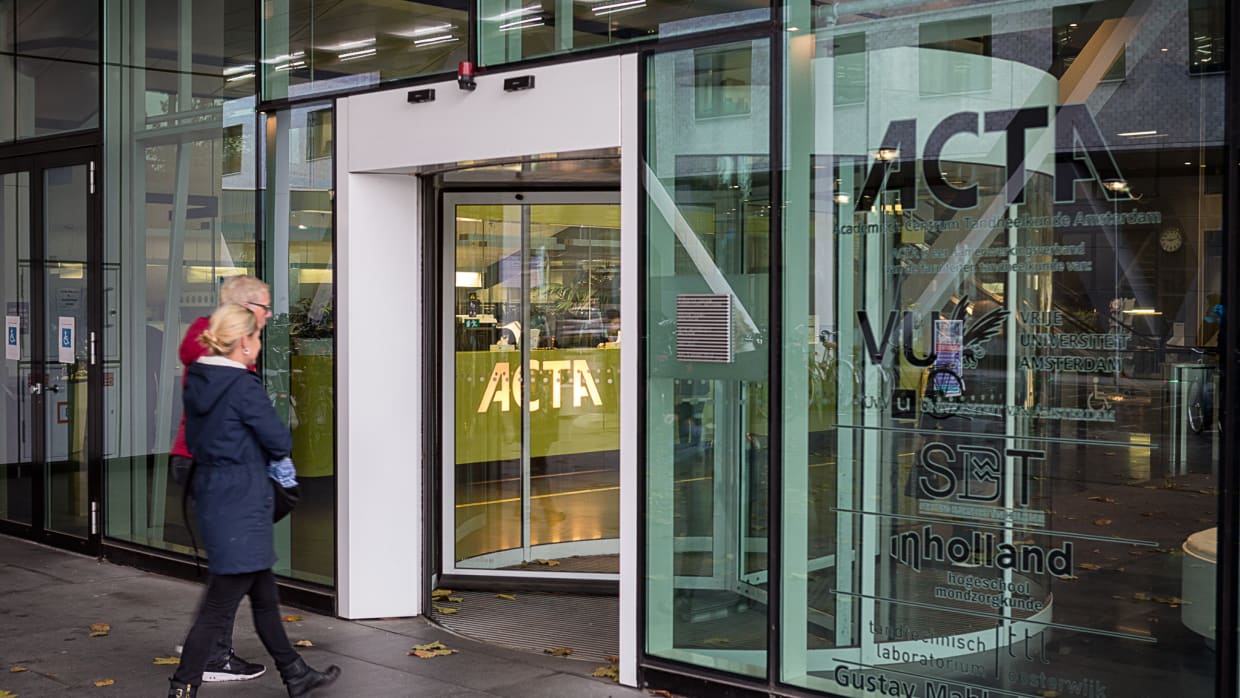
Last week, Education Minister Rianne Letschert rejected that recommendation, according to a letter to parliament. The plan would simply cost too much money, the minister said. The KNMT, the professional association representing dentists in the Netherlands, responded with disappointment. Etienne Verheijck, Director of Education at ACTA, the Academic Centre for Dentistry Amsterdam, also called the decision “a shame”.
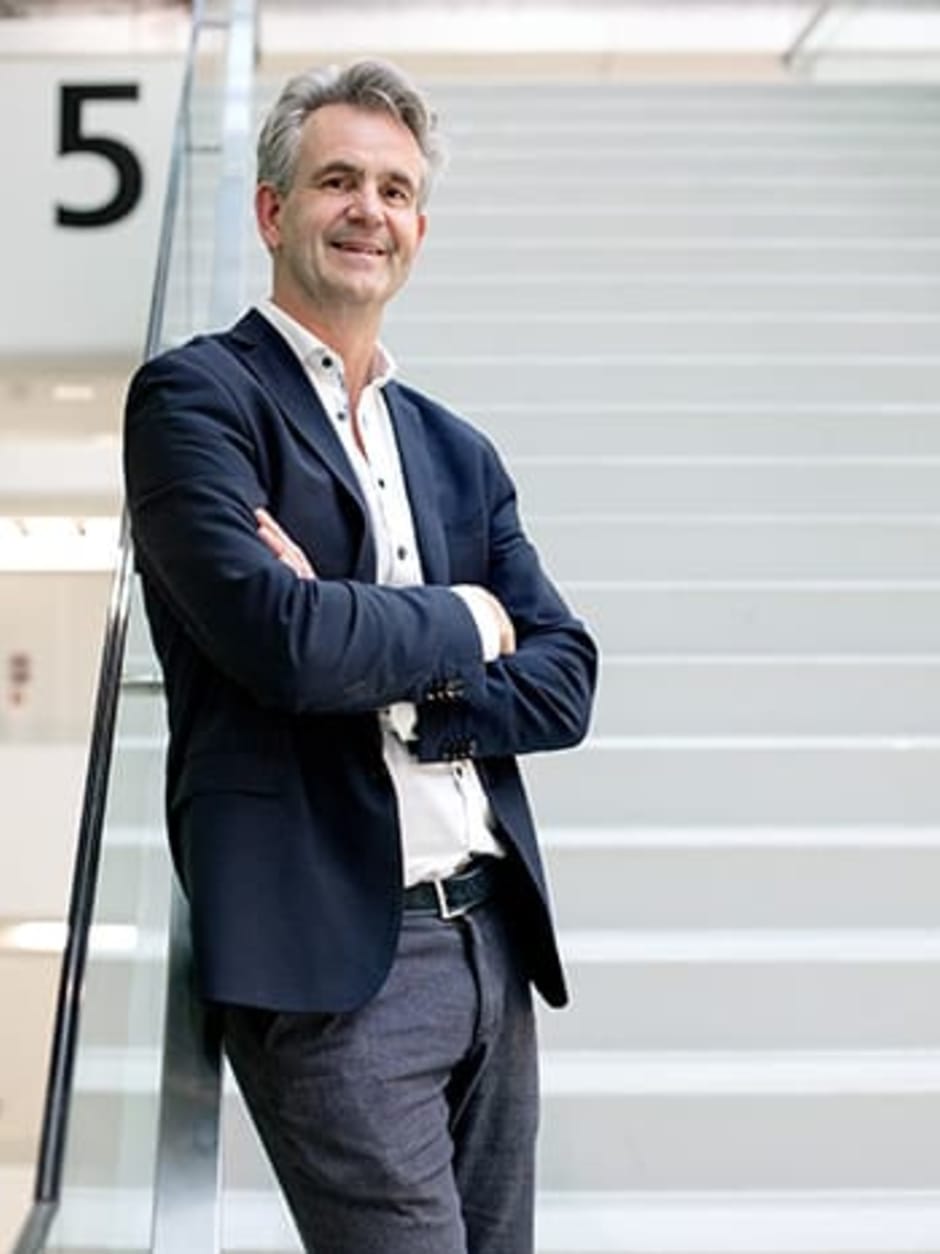
Verheijck says: “We do have the capacity to train more dentists. At this rate, we will face a massive shortage of dentists in ten years’ time. The Netherlands as a whole will pay
the price.”
According to Verheijck, the minister’s response fits a broader pattern. Previously, the government proposed shortening dental training from six years to five in order to create additional places. The plan attracted considerable criticism because it was feared that it would “further marginalise dental care”. Ultimately, the plan was abandoned, and last year 31 additional training places were made available nationwide. Verheijck says: “We were very pleased with that, but it was the bare minimum. We could use around a hundred additional training places.”
More dental hygienists
The letter also states that 28 additional places will be made available for dental hygiene programmes in the 2027–2028 academic year. This could help alleviate the shortage of dentists, at least in part, Verheijck says. “I’m pleased that additional places have been made available, but a more comprehensive approach to the shortage of dentists is essential.”
ACTA is already working to redistribute responsibilities within dental care. Verheijck explains: “Dental hygienists will become central to preventive care. This development is already underway, while dentists take care of more complex dental treatments. Good interprofessional collaboration is essential in this respect, and we are currently working closely with Inholland University of Applied Sciences’ oral healthcare programme.”
The government also appeared to be moving in this direction, introducing a pilot scheme to redistribute tasks within dental care and give dental hygienists greater responsibilities. However, the initiative was terminated prematurely. Verheijck says: “As a dental school, we think that was an unwise decision. At ACTA, we are nevertheless trying to take responsibility by redistributing tasks and helping to tackle the shortage of dentists.”
The government appears to be seeking to fill the gap by bringing in more dentists from abroad. Over the past five years, the number of dentists trained outside the European Union who are based in the Netherlands has doubled, according to ACTA figures. To be allowed to practise in the Netherlands, these dentists must have their skills and knowledge assessed by ACTA and learn Dutch. Verheijck says: “This helps to offset the shortage of dentists to some extent, although it is not enough.”
An ACTA branch in Middelburg
The shortage of dentists is not the only concern; their geographical distribution is also a problem. Dentists often continue to live and work near the city where they graduated. Since dental schools are located in Amsterdam, Groningen and Nijmegen, provinces such as Zeeland and North Brabant are already facing a shortage of dentists. The idea of establishing a dental school in Rotterdam has therefore been raised on several occasions. Incidentally, Acta had previously had branches in Almere, Hoorn and The Hague, but these proved not to be viable.
Verheijck has a different solution in mind. “Driving from Zeeland to Rotterdam takes almost as long as driving to Amsterdam, so I’m not convinced that would work.” A dental school in Zeeland, however, could be a viable option, he believes. Last week, Zeeland’s King’s Commissioner, Hugo de Jonge, also advocated the idea in an opinion piece in Trouw.
“Think of an ACTA branch in Middelburg. A pilot scheme involving GP training in Zeeland shows that training students in the regions can indeed work.” The idea would not be to establish an independent dental school, but rather a satellite campus where students could gain practical experience during the later stages of their studies. Verheijck expects that setting this up would require considerable organisation.“Encouraging people to settle in the region requires additional measures, such as financial support for housing and childcare. Many of our students get married during their studies, so we would also want to make it possible for their partners to move with them.”
Such an initiative would require substantial funding from the Ministry of Health, Welfare and Sport. Verheijck says: “As a school, we cannot afford to send students to Zeeland for an extended period without additional funding. But if the money becomes available, we would be very keen to take responsibility for training dentists in Zeeland as well.”