‘We want it all’: UvA student Jesse joins a protest in Paris

Who’s more likely to take to the barricades than the French? Perhaps UvA student Jesse van Schaik, who took the FlixBus to Saint-Denis last weekend to join the large demonstrations calling for improvements in education. Van Schaik thus found herself in the midst of the occupation of a French university building.
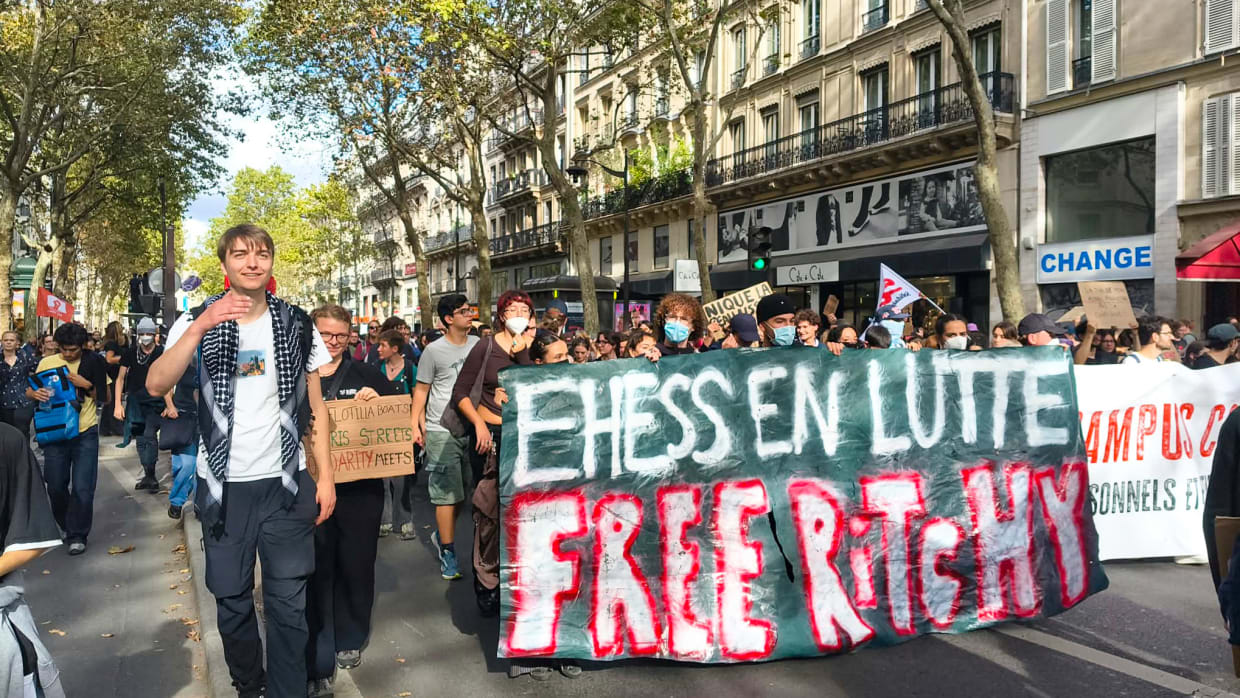
There has been unrest in France for weeks. School pupils, university students and teachers have been taking to the streets in ever-larger demonstrations to demand improvements to the education system. History student Jesse van Schaik, a seasoned activist who, amongst other things, took part in the flotilla to Gaza, has been keeping a close eye on the growing protests recently. This weekend, she decided to join the protests and witnessed the occupation of a Parisian university.
A crumbling system
Van Schaik arrived in Saint-Denis, a suburb of Paris, on Monday morning. She sees in the school pupils’ protests the same struggle she is waging in the Netherlands, she explains over the phone whilst the battle cries of hundreds of French youths can be heard in the background. ‘The school pupils are fighting against a failing system, which is now slowly crumbling. I had to be there.’
She set off not only out of solidarity, but also because she was troubled by the media coverage of the protests. ‘They only made the news when things were set alight. I suspected that this wasn’t the whole story, and wanted to see it with my own eyes.’ That’s how she came up with the idea of setting off as a reporter for the Activists’ Party. Since Monday, she has therefore been featuring in the stories on the Activists’ Party’s Instagram account, where she documents her experiences.
‘Embedded journalism’
Van Schaik describes herself as an ‘embedded journalist’, which means she reports without claiming to be neutral. In this way, she becomes part of the events she is documenting. On Monday afternoon, she immediately witnessed something remarkable. Université Paris 8, founded in the wake of the major student protests of 1968, was occupied.
The president – as the highest-ranking official at French universities is known – had closed the doors of Paris 8 a few days earlier in response to the protests. Lectures were delivered online or cancelled. According to Van Schaik, he wanted to prevent political demonstrations on campus, but the students put a stop to that. ‘Three anarchists gave a speech, broke open the gates and declared the building occupied’.
That night, Van Schaik slept amongst around a hundred French students, who had transformed the foyer of the university building into a dormitory using inflatable mattresses and hammocks. According to Van Schaik, they left the university building intact, but did decorate the walls with all manner of slogans. A recurring phrase was ‘on veut tout’, ‘we want everything’.
You can learn to protest
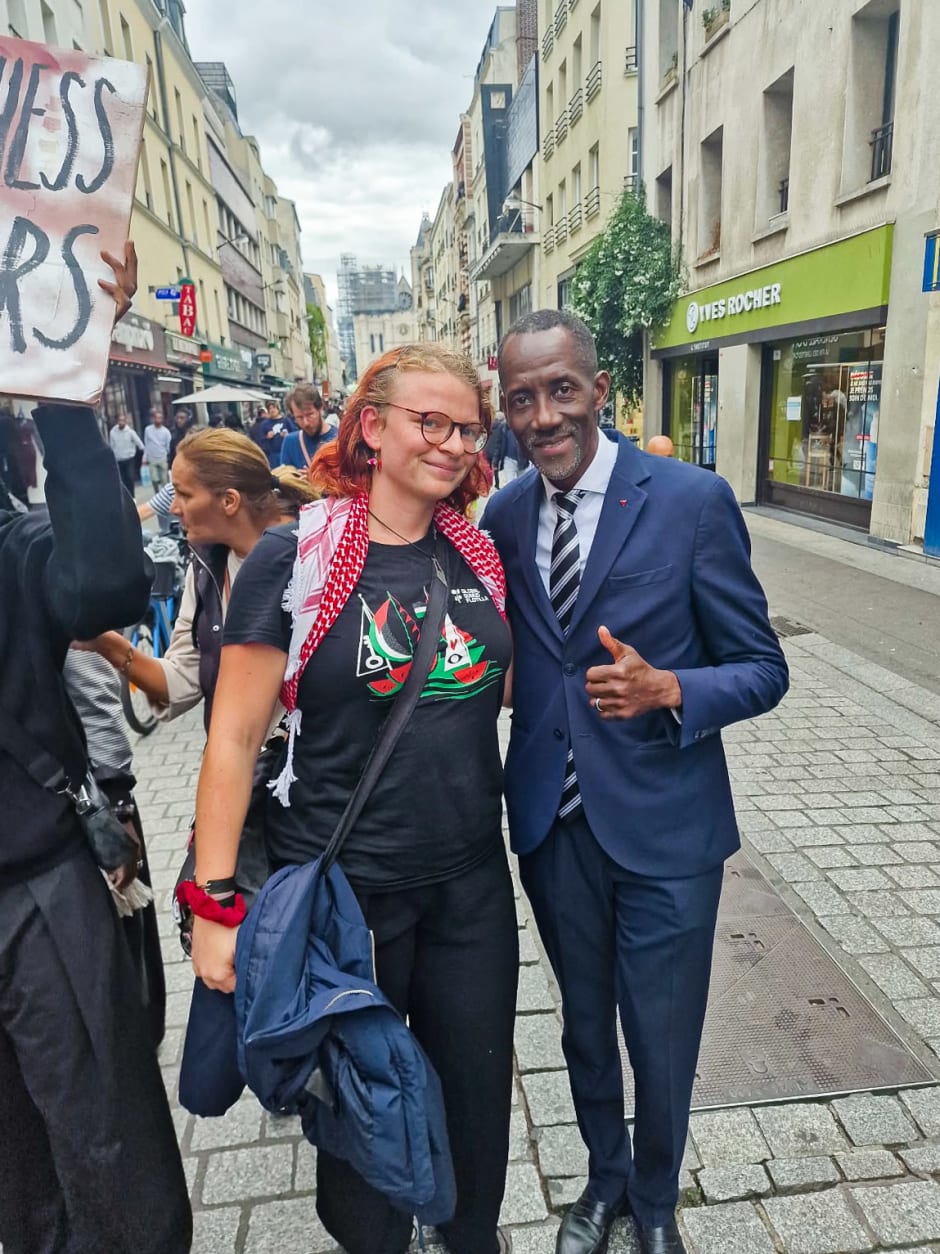
According to Van Schaik, what the students meant by ‘everything’ was actually quite modest. The main aim of the occupation was to secure a safe haven for the protesting secondary school pupils. There, they would not only be able to gather undisturbed, but also learn how to protest from the older students. ‘The students have more experience and want to pass that on to the younger generation,’ says Van Schaik. ‘Lecturers support the students here, and the students, in turn, support the school pupils.’
Cultural difference
Such solidarity also exists in the Netherlands, but according to Van Schaik, it is more widespread in France. Whilst walking alongside a march of school pupils heading towards the occupied university, she hears cars honking their horns around her, for example. She believes they are expressing their support in this way. ‘In the Netherlands, they’d just drive into you,’ she remarks cynically.
She also notes that, in terms of numbers, the French demonstrations are larger than those in the Netherlands. Two years ago, she herself took part in the occupation of the Academische Club next to the Oudemanhuispoort, which, she says, involved far fewer students. She estimates that in Paris, well over two hundred students – supported, incidentally, by a number of lecturers – took part in the occupation. ‘That’s far more than in Amsterdam, and it says something about the French people’s willingness to protest. It’s more ingrained in the culture here’.
Lessons from Saint-Denis
Van Schaik is particularly impressed by how the French students managed to overcome their differences. During the occupation of Paris 8, for example, there were tensions between communists and anarchists (the latter felt, for instance, that the former were too keen on holding meetings), but they were able to set these aside thanks to their shared interests and ultimate goal. ‘At the start, there may have been chaos and mutual irritation, but the end result was a success. The university is still occupied’.
And did she sleep better at Paris 8 or the Academic Club? ‘In Paris, we weren’t kicked out at four in the morning. Still, both places were nice to stay in.’