Is this the new way to party? Even at ADE, you can’t ignore ecstatic dance any longer

Is it possible to get through ADE without alcohol or drugs? At the increasingly popular ecstatic dance parties, you dance barefoot, without any intoxicants and without speaking. Is this trend catching on amongst UvA students too? “You really do feel a kind of ecstasy.”

Dancing sober, not exchanging a single word and no shoes on the dance floor. To the outsider, the phenomenon of ecstatic dance may seem like a fever dream, but for those right in the thick of it, it is “very pure”. In Amsterdam, the various ecstatic dance parties are attracting more and more people. Even at the Amsterdam Dance Event (ADE), where alcohol and drugs have long dominated, you can no longer ignore ecstatic dance.
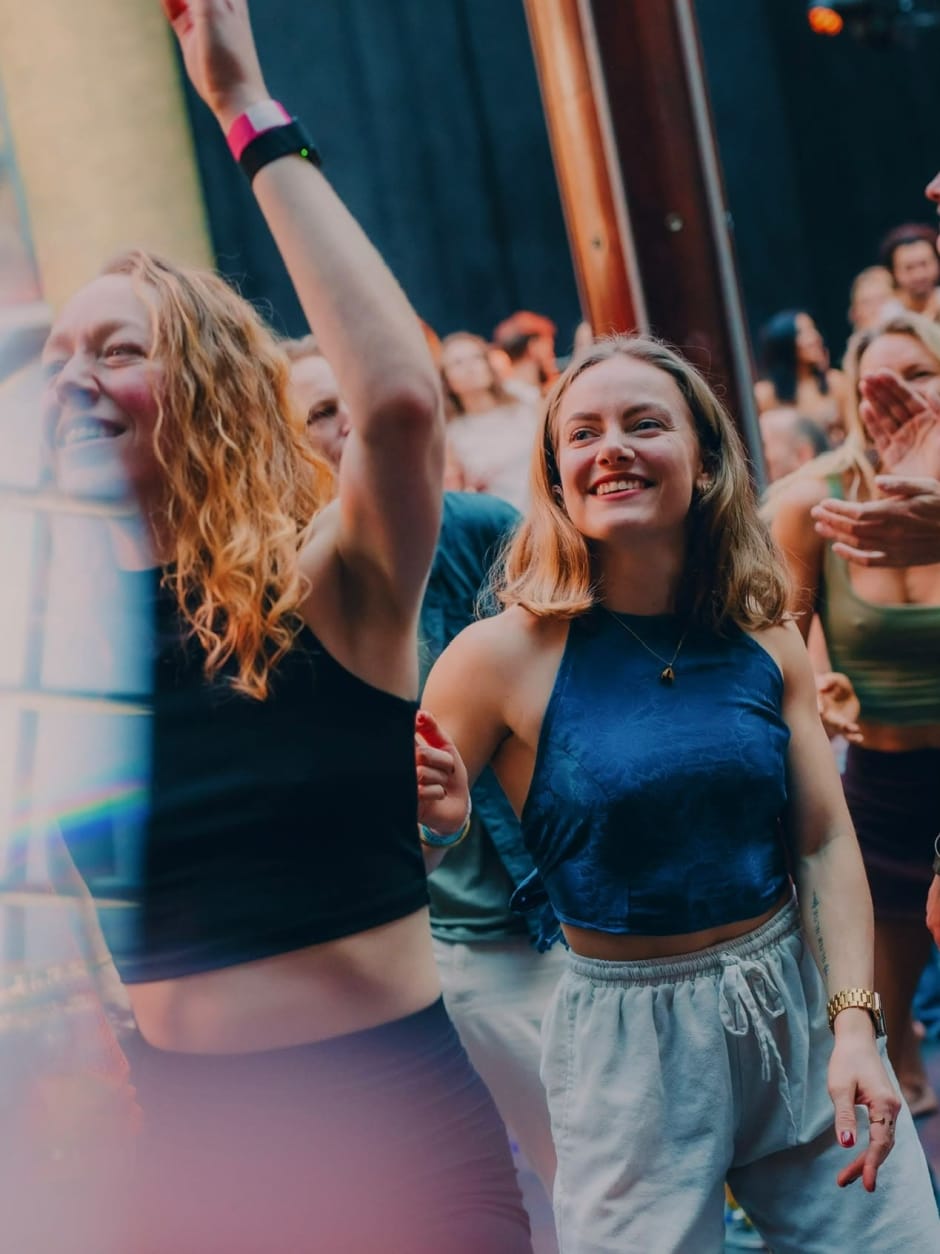
Ecstatic dance is all about being “your authentic self”, explains Carolien Wolsink, one of the founders of the ecstatic ravea variant where the music has a higher BPM and a faster rhythm, as at a rave. Ambrosia is an example of this. Ambrosia. “There’s much more focus on the dance and the energy you release whilst dancing,” says UvA student Mathilde van der Houwen (25, Brain and Cognitive Studies) about her experiences with ecstatic dance.
Embracing their way of dancing
Fourteen years ago, the first ecstatic dance party made its debut in Amsterdam. What began as a way to fill the empty club nights at Club Light has grown into Ecstatic Dance Amsterdam (EDA). And they are no longer alone: at Odessa you can dance on a boat four days a week and at Ambrosia you can “rave” in the early hours of the morning with a cup of tea. Ambrosia started 2.5 years ago with, approximately, 200 people on a single evening and now organises parties that attract over than 1,200 people.
EDA used to be the only one, but since the pandemic, the popularity of ecstatic dance – and with it the number of venues where it is organised – has grown enormously. This is according to EDA’s owner, Dide van der Veen. “Our way of dancing has been so widely embraced that you can now dance like this all over the Netherlands.”
A different kind of night out
The various events take place during the day or in the early evening, but one thing is certain: unlike traditional nightlife venues, you’ll be in bed early. The clubs where the party goes on until the small hours are seeing their numbers dwindle, as Folia previously reported. “Going out is so centred on alcohol; I don’t enjoy that anymore. Everyone ends up feeling much further removed from who they really are,” says Van der Houwen. With ecstatic dance, she believes, it’s different: it’s about moving intuitively and dancing together with the people around you. “I sometimes miss that sense of connection in society. I mean, we’re all here together, aren’t we? Yet I don’t really experience it that way in everyday life.”
Here’s where you can go ecstatic dancing/raving in Amsterdam during ADE this week:
- Ambrosia is running a stage at Into the Woods and is also hosting its own party on Saturday 24 October from 11.30 to 15.30 at Beest Boulders Amsterdam.
- Ecstatic Dance Amsterdam (EDA) is hosting an ADE special on Wednesday 21 October from 7.30 pm to 10.30 pm at the Volkshotel.
- Odessa isn’t organising any special events around ADE, but its weekly nights from Thursday to Sunday will continue as usual.
Wolsink recognises this too. “We’ve really focused our marketing on the fact that you can come by yourself. We saw people’s need to meet up, connect and really get back to that offline connection.”
Van der Veen observes that the declining demand for alcohol is linked to the growing popularity of dance parties, where everyone stays sober: “Many people no longer find alcohol and drugs all that interesting. They realise it takes a lot of energy and that it takes days to recover.”
Overcoming the hurdle
To let go completely, without alcohol or drugs, Van der Houwen had to overcome a hurdle. “The first time, I found it really uncomfortable. It’s hard to really let yourself go. But as I went more often, I was able to let go of the belief that I couldn’t dance.” She hopes to see even more students in the future; at the moment, she’s one of the few in her circle. “I think people find it scary because there’s something very pure about it and you’re not doing anything whilst numbed by other substances.”
With the rise of ecstatic dance and ecstatic raves, Van der Veen actually did notice that more and more young people are finding their way to these events. Folia asked a number of UvA students what they think of the idea of partying sober and whether they might have already heard of ecstatic dance.
No talking
Besides the ban on alcohol and drugs, one of the most important rules is that you mustn’t talk to one another. At least not until the dance – which often lasts around two hours – is over. “That might sound strange to people who don’t go there, but it really adds something,” says Van der Houwen. “You can really feel the energy of the people around you and dance in unison. There’s a strong sense of harmony with everyone there. I’ve never experienced the intensity of the dance and the connection quite like I have at an event such as Ambrosia. You really feel a kind of ecstasy through the dancing.”
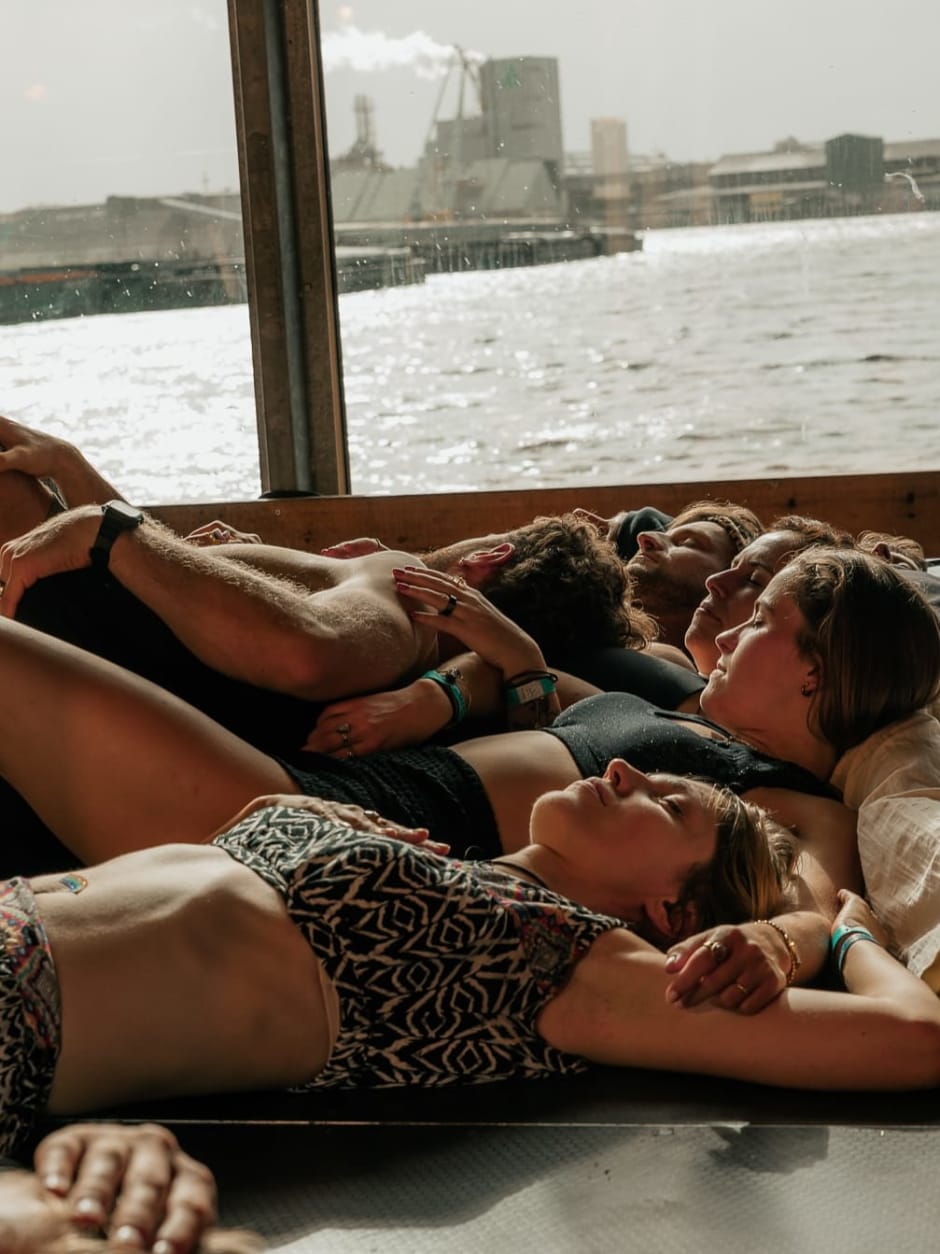
“You’re free to come and go as you please,’ says Wolsink, describing what a party at Ambrosia is like. Yet the vast majority of dancers are there right from the start. After the opening, the dancers are taken on what is sometimes called a “journey”. “There’s a clear build-up and wind-down,” explains Van der Houwen. “That’s really necessary. It helps you make sense of your emotions and experiences.” When the music and dancing end, the silence is broken and people are allowed to talk again.
Outlet
So, dancing can help you connect more with others, but according to Wolsink, it’s also about your relationship with yourself. “At some parties, it’s about an inner journey; at Ambrosia, there’s a strong emphasis on ecstasy. For me, it’s an outlet. On the dance floor, I really think: fuck it all.”
According to Wolsink, that’s also the difference compared to the nightlife we’ve known for years. Back then, she was more concerned with her outfit, how she danced and what she was doing. “A different atmosphere is created,” she explains. “Everyone who comes to Ambrosia is there with the feeling that you can do whatever you fancy and we’re just going to let our hair down.” There are also spaceholders on hand to ensure the atmosphere is just right and everyone feels comfortable, Wolsink explains. They get the crowd going with an “energy explosion” but are also there to give hugs to anyone who needs them.
Wolsink: “The goal is for it to be so fucking fun that you don’t even think about taking a line, walking to the bar or checking your phone.”