UvA alumnus develops app that checks if you will arrive at your lecture dry

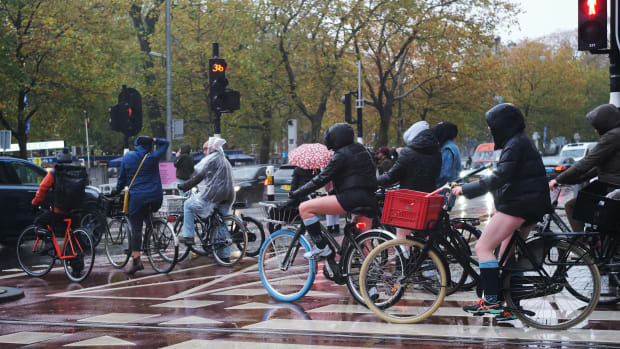
Now that autumn is well and truly underway, students who want to avoid arriving at lectures drenched need to plan their bike rides around the rain showers. To help them do just that, UvA alumnus Jesse Verbeek developed the app Droog Over.
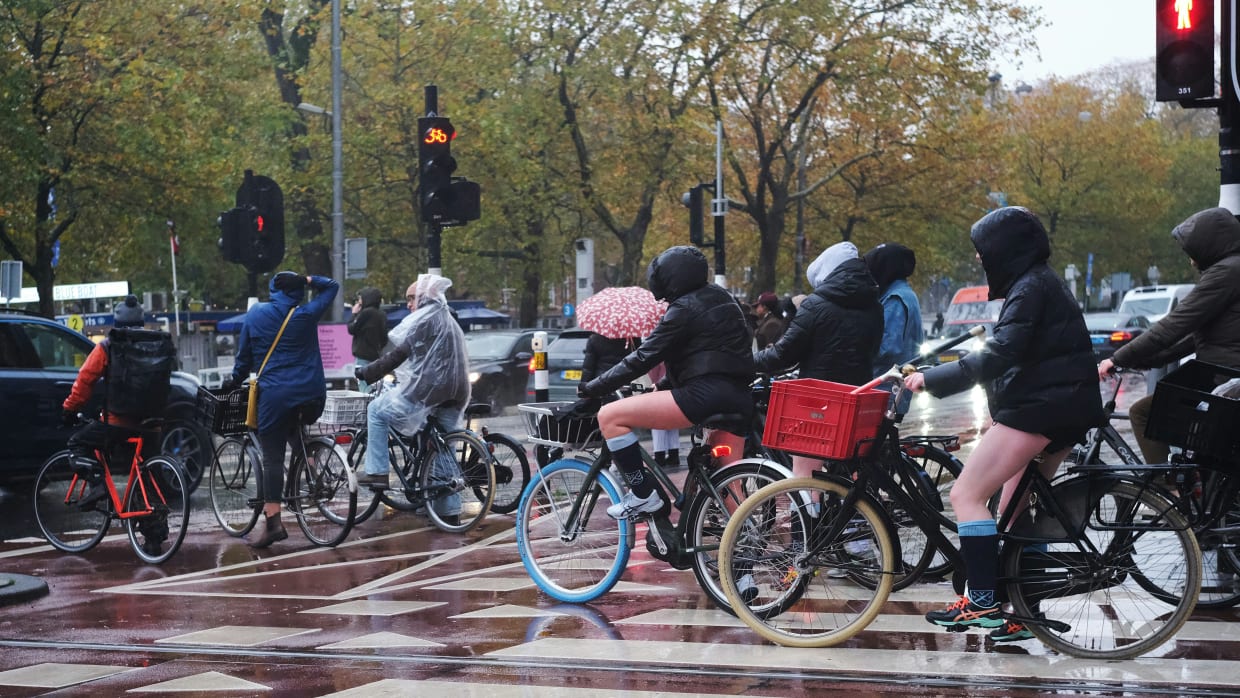
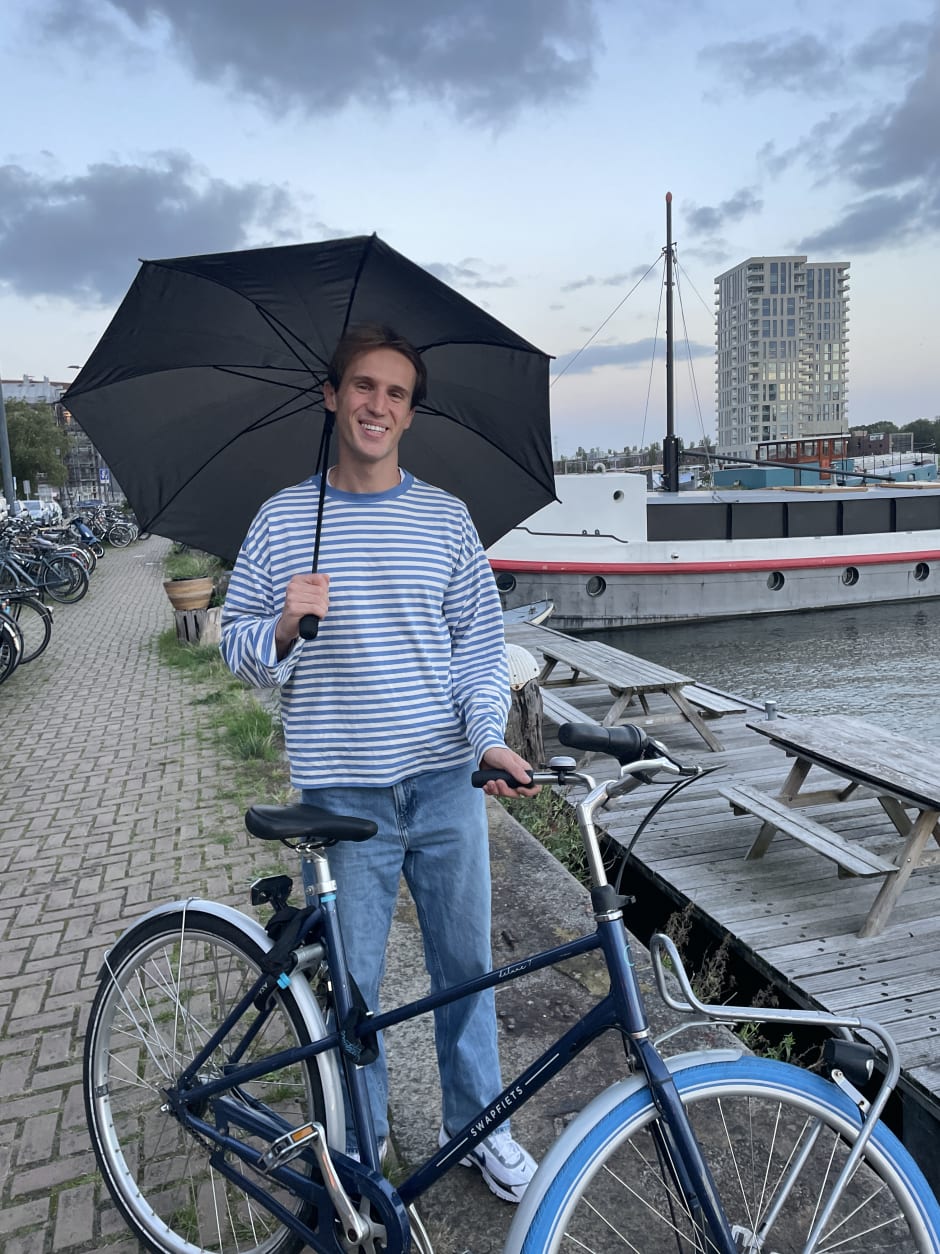
UvA alumnus Jesse Verbeek (26) developed the app Droog Over in his spare time. As the name suggests, the app checks whether cyclists can get from A to B without getting wet. Users enter their starting point and destination, specify their departure time and cycling speed, and the app then calculates whether they can expect to encounter any rain along the way.
Is this app the result of all the frustration you felt during your student days when you once again arrived at a lecture drenched?
“When I was studying at the UvA, I always had to cycle half an hour to get to lectures, so the app would certainly have come in handy back then. The idea actually came to me later, though, when my girlfriend came home from work at Schiphol drenched one day. I asked her whether she hadn’t checked Buienradar, but when she explained that she could cover six or seven kilometres in just fifteen minutes on her electric bike, I realised that apps like Buienradar and Buienalarm obviously don’t take that into account. So I decided to have a go at building something myself, and the app went live at the end of July.”
How exactly does the app work?
“I get the weather data from the KNMI, the Dutch national meteorological institute. It publishes highly accurate forecasts of how much rain will fall at specific locations. I then combine that data with the coordinates of a particular route. With a few calculations and an estimate of how fast you cycle, you can work out how much rain you’ll encounter along the way.”
Can you really predict exactly where and when a rain shower will hit with that level of accuracy?
“There are always factors that make things more complicated. For example, the KNMI doesn’t measure drizzle. So it’s not entirely black and white, or 100 per cent accurate, but you can calculate it mathematically to get a reasonable estimate. The app has also been tested quite extensively. So far, I’ve received negative feedback only once, despite it having been downloaded by more than 16,000 people.”
“That said, the app is more accurate over slightly longer distances. It’s less suited to a quick walk to the supermarket 500 metres away. It’s ideal for medium-length journeys in particular.”
So students who have a half-hour journey to university are your ideal target audience?
“Yes, the app is particularly useful for people who make the same 20- to 40-minute journey several times a week to get to work or university. They can set up an alert linked to a regular route at a specific time. So, if you have a lecture every Monday at nine, for example, you’ll automatically receive a notification whenever rain is forecast along your route at that time. That way, you know you’ll need to leave half an hour earlier or bring a raincoat.”
Were you already interested in programming and developing apps when you were a student?
“Yes, I started building websites and web applications during my master’s degree. I’m a programmer by trade and have always worked on little projects like this, but with this app, it was the first time I felt I’d really hit on something. It still feels like a hobby project to me, but it’s gradually becoming something more serious.”
The app is free to use and contains no adverts. Do you eventually want to make money from it, or should it remain a hobby project?
“I sometimes think about launching a premium version for one or two euros a month, which you could link to your walking or running app, because I’d like to break even. I want to put off introducing adverts for as long as possible, until it becomes absolutely necessary because otherwise I’d be losing too much money.”
“I don’t know whether I could actually make serious money from this anyway. For now, it’s easy enough to combine with my job, and I simply enjoy doing it. That’s enough for me.”