Allard Pierson returns illegally excavated vase to Sicily

A vase that has been part of the Allard Pierson’s collection for years turns out to have been illegally excavated and exported. In the presence of a large Italian delegation, the archaeological artefact was therefore officially returned to the Sicilian authorities this afternoon.
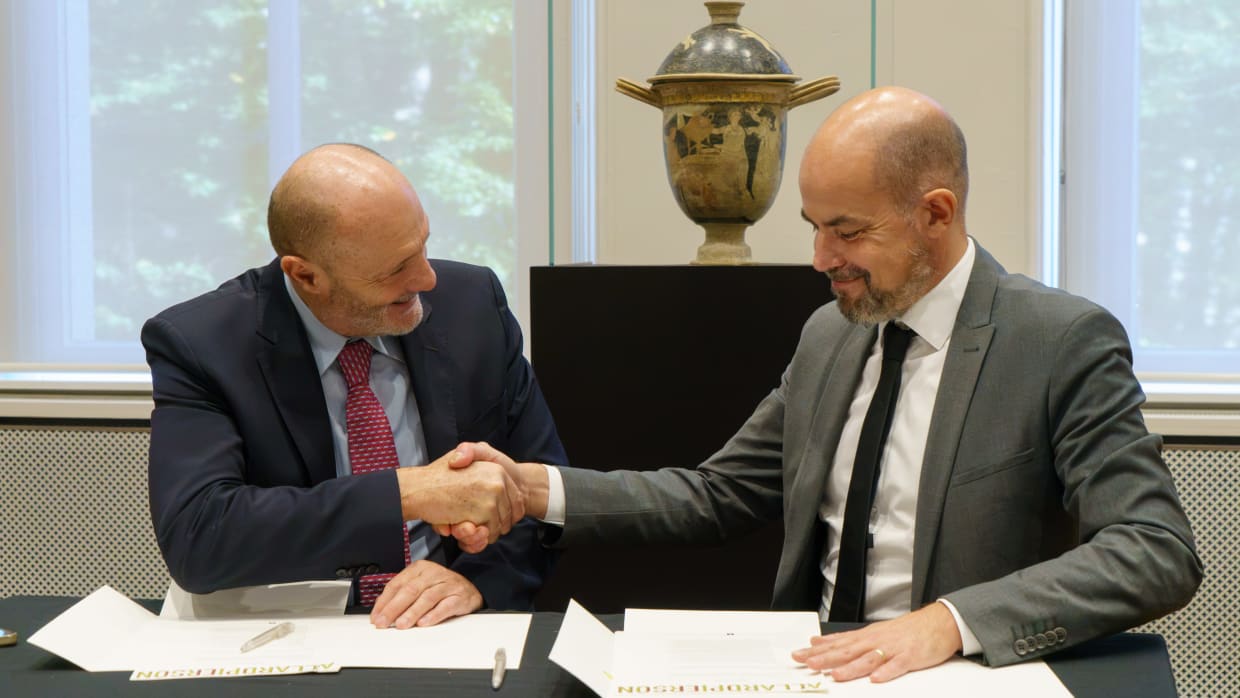
On Wednesday afternoon, an official handover ceremony took place at the Allard Pierson. The subject of this restitution was the Centuripe Pyxis, a ceramic vase made in the third century BC in the Sicilian town of Centuripe. The vase came into the possession of the Allard Pierson in 1997, but twenty years later, the Sicilian authorities raised the alarm after photographic evidence showed that the vase had been illegally excavated and exported.
UNESCO Convention
Here is how it happened: while preparing a local photography exhibition, negatives from 1976 were discovered, in which the Centuripe Pyxis was identified. As the photographs showed that the vase was still on Sicilian soil after 1970, this would constitute a breach of the 1970 UNESCO Convention. The convention stipulates that archaeological finds that have been acquired illegally or through untraceable means must have been acquired before 1970.
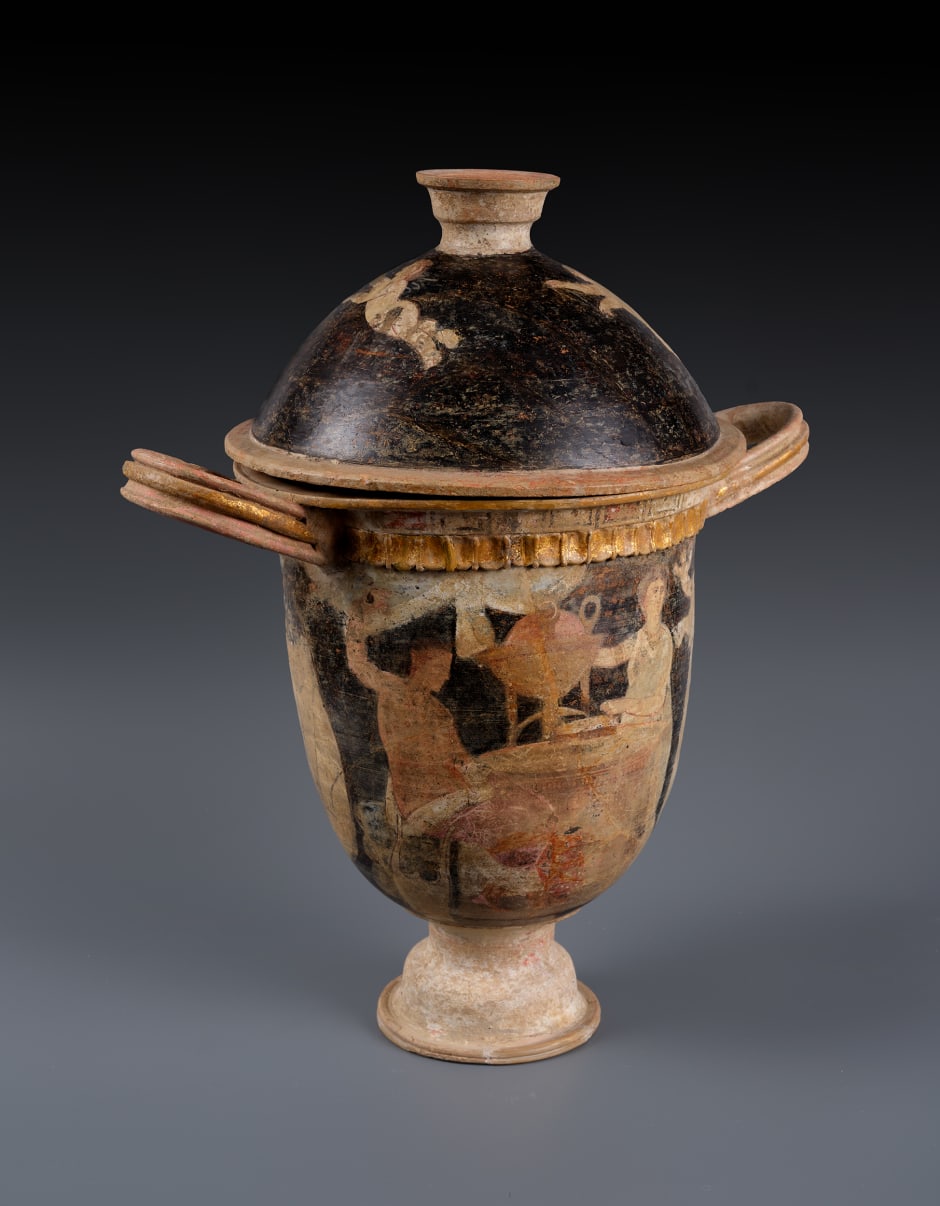
According to Herbert Cahn, the antiques dealer who sold the vase to the Allard Pierson at the time, the piece was part of an old collection owned by his family. The museum accepted his verbal statement, convinced that the object had therefore left Sicily before 1970. When this turned out not to be the case, the process of returning the Centuripe Pyxis to its country of origin was set in motion.
Italian delegation
The handover of the vase to the Sicilian authorities was not short on ceremony, with a sizeable Italian delegation in attendance: the Italian ambassador, the director-general of the Department of Cultural Heritage of the Sicilian regional government, and even the carabinieri’s art police were present.
The Italian delegation particularly praised the Allard Pierson’s willingness to return the vase. Legally speaking, the museum is not obliged to restitute the vase, as the 1970 UNESCO Convention was not ratified by the Netherlands until 2009.
Nevertheless, the Allard Pierson’s decision to voluntarily return the vase to the Sicilian authorities is in line with the institution’s policy of treating cultural heritage in an ethically responsible manner. Rogier Kalkers, head of provenance research at the Allard Pierson, said during the ceremony: “More than half of the objects in our collection were acquired after 1970, so there are problematic pieces among them as well. Even when we are not legally obliged to do so, we want to take a proactive and ethically motivated approach to our archaeological collection.”