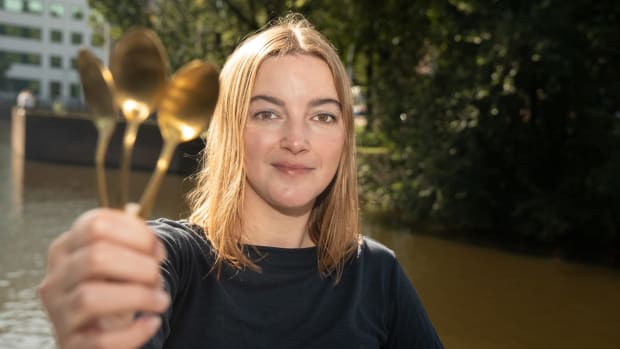
Why we need to plan not only our time but also our energy (using spoons, for example)
A lecture at a quarter past nine, a hairdresser’s appointment at ten past two, and that one essay has to be handed in at one minute to twelve. We organise our lives, but forget to consider how much energy it all takes, writes UvA behavioural scientist Emma Op den Kamp in her book “Grip op je energie” (Taking Control of Your Energy). “We often only react when it’s too late, when our energy is already depleted.”
Your book is about gaining more control over your energy. You write that, just as with time, we need a unit of measurement to express energy. You use spoons as an example. How exactly does that work?
“Everything you do costs energy to a greater or lesser extent. Time is very concrete. We can count hours and days. Our society is organised around that. That makes sense and is also simply very convenient. But why don’t we do the same with energy?”
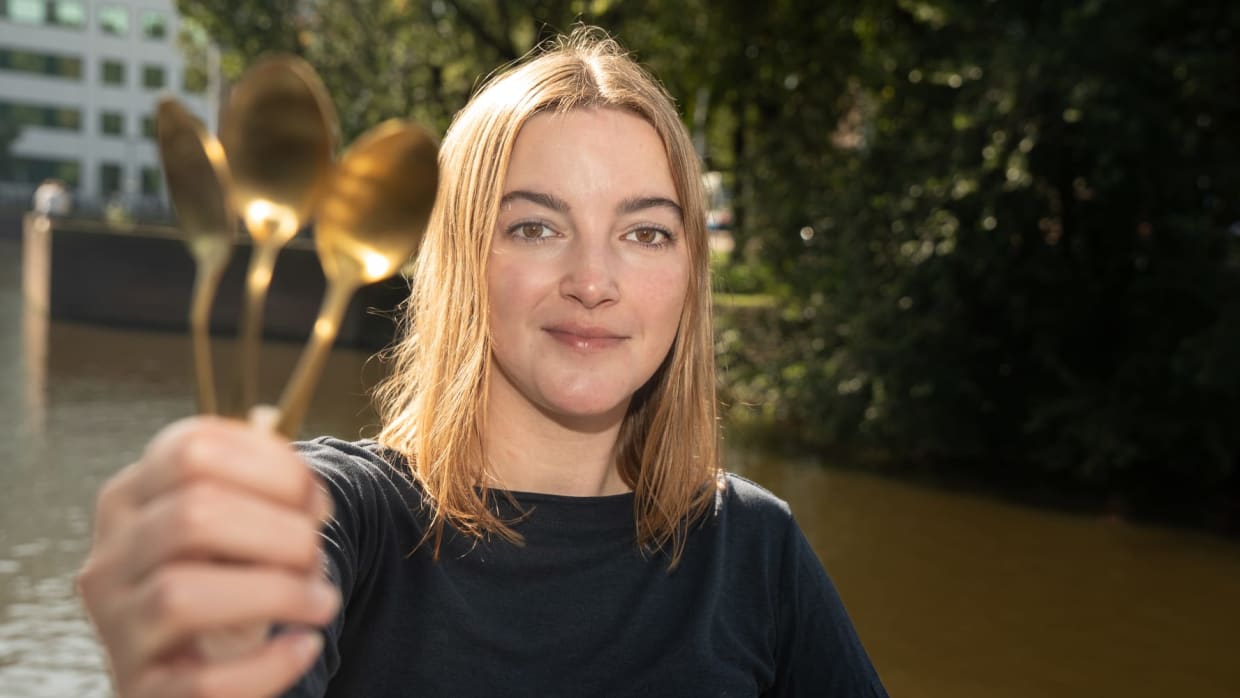
“The spoon concept was originally devised by the American writer Christine Miserandino. She was sitting in a café with a friend who asked her what it was like to live with a chronic illness. At that moment, she spotted a handful of spoons lying there and used that as a metaphor. The spoons represent the amount of energy you have in a day; they gradually diminish as the day goes. Not everyone has the same amount of spoons. I’ve been talking about spoons for years; the people around me now understand exactly what I mean when I say: “That took me a lot of time and spoons.” It’s all a bit tongue-in-cheek, of course, but it does help to make it tangible.”
“You can’t just think: I’ve got some spare spoons lying about somewhere. Imagine: you’ve only got one spoon left in the evening and you’ve got to do the washing and cook. You might then have to make choices more often and manage your energy more consciously.”
You also have a chronic illness. What has that taught you about managing your energy?
“Of course, everyone has their own struggles – one person might be deep in mourning, whilst another has a baby who never sleeps. Because of my illness, I have a lower energy level than the average healthy person. I was directly confronted with that.”
“I was quite ill, so I had to do something. That happened in part consciously and in part unconsciously. I tried to notice what was happening each time. Had I simply had a short night’s sleep, or was I irritated by something else? What was causing this? Could I do anything about it? I was constantly observing what I was doing, how it affected me and what helped. I’ve always been interested in why things sometimes work out and sometimes don’t. That’s why I choose to study psychology.”
What are the consequences of not managing energy properly?
“In practice, but also in research, we see that we only start thinking about energy once it’s actually run out. Sometimes it’s only discussed once someone has suffered a burnout. We focus on recovery after the event. But if you only realise it afterwards, you’re playing catch-up and the strain just keeps building up.”
“You’re often caught off guard afterwards. Just how tired you actually are can come as quite a shock. You find yourself thinking: “Oh God, I’m extremely tired, but I’ve still got so much to do.” If you learn to better assess in advance how much energy something costs you, it’s less likely to take you by surprise.”
How do you ensure that you do take your energy levels into account in the choices you make (in advance)?
“If you factor in the energy costs beforehand, you’ll have more options. Perhaps you can reschedule something in your diary or set aside five minutes to step outside for a moment. By the time you need to recover, you’re asking yourself to make sensible energy choices at a time when you don’t have the energy to do so. Most people simply aren’t very good at that. You can make those choices in advance from a version of yourself that isn’t quite worn out yet.”
“So you can make certain choices in your diary. But you can also take a more ad hoc approach: can I take a break somewhere, and what will I do then? Does it help to go for a walk, or do I actually need a good laugh with a colleague? The more control you gain over this, the better you can factor it in beforehand. There’s no universal hack; it’s about learning to understand yourself better.”
If your energy levels are constantly changing, how do you get to know them and plan for them?
“Some people have a slightly more consistent energy level. They have a rough idea of how much energy they have each day. On Mondays, for example, you come to life, whereas at the weekend you’re completely knackered. Do you thrive in the morning or the evening? You might recognise a pattern there.”
“Energy planning is a broad term for taking your energy levels into account in the choices you make and what you do. One person might plan their energy quite literally in a diary, whilst for another it means getting to know their own energy better.”
What do we, as a society, need to do differently?
“We need to talk about energy in more concrete terms. It needs to become more commonplace. Simply talking about it can, at the very least, go a long way towards making people feel a bit more seen and heard. It doesn’t have to be solved solely at an individual level; we’re all facing this together.”
“But even if we have some idea of what would be good for us in terms of energy, we’re still surrounded by social norms. We live in a performance-driven society. Time is money, so efficiency and productivity are important. The performance standard itself is all well and good. But in the way we strive towards those achievements, there should be more scope for how each person does that for themselves. There should be more room for individual variation in how you get there – not just in terms of time, but also in terms of energy.”
“My book isn’t intended to be yet another self-optimisation book or productivity hack book. It’s not about doing more, nor is it about doing less. It’s about being more mindful of our energy. If that leads you to want to be more productive, that’s fine, but it shouldn’t necessarily matter. Not everything is within our control. And I’m certainly not someone who always makes the perfect energy choices or is always fit.”
Emma Op den Kamp, Grip op je energie (Amsterdam, 2026). Price: € 23,99.