UvA joins a knowledge centre aimed at improving the use of AI in healthcare
The University of Amsterdam (UvA) is joining the Amsterdam Centre AI & Health (AmsCAIH), which has been revamped as of this academic year. The centre aims to ensure that AI can be applied more widely in Amsterdam’s hospitals and that treatment plans become more personalised.
Amsterdam UMC and the University of Amsterdam (UvA) are joining the Amsterdam AI & Health Centre, which aims to ensure that AI models become even more widely used in healthcare. The initiative had been in place for some time, but previously only involved the VU. With this new collaboration, the institutions aim to “pool their expertise”, according to Sara Ben Hmido. Ben Hmido is a PhD student at Amsterdam UMC and will be coordinating the new collaboration. At present, AI models are still used very selectively in healthcare, she explains. “A great deal of research has been carried out in recent years into the use of AI in healthcare, but its application is still very niche.”
An extra surgeon
AI could play a particularly important role when it comes to making decisions about patients and treatment plans, says Ben Hmido. “AI and algorithms can take far more factors into account than we humans can, and can make complex assessments based on a vast amount of data. A tool like this is built on a huge amount of patient data and essentially works as if a second or third surgeon were looking over your shoulder.” This does not involve large language models, such as ChatGPT, but specialised models designed to support decision-making. According to Ben Hmido, the use of AI could actually contribute to even better and more personalised care. “Human expertise must remain central. AI is no substitute for healthcare professionals – let’s be clear about that.”
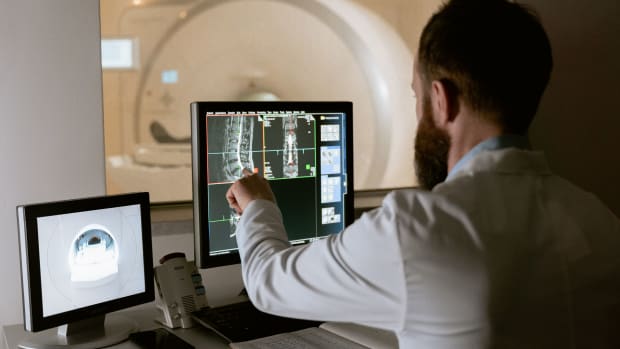
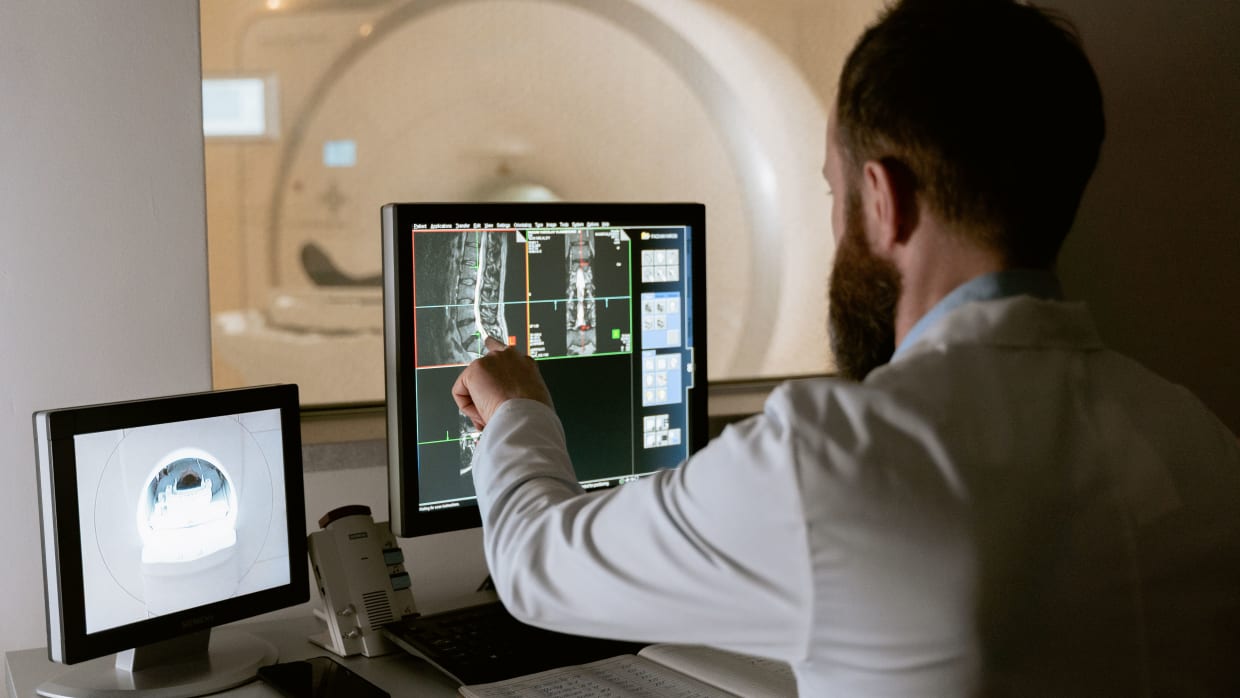
AI models are currently being used in radiology, for example, to search for abnormalities in scans and X-rays. Ben Hmido: “An AI tool like this highlights areas that need prioritising. You’re directed straight to potentially abnormal cells.” She explains that AI is not yet used across the board in healthcare. “We want to see if we can also apply the existing techniques to other forms of diagnostics.”
Risks
There are also risks associated with the use of AI in healthcare. For instance, if healthcare professionals become too reliant on the knowledge contained in the AI models. The privacy sensitivity of patient data is also a point of concern. Ben Hmido also warns against data bias. “You get out what you put in. Patient profiles change, so if the outcomes of such an AI tool are not monitored, it will no longer be representative of the patient population. We must guard against that.”
The centre also aims to take on a watchdog role in this regard by ensuring that the implementation of more AI models in Amsterdam’s healthcare sector is carried out correctly. “It starts with clinical relevance,” adds Ben Hmido. “There must be a specific problem in healthcare for which such an AI tool can offer a solution. Only then does its application truly add value.”