The 2026 summer of sport | “Winning two gold medals is the ultimate dream”

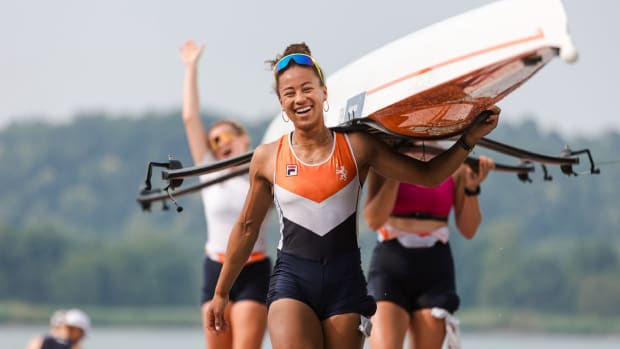
Summer has arrived, which means the biggest sporting events of the year are getting under way. University of Amsterdam students are competing too. What is at stake for them? That’s the focus of Folia’s six part series The sporting summer of 2026. This week: UvA student and elite rower Sona Hospers (24) is training for gold at the European Rowing Championships in Varese, Italy.
You are part of the Royal Dutch Rowing Federation’s (KNRB) talent squad and have already competed twice in the World Rowing Cup. What makes the European Championships different?
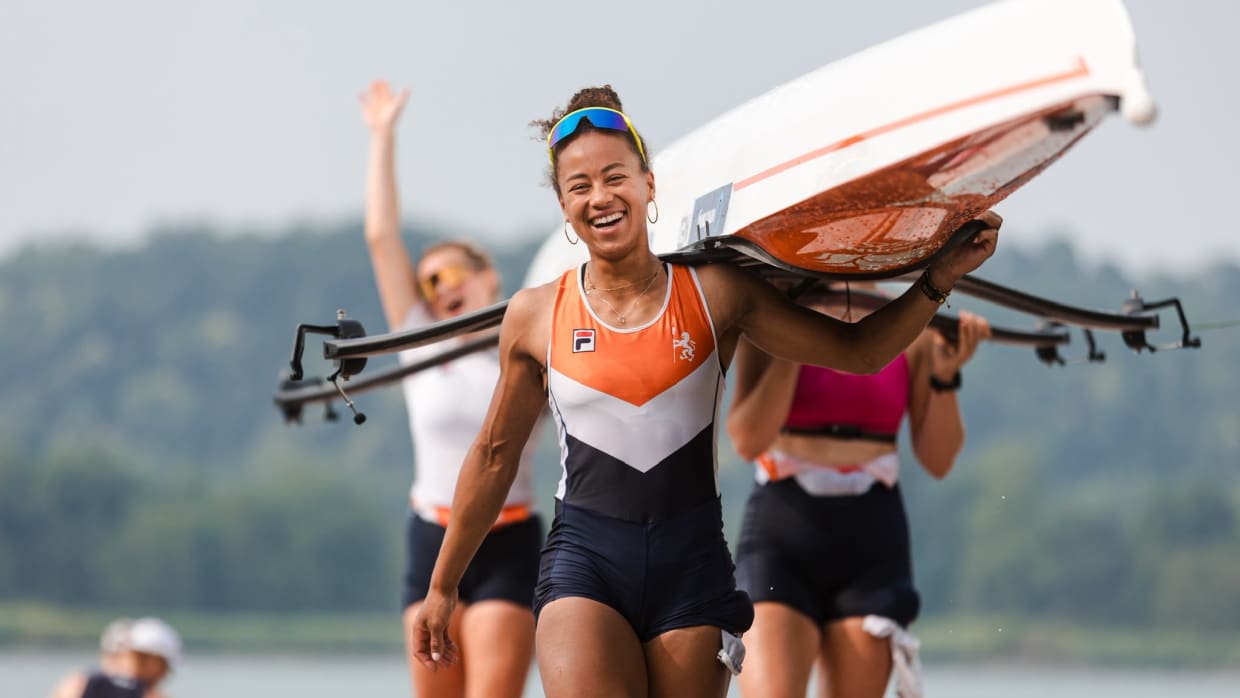
“The World Rowing Cup is a great opportunity to measure yourself against the very best in the world. Everyone competes there. You can qualify through your club, in my case A.S.R. Nereus, provided you meet certain criteria. The KNRB then selects athletes based on the entries. For the European Championships, however, the federation decides who will represent the Netherlands. You can’t enter yourself. Each country is only allowed one boat per event, so the selection is much tougher. Being selected to compete with the KNRB talent squad makes it feel even more special. It’s also a sign that they have confidence in my abilities as an athlete.”
Sport: Rowing
Studies: Health Sciences (Vrije Universiteit Amsterdam) and Health Law (University of Amsterdam)
Started rowing: At the age of 18
Competing in: European Rowing Championships, Varese, Italy, 31 July to 2 August
At the European Championships you will compete in two events: the women’s pair and the mixed double sculls. What strengths do you bring to the boat?
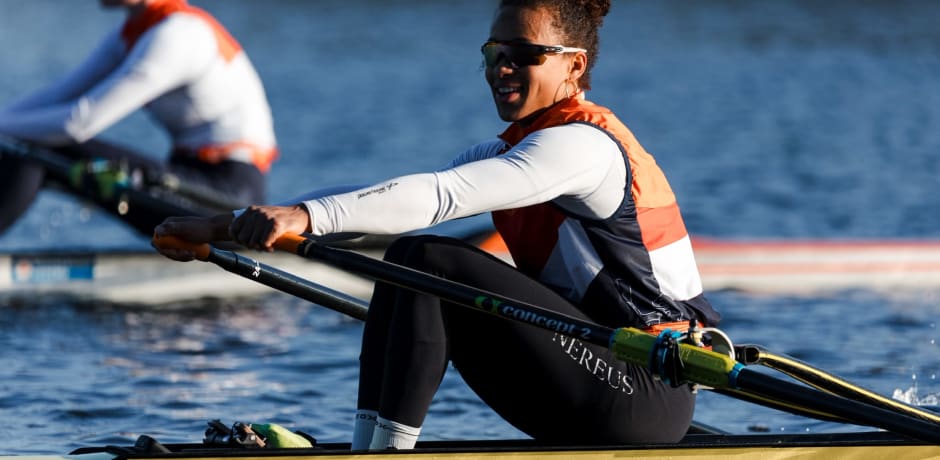
“My biggest strength is my sprint. In a single scull I can cover 100 metres in under twenty seconds. I’ll be looking to use that power in both the start and the finishing sprint of my races at this championship.”
At the European Championships you will be wearing the Dutch national kit rather than the colours of A.S.R. Nereus. Does your training change in the build up to a tournament like this?
“Not really. I train about fourteen times a week: twice a day every day, and three times on Wednesdays and Saturdays. The rowing federation’s physiologist, Marloes Oldenburg, plans my training programme for the entire year. My coaches at Nereus supervise that programme for domestic races, while the KNRB coaches take over for international competitions. It’s very much a hybrid programme. The agreement is that I compete for Nereus in national events and for the federation internationally.”
Varese can be extremely hot in the middle of summer. During the World Rowing Cup in May temperatures reached 36 degrees. How do you prepare for that?
“In the large orange team tent at the venue we have chairs, rowing machines and exercise bikes for our warm up and cool down, but also a slush machine. During the European Championships at the end of July it’s likely to be even hotter, so it’s great to be able to cool yourself from the inside. We also use ice filled cooling collars around our necks. We do everything we can to keep our bodies as cool as possible until the race starts.”
(Article continues below the image.)
What are you hoping to achieve at these European Championships?
“Winning two gold medals is, of course, the ultimate dream.”
And after that?
“In January 2027 the selection trials for the federation’s senior A squad begin. That’s my opportunity to qualify for the Olympic team. Winning Olympic gold is the highest achievement any athlete can aim for.”
Finally, how do you combine elite sport with two degree programmes, Health Sciences and Health Law?
“Both Vrije Universiteit Amsterdam and the University of Amsterdam have granted me elite athlete status. That means I can sometimes sit exams at a different time and follow lectures online. Saturdays are entirely devoted to training. On Sundays I try to make time to relax, for example by meeting friends for coffee or going to the beach. I don’t do anything else that day, so I have enough energy for my studies during the week. And when the weather is as nice as it is now, that’s much easier than it is in winter.”