Artis Aquarium reopens after five years, thanks in part to UvA alumnus Alex Huiberse
The Artis Aquarium reopens on Saturday after five years, fully restored. The fish now have more space to move around, although this also means there was no longer room for the electric eel, a favourite among visitors. Biologist and UvA alumnus Alex Huiberse, who is the curator and responsible for the welfare of the fish, played a key role in the renovation.

The restoration of the Artis Aquarium took five years. It was Artis’s biggest project ever, and it didn’t go without a hitch. For instance, the North Sea tank didn’t get cold enough, paint flaked off in other tanks, and – due to a small flaw in the glass – an entire tank even shattered. But as this saturday, it is finally open to visitors again, in a revamped form.
First, a brief history lesson. The aquarium opened in 1882, making it one of the oldest aquariums in the world. However, the salt water that had been circulating for a century and a half had caused severe damage to the walls, ceilings and structures. So it's time for a refurbishment, and UvA alumnus Alex Huiberse is closely involved: as curator, he is responsible for the fish.
“All the animal and plant species you see here were selected and brought here by me, together with European colleagues." He mentions two major challenges from the past five years. The first: the filtration system – Artis is the oldest aquarium in the world where the original Lloyd water filtration system, developed by the world’s first aquarist William Alford Lloyd, is still in operation. “How are we going to modernise that filter system so that the water quality becomes even better than it was before? That was in the initial phase.” From 2023, Huibers and his colleagues will start thinking about the design of the new aquariums. “Almost all the aquariums have been newly built, which was of course absolutely brilliant for me, to work out how big they need to be, how deep, and which fish go in which ones.”
So the restoration also changed the experience of the building. There is more space for education – a trend evident throughout Artis – sustainability and animal welfare. For instance, there is a strong focus on species conservation and the fish now have more space, although that also means some have not returned. Such as the electric eel, which was a crowd favourite with its little voltage meter.
Huiberse completed his Master’s in Biology at the University of Amsterdam in 2012. “Not the best year to find a job. So I started as a volunteer at Artis, in the office.” After three years, a vacancy arose for an animal keeper in the aquarium. “You learn a great deal during your studies, but not the practical side, of course. Here I was able to experience first-hand: how do you actually handle such an animal, what does it need?”
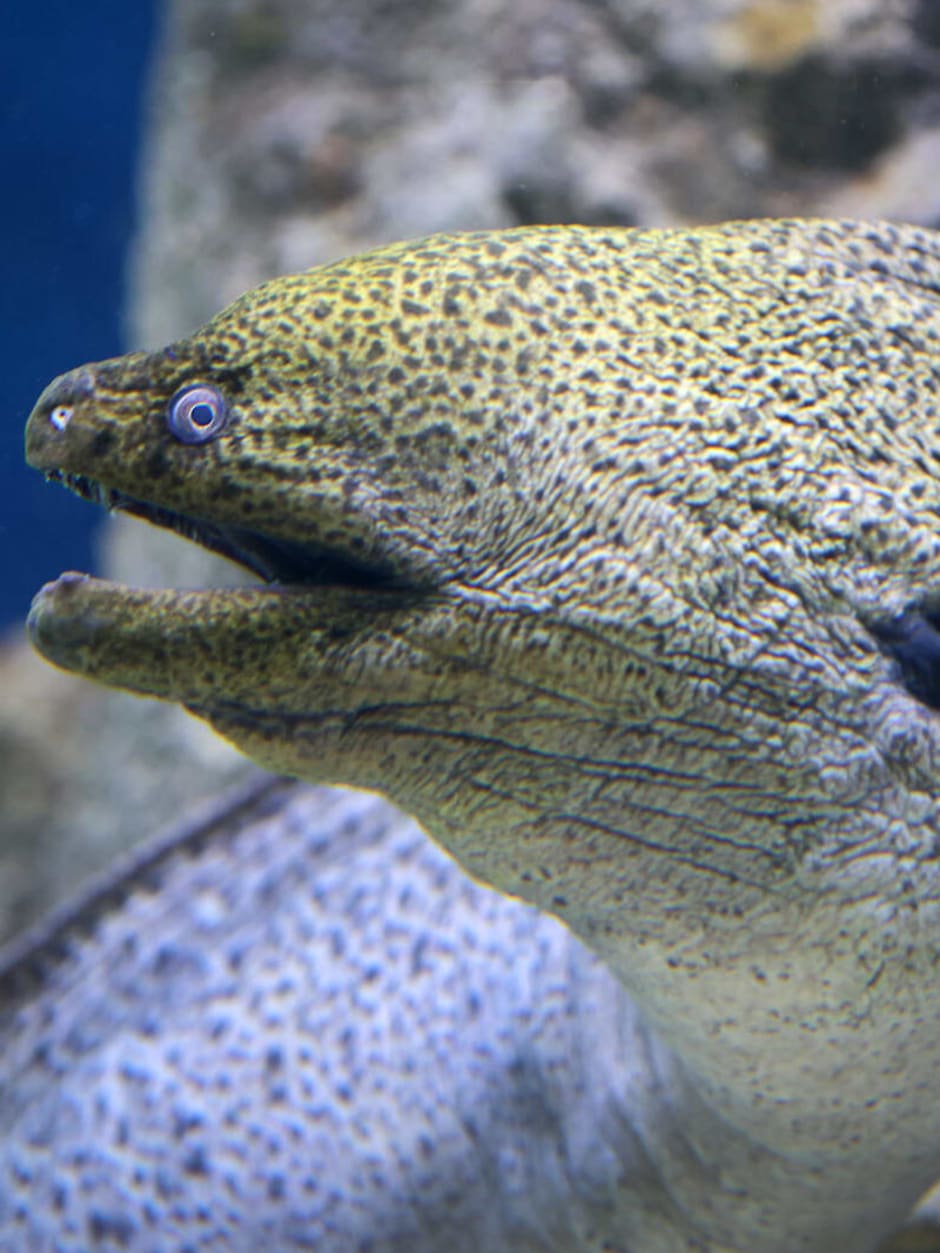
“They find it quite remarkable when someone suddenly stands in front of the aquarium”
For Huiberse, a highlight is releasing the fish into their new home. First, they spend a while in quarantine – which isn’t as dramatic as it sounds; they stay in an aquarium that isn’t quite as attractively decorated. “If no diseases have broken out, they’re released into their new tank.” Huiberse’s eyes light up. “I’m a biologist. So I don’t just look at how beautiful a fish is, but mainly at its behaviour. When you release them, you see the fish setting out to discover what their new environment looks like. That sense of exploration – I find that really beautiful.”
Some fish are a bit more timid than others, he explains. “They’re prey animals; they dart away immediately and hide. Of course, they don’t know where they are. But others are incredibly curious; they explore everything straight away.” Take the boxfish, for example: “It’s not so much that they’re people-friendly, but they find it quite special when someone suddenly stands in front of the aquarium.” There are quite a few intelligent animals among them, says Huiberse. “Personally, I enjoy monitoring them most whilst they’re in the aquarium.”
Artis has traditionally had a strong connection with the University of Amsterdam. “That’s faded a bit,” says Huiberse. “But we’re now trying to revive it and keep it active. I really enjoy meeting people here who taught me and with whom I’m now collaborating in a different way.” As far as Huiberse is concerned, that connection is only getting stronger. Take the seagrass project, for example. Researchers from the UvA and Wageningen University have brought this fragile plant from the Dutch Caribbean and planted it in the aquariums. Seagrass is crucial for the health of coral reefs and serves as a nursery for fish. Huiberse is absolutely delighted: “It’s a plant that might not be all that interesting to visitors, but it’s all the more so to us.”