Can April Fools’ Day jokes still exist in an era of deepfakes and disinformation?

This week, it may be wise to follow the news with a healthy dose of skepticism: April Fools’ Day is approaching. But can such pranks still thrive in a society where fake news plays an increasingly prominent role?
Drones that will track down smokers on the UvA campus, a giant slide in the canal at Roeterseiland, a metro line connecting the UvA and the VU, and midnight exams to accommodate night owls: around April 1, it pays to stay alert.
But can such pranks still work in a time when fake news is spreading more frequently and reliable information has become a scarce commodity? In short, have April Fools’ jokes become a little passé?


Prank
“It depends on who’s doing it,” says communication scientist Mark Boukes. “For media organizations, it has become increasingly sensitive. The media are already often accused of spreading fake news. In that context, it’s not very wise to start making jokes as well. For the sake of a simple prank, the risk is quite high.”
According to Boukes, the issue plays out somewhat differently at an institution like the University of Amsterdam (UvA). “Providing accurate information is one of the university’s tasks, but it’s not its main one: conducting research and educating students are also central responsibilities. At the same time, you do see a lot of skepticism toward institutions such as universities and science. As a university, it’s probably best not to joke about topics like climate change or vaccinations. Those are highly polarized issues, where there is already a great deal of debate about what is and isn’t true.”
Superhorse
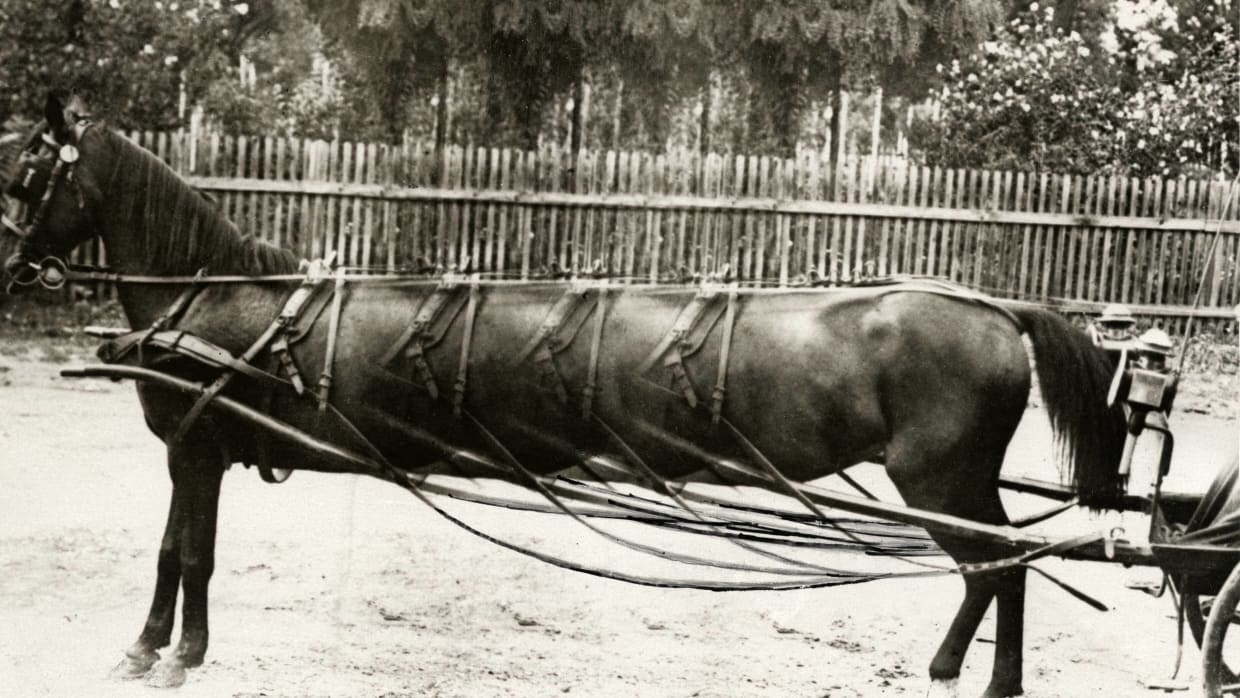
The examples written above are quite recent, but the tradition of April Fools’ jokes in the media goes back a long way. These jokes were not always well received. In the early 20th century, the sensationalist magazine Het Leven made it an annual sport to fool its readers – complete with heavily doctored photographs. Examples include the “superhorse” supposedly on display in Rotterdam in 1928, or a sheep with the beak of a pelican in 1932.
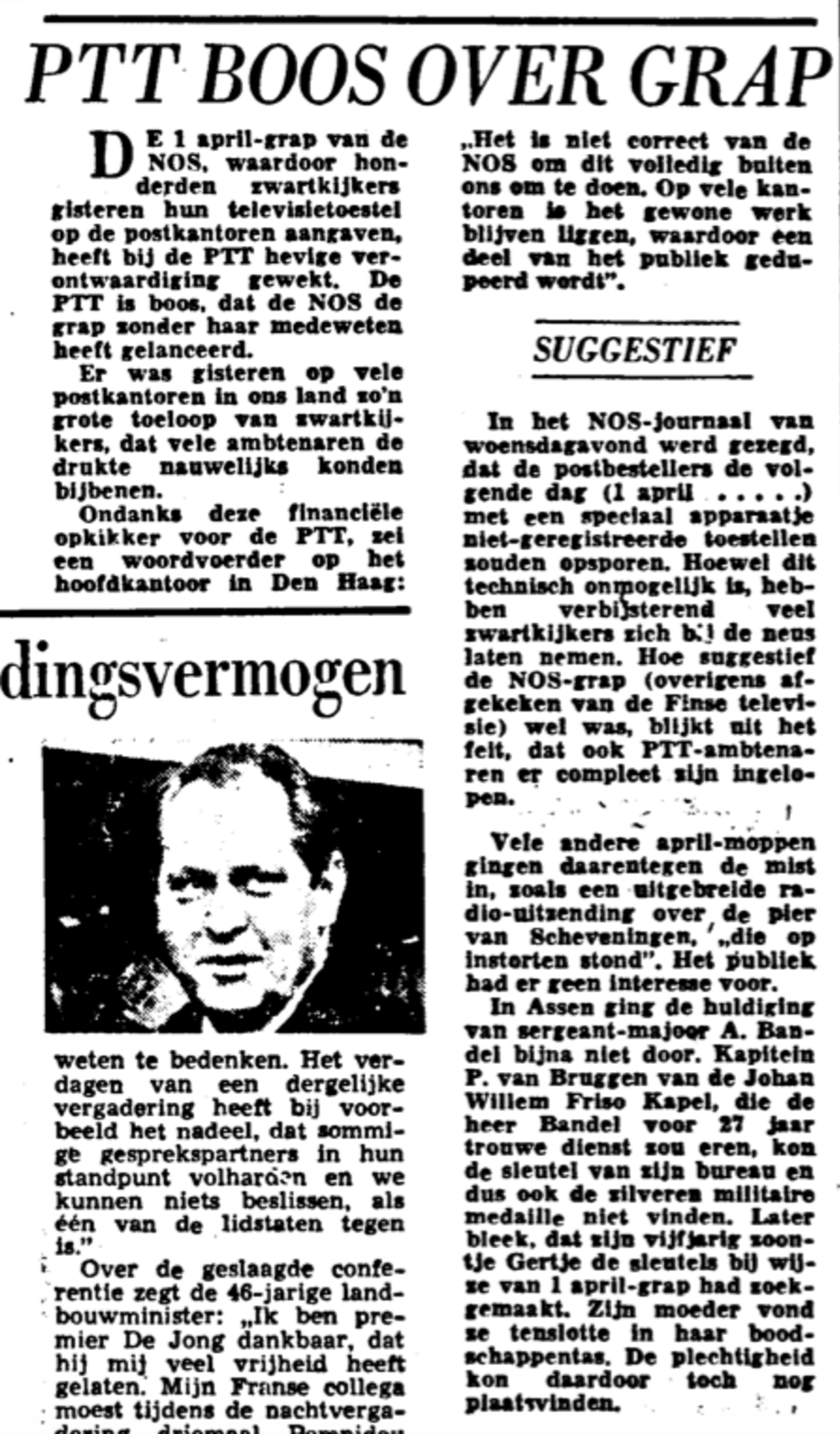
In 1971, the NOS aired a report on “black viewers” – households not paying their TV license – claiming they could now be tracked with a special device that measured non-payment from the street. This led to a rush of people flocking to the PTT to pay, much to the annoyance of the post office staff.
Today, technologies like AI and online bots make it even more difficult to distinguish fact from fiction. As Boukes puts it: “We have all entered a crisis of truth. Nowadays AI is partly responsible, whereas before it might have been disinformation coming from Russia. With AI, anyone can manipulate content. The internet is full of it. We are forced to constantly ask ourselves: is this person real, is this story true? That’s why pranks have become far more sensitive for journalists, because the line between truth and falsehood has become increasingly blurred.”