UvA students on their special volunteer side job

No money, but a clear conscience as a reward: this Sunday the hard work of volunteers is celebrated on "National Volunteers’ Day". In that spirit, three UvA students share their experiences as volunteers. “At De Kindertelefoon I sometimes get pranked.”

Saera Khan (22)
Volunteer at De Kindertelefoon
Master’s student in Developmental Psychology Saera Khan (22) has been gaining practical experience at De Kindertelefoon in Amsterdam for two and a half years alongside her studies. “But I also just think it’s a really nice organisation,” she adds. Every two weeks, Saera works a three-hour shift at the organisation’s office. Children aged eight to eighteen can call or chat anonymously about anything that’s on their minds. “It’s pretty much non-stop.”
Letting off steam
Saera encounters all sorts of things during her shifts: from light-hearted conversations about everyday life to intense calls about domestic violence. “Sometimes children call because they’re bored,” she says. “Then they just want to chat about gaming or their pets.” De Kindertelefoon is also approached for love advice. Saera remembers one child who needed to let off steam because he was in love. “He wanted to ask a girl to be his girlfriend but wasn’t sure if he dared.”
Still, Saera gets the most satisfaction from conversations in which she has genuinely been able to help a child – even though that’s not the primary aim of De Kindertelefoon. As a volunteer, the goal is to empower the child to find their own solutions. “Once I had someone on the line who was being bullied and wanted to tell the teacher. The idea was his own; he just needed one final push.”
Prank call
As an experienced volunteer, Saera can spot prank calls straight away. Out of curiosity, she always plays along. “Children put on the most bizarre little plays. A common joke is a child who has supposedly pooped next to the toilet. Then an ‘adult’ comes in who catches the child and tells them off. That so-called father is actually a friend of the caller using a deep voice. In the background you can hear the children giggling.”
Male volunteers
In the “call room” – the office of De Kindertelefoon – you’ll find men and women from all professional backgrounds and of all ages. That equal gender ratio is actually quite unusual. For this article, Folia explicitly looked for male UvA students, but found virtually none. If Saera had to come up with an explanation, it would be that women generally engage more often in social initiatives. She believes it has to do with interest. “In my degree programme too, women form a large majority.” Stereotypes also play a role, Saera thinks. “Perhaps volunteer work is seen as less masculine or tough. People often automatically assume that women are caring, a trait that fits well with volunteering.”
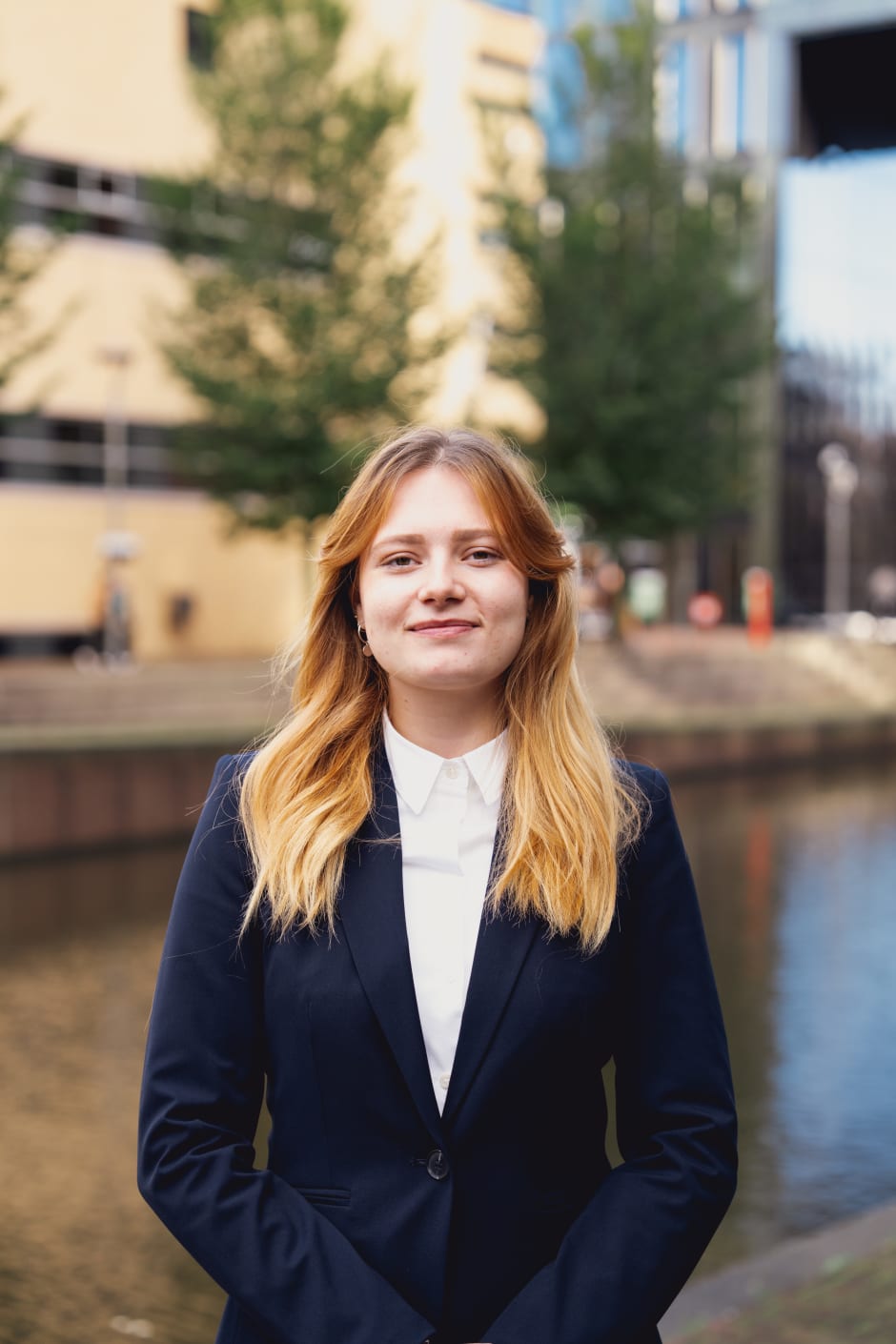
Isabeau Smidt (22)
Voluntary Legal Assistent
When you think of volunteer work, it’s probably not the first thing that comes to mind: Legal Assistant. Isabeau Smidt (22) was initially looking for a paid side job to do alongside her law degree, but came across something unpaid instead. She applied anyway. As a volunteer at the Strafwinkel Amsterdam Foundation, she provides explanation and support to people who – often for the first time – find themselves in the dock and have little understanding of criminal law. “It’s an accessible way to gain experience within criminal law without ending up at a big Zuidas firm straight away.”
Emotional and legal support
Although Isabeau didn’t have high expectations beforehand, the volunteer role has turned out to be a perfect fit. “I thought it would be almost exclusively legal research, but instead I’m in a very social position,” she says. She’s referring to the conversations she has with “suspects” during the weekly walk-in consultation hours, which take place at the Law Hub at the UvA. Isabeau encounters a wide range of minor criminal cases, and she mainly tries to reassure the people who come in.
She tells, for example, about refugees who unintentionally received fines for violating compulsory education laws because they weren’t familiar with the Dutch school system. She also remembers a homeless person who – understandably – couldn’t pay his parking fine. Apart from his car and belongings, he owned nothing. “We explained what he could expect from the criminal process, but we also offered a listening ear for his problems.”
One case has stayed with Isabeau the most. “We once assisted a demonstrator who was charged with failing to follow the instructions of an authorised official,” the student says. “It was an interesting discussion, because it was difficult to determine whether it was an offence or fell under the right to protest.”
Students also come to the consultation hour. Due to their financial situation, they sometimes can’t pay fines, or they feel the fine is unjustified. Isabeau says: “Students don’t always know how to find us yet, but they can always come to us.”
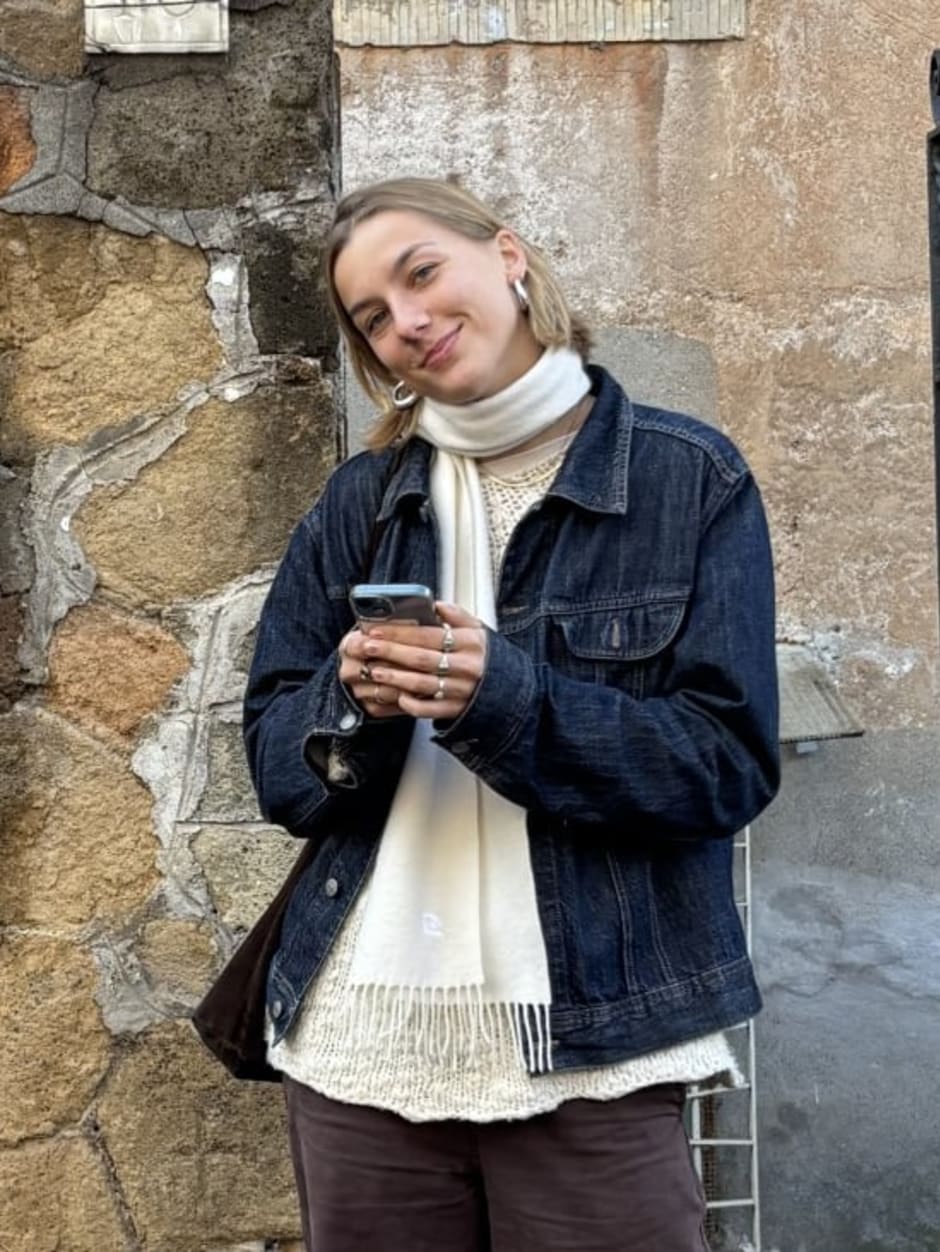
Micky Jordaan (22)
Voluntary Language Buddy
Besides being a Master’s student in Conflict Resolution and Governance, Micky Jordaan (22) is also a Taalmaatje, or language buddy. For the past three months she has been visiting 23-year-old Sarah once a week for an hour to give her Dutch lessons. Sarah is originally from Syria and lived in Turkey for eleven years. She recently moved to the Netherlands. Her husband, with whom she shares a home in Amsterdam, has been living and working here for longer. Sarah, however, does not speak a word of Dutch or English. In two years, on her own initiative – with Micky’s help – she will take a demanding civic integration exam.
Neighbours
The women who receive Dutch lessons through the volunteer organisation Amsterdams Buurvrouwen Contact have arrived in the Netherlands with a significant language gap. As a volunteer, you are also expected to show your language buddy – who conveniently lives nearby – a bit of Dutch life. Micky says: “Soon we’re going to a café together.” The reason these newcomers don’t attend lessons outside the home can vary: some have children to care for, others carry trauma. What else do they have in common? They prefer to be taught by a woman.
The language barrier between Sarah and Micky sometimes makes communication difficult. “You have to be creative,” the student says, “but with gestures and pictures we manage just fine.” The language buddies try to avoid using Google Translate; it would get in the way of the learning process. “But if we want to chat about weekend plans after the lesson, we’re happy to make an exception.”
Broken ankle
When Micky recently broke her ankle and could no longer work in hospitality, she knew it was the right moment to start volunteering. “The idea had been on my mind for a while.” She signed up with an agency that offers different kinds of volunteer work. It was no coincidence that she chose to give language lessons. From her own experience, Micky knows how helpful it is when people support you as a newcomer in a foreign country whose language you don’t yet speak. “I lived in Rome for a long time, where I learned Italian.” Because of that experience abroad, Micky can now empathise even better with Sarah.