At the climate summit, UvA researchers are advocating for phasing out fossil fuels, cleaner cities and plant-based food

The 31st climate summit opens in Turkey this week, focusing on phasing out fossil fuels. Researchers from the UvA’s climate institute Seven are also travelling to Antalya. What do they hope to achieve at the summit?
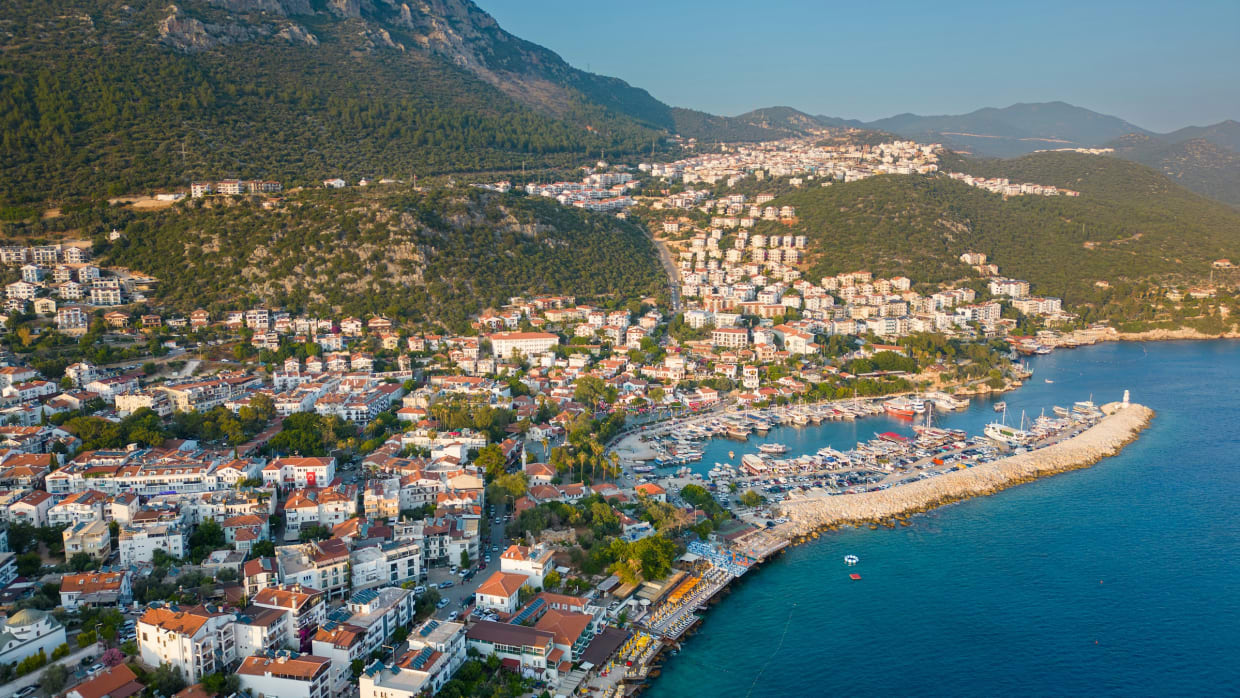
All countries attending COP31 in Turkey should commit to a time-bound national roadmap for phasing out fossil fuels. This is one of the recommendations that UvA researchers from climate institute Seven will be advocating for at the 31st climate summit in Antalya next week. The recommendation is set out in a policy brief published by the climate institute ahead of the summit.
The researchers are taking a total of five recommendations to the summit. Fossil fuel subsidies should be abolished and the public money should be invested in green energie, international rules should be introduced to rein in fossil fuel companies, it should be made harder for investors to file compensation claims when governments implement climate policies, and wealthy countries must take the lead in phasing out fossil fuels through a roadmap that incorporates equity, public participation and the remediation of damage.
National roadmaps
With this, the UvA is building on a process that began at the 28th climate summit in Dubai. For the first time, moving away from fossil fuels was included in the summit’s final declaration, and countries were called upon to contribute to ‘transitioning away from fossil fuels in energy systems’.
The subsequent climate summits focused on how to achieve this. For the Colombian-Dutch climate summit in Santa Marta, which was entirely dedicated to moving away from fossil fuels, researchers from climate institute Seven drew up a policy advice on how countries can phase out oil, coal and gas in a fair manner.
At the climate summit in Antalya, the focus is expected to shift towards implementing these commitments. However, there is still some way to go. Although the 57 countries that took part in the climate summit in Santa Marta agreed to work towards developing national roadmaps for phasing out fossil fuels, these have yet to materialise.
Last September, the Netherlands became the second country in the world, after France, to present such a roadmap. The Netherlands hopes to set an example, although the plan has also attracted considerable criticism. It lacks a clear end date for the extraction and use of fossil fuels, and several interim targets have been scaled back. Most countries do not yet have such a roadmap. This will be one of the topics for discussion at the forthcoming summit.

Plant-based food
Alongside fossil fuels, UvA researchers are also seeking to put other issues on the climate agenda. Legal scholar and scientific director of Seven André Nollkaemper is attending not only to present the policy brief, but also to collect signatures for a declaration on the transition from animal-based to plant-based food. He is doing so partly on behalf of the non-profit organisation True Animal Protein Price Coalition (TAPP), of which he is chair. TAPP is a coalition of 80 organisations campaigning for fair prices for meat and dairy products. It is now introducing an improved version of an earlier declaration, which was signed by 28 countries in Belém.
Food systems are therefore gaining increasing prominence at climate summits. Nollkaemper says: “When it comes to food, we are not as far along as we are with fossil fuels. We want food to move in the same direction. That does not mean meat has to disappear, but we are calling for a gradual and fair transition towards sustainable, diverse food systems with low emissions, with wealthy countries that have high levels of consumption taking the lead.”
Major polluters
Legal scholar Margaretha Wewerinke-Singh is set to take part in the negotiations as a member of the delegation from Vanuatu, an island nation comprising some eighty islands in Oceania. She played a prominent role during the climate proceedings before the International Court of Justice in 2025, leading the legal team for Vanuatu and the Melanesian Spearhead Group, an international organisation dedicated to promoting the interests of Melanesia, a group of islands in the Pacific Ocean of which Vanuatu is a part. In that case, the Court ruled that countries are obliged to prevent significant damage to the climate system.
In Turkey, Wewerinke-Singh will seek to include references to the 2025 advisory opinion of the International Court of Justice in the outcome of COP31. Wewerinke-Singh: “From a legal point of view, nothing changes: the obligations already apply, even without a COP decision. Politically, however, it would mean a great deal.”
The climate summit in Turkey will also see the results presented of a citizens’ dialogue on climate issues affecting Amsterdam residents, organised by the Municipality of Amsterdam and climate institute Seven. Similar dialogues have taken place in cities around the world. Cities are major contributors to the climate crisis. According to the IPCC, urban areas are responsible for around 70 per cent of global greenhouse gas emissions.