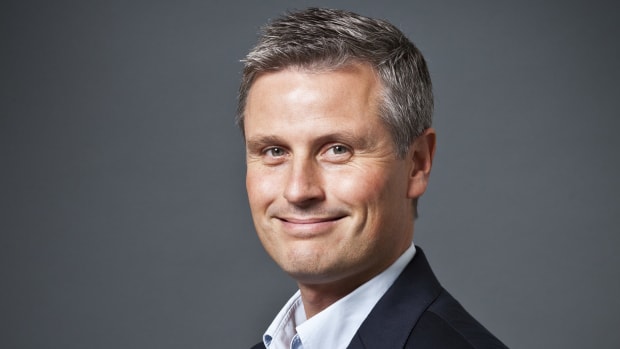
Professor Claes de Vreese is the first UvA recipient of the Stevin Prize
Claes de Vreese, UvA professor of AI and society, has been awarded the Stevin Prize, the highest scientific honour awarded by the Netherlands Organisation for Scientific Research (NWO) for research with societal impact. This is the first time the Stevin Prize has been awarded to a member of the UvA.
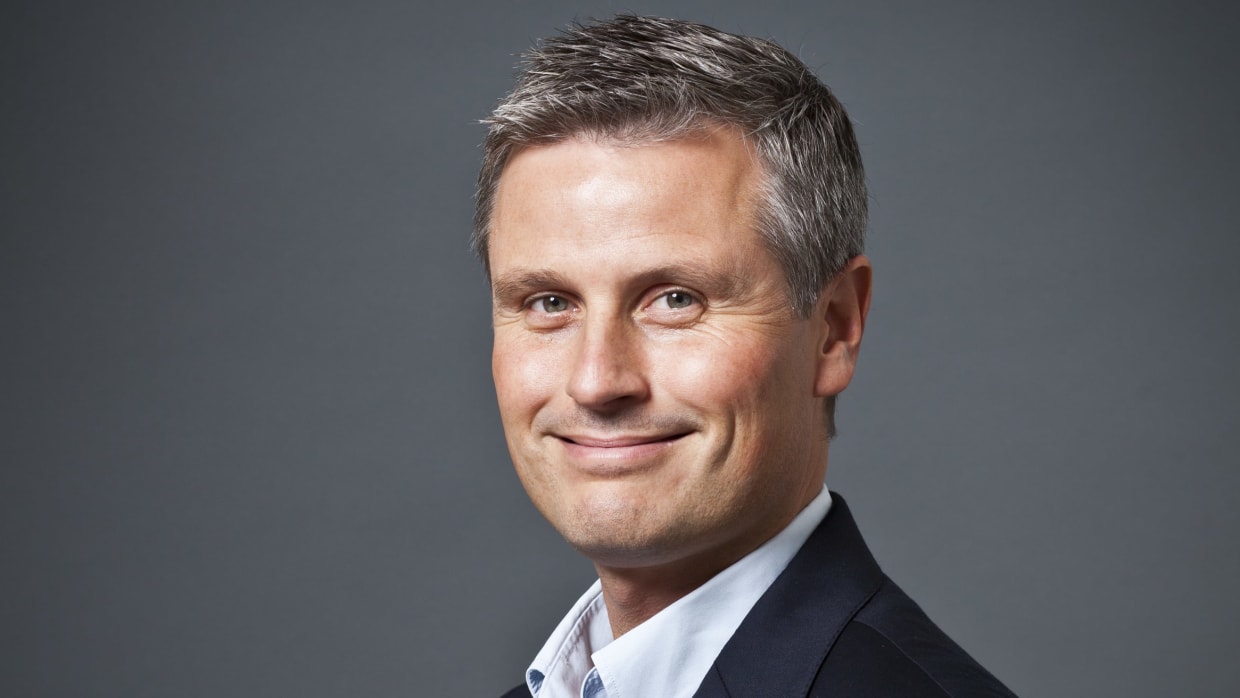
The news came “completely out of the blue”, says Claes de Vreese, the Danish UvA University Professor of AI and Society, via a Zoom call from Denmark. He was in his car when – after a few missed calls – he got NWO President Marcel Levi on the phone. “I had to concentrate hard on driving when he told me why he was actually calling. I was completely overwhelmed.”
Alongside Claes de Vreese, Iris Sommer, professor of psychiatry at the University Medical Centre Groningen, is also to receive a Stevin Prize. Sommer conducts research into women’s mental health and, according to the jury, is receiving the prize for the bridge she has managed to build between her research and society. This includes her bestsellers Het Vrouwenbrein (The Female Brain).
The Spinoza Prizes go to Karin Roelofs and Hermen Overkleeft. Roelofs is a professor of cognitive neuroscience at Radboud University Nijmegen and is receiving the prize for her research into how stress influences human behaviour. Hermen Overkleeft is a professor of bio-organic synthesis at Leiden University and one of the founders of chemical biology
Following the brief conversation, De Vreese received a welcome confirmation by email from the Netherlands Organisation for Scientific Research (NWO) that he is indeed the winner of the 2026 Stevin Prize. Together with the Spinoza Prize, the Stevin Prize is the highest scientific honour in the Netherlands. Two of each prize are awarded annually, with the prize money totalling 1.5 million euros. Whilst the Spinoza Prize focuses on scientific breakthroughs, the Stevin Prize emphasises impact on society. This is the first time that the Stevin Prize, now in its ninth year, has been awarded to a member of the UvA. “That makes it even more special.”
De Vreese is receiving the prize for his “ability to bring scientific knowledge into the public debate”, according to the jury’s report. The jury also noted that De Vreese addresses the pressing issues facing society. De Vreese: “AI affects every institution and every process of democracy. How media companies operate, what we consider to be reliable journalism in the age of AI, but also how political parties use AI in their campaigns and what that means for trust in a democracy.”
Media appearances
Many people will recognise De Vreese from his media appearances. There, he regularly shares his analyses, including on the rise of tech power in the US, the emergence of AI and the future of democracy. “If a newspaper, a government department or a Member of Parliament calls, I’m happy to share what we know,” says De Vreese. “I really see that as a duty and an obligation as a scientist.”
And taking part in the public debate often comes with criticism. De Vreese: “Criticism reinforces my feeling that it’s important to do this. Many young researchers working on topics such as disinformation prefer not to talk about it in public because they’ll get a lot of flak. That’s understandable. That’s precisely why I think it’s important to speak out: I’m a professor, I have a permanent job, I have privileges – that makes it a lot easier than if you’re young and on a temporary contract.”
Government adviser
De Vreese is also known for his role as an adviser to governments and ministries. Earlier this year, he was one of the advisers to the Jetten minority government, where he drew on his knowledge of Danish politics, where minority governments – albeit under different conditions – have been functioning effectively for years.
2004 Founder of the Centre for Politics and Communication (CPC) at the University of Amsterdam (UvA), a meeting place for students, academics, journalists and politicians
2005 Professor of Political Communication at the University of Amsterdam (UvA)
2007 VICI grant for the research project Communication and the Future of Europe
2005 – 2013 Director of the Amsterdam School of Communication Research (ASCoR) and the Netherlands School of Communication Research (NESCoR)
2015 ERC grant for the research project Europinions
2017 – 2020 Chair of the Social Sciences Council of the Royal Netherlands Academy of Arts and Sciences (KNAW)
2021 University Professor of AI and Society at the University of Amsterdam (UvA)
2021 Research Director of the Digital Democracy Centre at the University of Southern Denmark
2023 Co-Director of AlgoSoc (Algorithmic Society), a Dutch research programme investigating the algorithmic society
De Vreese grew up in Denmark, where his Dutch father had moved before he was born. “I feel like a Dutch-Danish person.” From an early age, he wanted to become a journalist or documentary-maker so that he could communicate on social and political issues. Over time, this shifted towards conducting research into journalism and the media. In recent years, he has focused increasingly on digital technologies and AI.
Access to data from tech companies
In recent years, De Vreese has been committed to ensuring that data from digital platforms remains accessible to the academic community – something that is becoming less and less a given amid the shifts in power in the US. Together with a group set up by the European Commission, De Vreese worked to enshrine that access in law through the Digital Services Act (DSA), European legislation that regulates digital platforms and online information.
What De Vreese himself is most proud of – and which is also highlighted in the jury’s report – are the ninety PhD students and postdocs whom he has co-supervised in recent years. “Training young researchers is actually the greatest social impact you can make. After all, this ensures that a new generation of researchers will emerge to tackle these issues.”
Unease
De Vreese is delighted with the prize, but also feels it is somewhat arbitrary. De Vreese: “I could name a dozen colleagues who could just as easily have won the prize because they conduct fantastic research and also contribute to society in all sorts of ways.” There is also some unease about the personal nature of the prize. “In recent years, I’ve worked almost exclusively as part of a team; I do almost nothing on my own. So that does feel a bit strange.”
He plans to spend this summer thinking about what he’ll do with the 1.5 million euros. “There is a huge need for new, fundamental scientific knowledge in the fields of digital technology and artificial intelligence, as well as for guidance on how we, as citizens in a democracy, should deal with these developments.” He does not yet know exactly what that will look like. “First, I’m going to have a proper read of the NWO guidelines on exactly how the prize money may be spent.”