What’s it like to spend a month conducting research at sea?
Eight UvA researchers are sailing this month from Cape Verde to Iceland aboard a brand-new Dutch ocean research vessel. The expedition aims to understand how viruses affect marine life. What is it like to spend a month at sea? “We have to secure everything in the onboard laboratory because it’s constantly moving.”
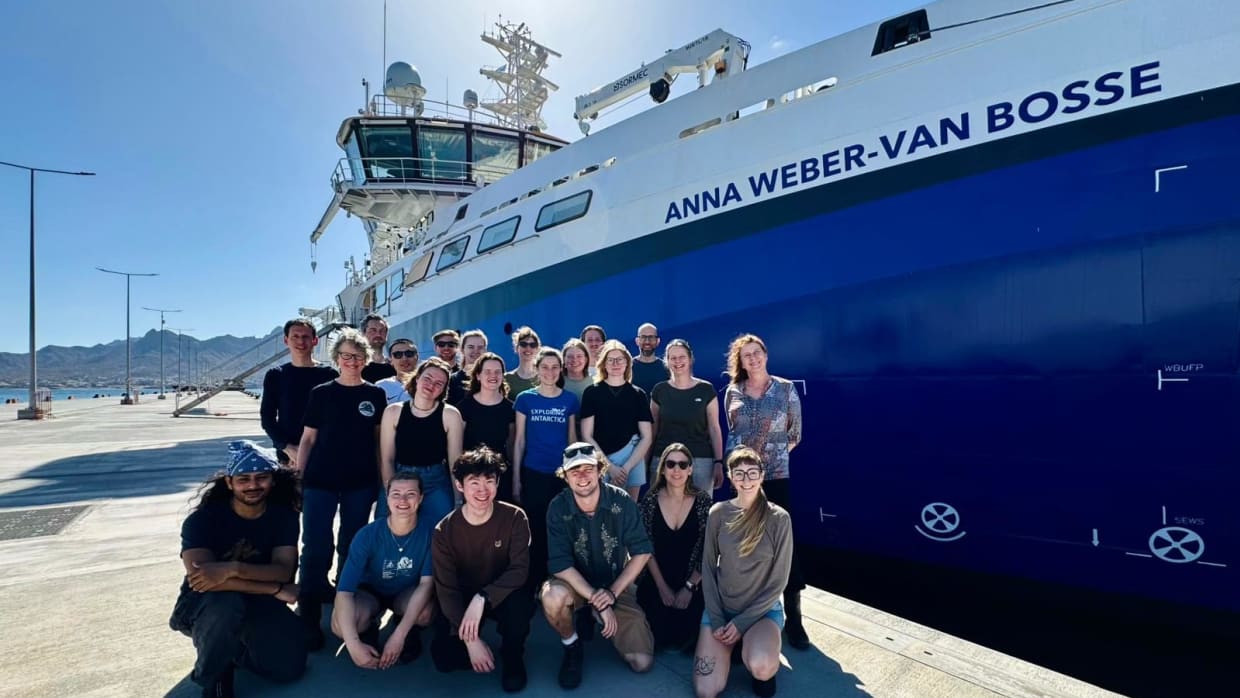
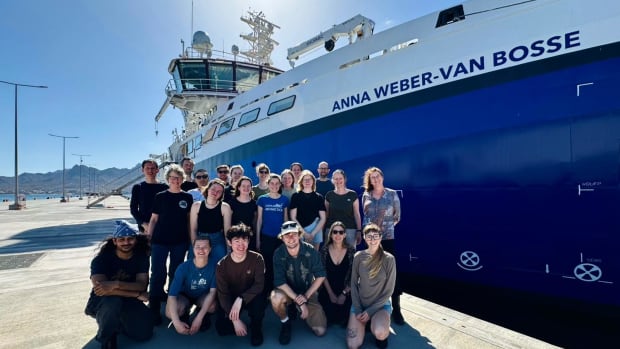
The sky, the sea and the rolling waves: for almost thirty days now, this is the view for researchers aboard the Anna Weber-van Bosse, the brand-new ocean research vessel in the Dutch research fleet. The goal of the expedition is to understand how viruses affect phytoplankton, microscopic algae that float in the water.
One of the new features of the research vessel, christened with great fanfare by Queen Máxima in March at the Netherlands Institute for Sea Research (NIOZ) on Texel, is that it can accommodate almost twice as many researchers. Of the 22 researchers on board, eight are from the University of Amsterdam (UvA).
“This also gives Master’s students the chance to experience research at sea,” says Corina Brussaard, principal investigator at NIOZ and professor by special appointment at the UvA. And research at sea often proceeds slightly differently than on land. A report by UvA Master’s students, PhD candidates and researchers from the Atlantic Ocean.
Onboard laboratory
Master’s student Amelie Wittig: “For research at sea, you have to take so many more things into account. It starts even before the voyage: once at sea, you can’t order any new parts, so it’s really important that you have everything with you and that you’re prepared for every possible situation. It was a bit like packing for a holiday, only it involved pipettes, vials and vacuum pumps, rather than a tent and pegs.”
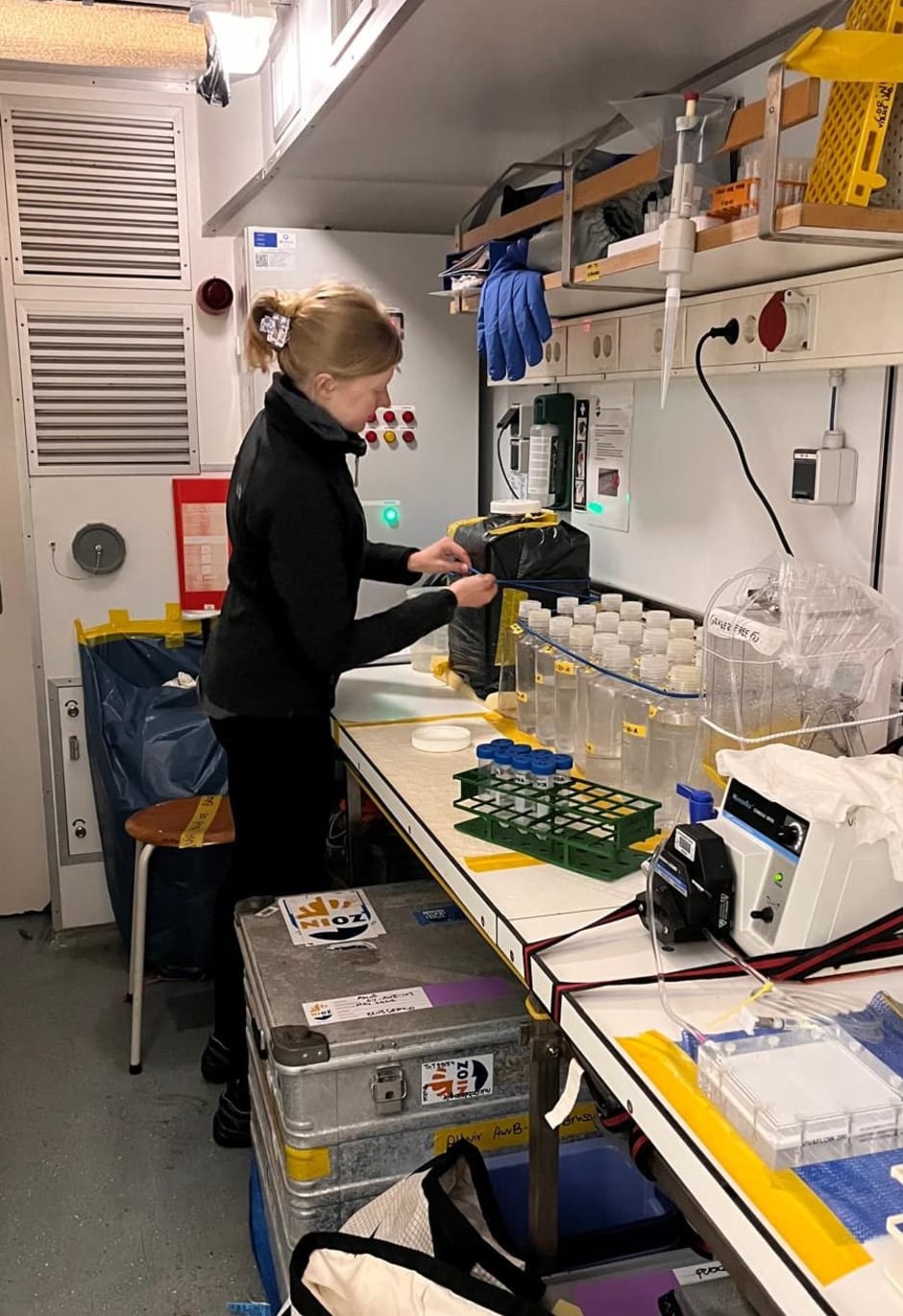
UvA PhD candidate Naomi Bakken: “The waves make working in the on-board laboratory difficult. Everything must be secured and stored in closed boxes, which affects your setup on the workbench. We had a few days of high waves, and it took some getting used to performing precise manoeuvres with the pipettes and tweezers whilst we were rocking back and forth quite violently.”
Seasickness
Master’s student Eva Hekma: “On the first day, many of the researchers still had to develop their ‘sea legs’. Almost the whole group sat on deck looking at the horizon to help the seasickness subside a bit. If you’re seasick, you should try to drink as much water as possible and make sure you have something in your stomach. Around dinner time, we took turns fetching crackers for each other. After a day, most of us were back on our feet.”
Theoretical ecologist Yael Artzy-Randrup: “Since then, there have been a few minor instances where the seasickness reared its head again for a couple of hours, especially in rougher weather. One day, the waves rose from about 1.8 metres to over 7 metres in just a few hours. Seasickness tablets help enormously if you take them in time, but because they can also make me drowsy and a bit dazed, I usually only take them when I’m fairly sure I need them. So it’s always a bit of a gamble. People are also very understanding, because many have at some point during this or earlier expeditions experienced seasickness.”
Saharan sand
Aquatic ecologist Susanne Wilken: “In the first week of the expedition, we saw some red dust on the ship, which indicated that we had sailed through Saharan sand. Saharan sand, which ends up in the ocean via storms, is an important source of iron for phytoplankton (microscopic algae that float in the water red.).”
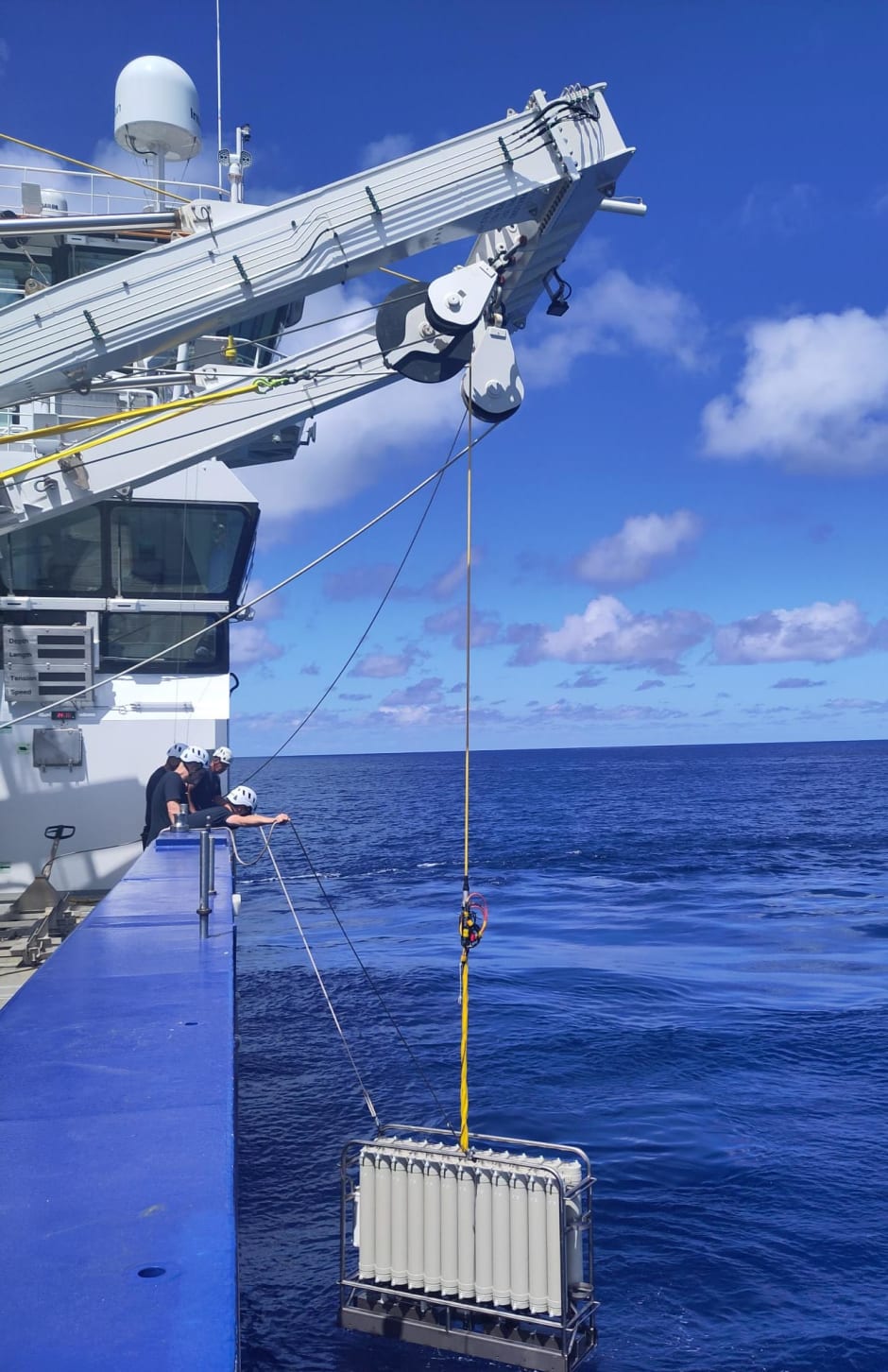
PhD candidate Melle Versluis: “My job is to take iron-free water samples. The standard method for taking water samples involves a device that contains iron, which affects the results of the experiments. Instead, we use a custom-made sampling device with a titanium instead of steel frame to avoid iron contamination. This frame is placed in a specially equipped container similar to a clean room, an extremely hygienic working environment. In this container, I have to put on a special suit. This means taking my shoe off on one leg, putting my leg through the suit and putting my shoe back on. This sounds simple, but when there are big waves and you’re not allowed to touch anything due to the risk of contamination, it’s quite a balancing act.”
Master’s student Emma Hynes: “We perform experiments with those water samples in special containers on deck. This allows us to see how phytoplankton growth changes when we add extra nutrients, such as nitrogen, phosphorus or iron – substances that may limit algae growth. Iron is often the limiting factor. To give you an idea: the amount of iron in nutrient-poor waters is comparable to a single paperclip in fifteen Olympic-sized swimming pools.”
Susanne Wilken: “The Saharan sand from the first week is reflected in those experiments. In the first week, nitrogen – not iron – was the limiting factor for phytoplankton growth. We don’t know much more at this stage; we’ll only really know the results of the research once we’ve analysed all the samples back in the laboratories. Ultimately, we also want to know how the lack of nutrients affects the interaction between phytoplankton and viruses.”
Ping pong
Amelie Wittig: “At the start, most of us didn’t know each other, but our shared passion for marine biology brings us together. By spending time together – in the laboratories, on deck, during meals or in the evenings playing table tennis or cards – we’ve formed new friendships. Now the ship feels like a little family.”
Naomi Bakken: “The working days are long, but we keep morale and energy levels high with music, by helping each other out and by doing some fun activities in the evenings.”
Eva Hekma: “In between work, there’s plenty of joking around and dancing. In the evenings, we watch films, stand on deck gazing at the stars or beat each other at ping pong.”
Isolated
Amelie Wittig: “I miss my friends and family most of all. Since the second half of the voyage, the internet has improved and I can ring home. I feel less isolated from the world, but I do miss seeing some people in person.”
Emma Hynes: “I’m an international student, so being away from home for a month isn’t a new challenge for me, but I do miss my friends in Amsterdam. After the first week, when we all got to know each other better on board, it became easier. Especially now that we’re approaching Iceland, the delay on phone calls has improved a lot and I feel less isolated.”