Magazine | Democracy in the animal kingdom: “An egotistical dictatorial leader contributes little for the group”
Over the coming weeks, Folia will be dedicating a special print magazine to the theme of ‘democracy’. Animals may not go to the polls, but forms of democracy have existed in the animal kingdom for millions of years. What can we learn from this?
Young swans communicate with one another by nodding their heads, buffaloes decide on a new direction by staring in that direction for several minutes, and ants have no choice but to follow the will of the majority. How does the animal kingdom deal with democracy?
Empathetic leaders
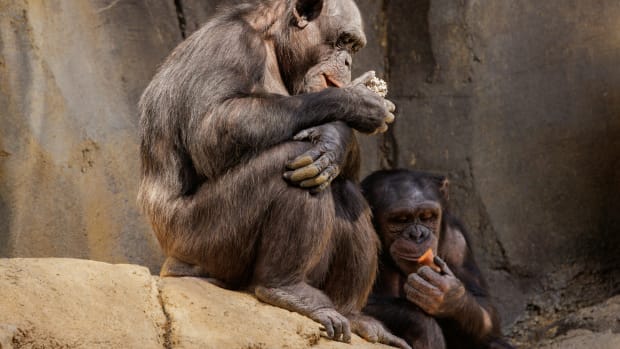
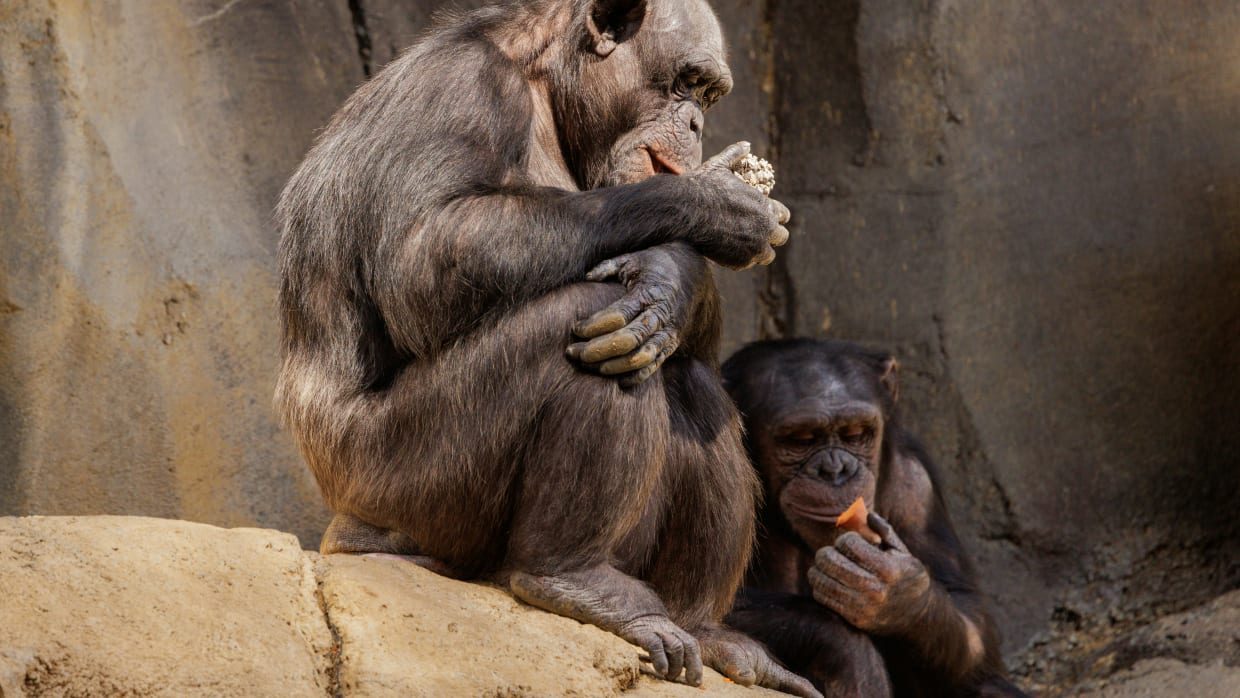
How and whether animals practise democracy varies greatly from species to species. Chimpanzees “elect” their leaders through a complex social structure. Biologist Frans de Waal described this in his 1982 book Chimpanzee Politics: Power and Sex Among Apes. To come to power, size and muscles are not the only things that matter, an emerging leader is heavily dependent on the support of other males and influential females. It’s a case of nepotism: the more allies a leader has, the greater the chance of reaching the top of the monkey rock. If the leader loses his friends, impeachment is not far off. This is often far from peaceful and can sometimes even prove fatal.
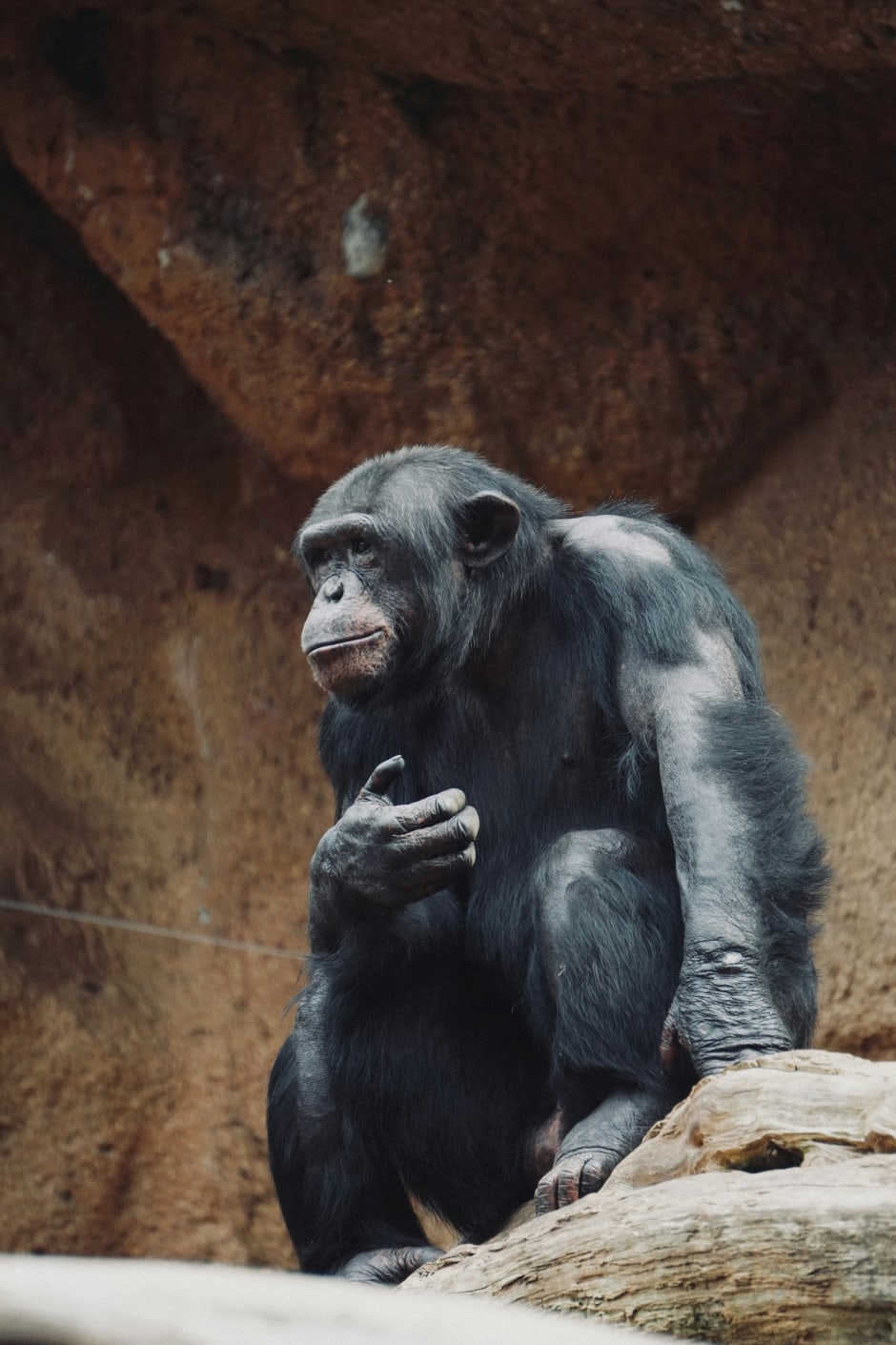
A leader is useful for social animals that live in groups, says professor of comparative psychology Mariska Kret. In 2012, she conducted the first computer experiments at the University of Amsterdam on chimpanzees and bonobos, the two species of great apes most closely related to humans. “The leader often sets the course. For example, they know on which day to go to certain fruit trees because the fruit there is ripe.”
A leader brings peace and stability to a group. Ultimately, it is best for every individual in the group when there is enough food, as little stress and as many offspring as possible, according to Kret. “That is also why it is important for chimpanzees and bonobos that a leader is empathetic. A dictatorial leader who only thinks of himself is of little use to the group.”
Sacrifice
Ants, on the other hand, do not engage in favouritism, but practise a much more impartial form of democracy, according to ant researcher Jonna Kulmuni. “Ants send out scouts to find food. When the scouts find food, they leave a scent trail on their way back to the nest. The shorter the path to the food, the stronger the scent trail, and therefore the path that the majority of ants choose.”
Ants also apply this same mechanistic principle when choosing a new nest. But that does not always lead to the best decisions, says Kulmuni. She cites an experiment by Israeli researchers who presented ants searching for a new nesting site with a dilemma. The researchers showed all the ants a mediocre nest site, and a majority of the ants – but not all – an excellent nest site. The researchers then let the colony choose between the two nests. The entire colony moved into the poorer nest site, even though the majority of the ants knew full well that the other site was a better place to live. Ants are therefore willing to make a significant sacrifice to remain with the group, a trait characteristic of “eusocial” species – species that live in colonies with a division of labour – and unthinkable for more selfish individuals.
Coordination
Carrier pigeons do not simply fly along with the flock, states Bart Nolet, professor of movement ecology at the UvA. These pigeons, which are known for their ability to find their way back to their loft from dozens of kilometres away, follow a single leader who determines the direction. The pigeon that can fly fastest becomes the leader, at least if it flies in the right direction.
In an experiment, researchers deliberately disrupted the leader’s sense of direction, causing it to choose the wrong direction upon departure. The other carrier pigeons managed to reverse the leader’s decision and still choose the right direction together. “This demonstrates the power of democracy over autocracy,” concludes Nolet. Another admirable characteristic of pigeons is that leaders who make mistakes also lose their influence within the group.
Not all herd animals blindly follow their leader. Biologist Herbert Prins discovered as early as 1996 that buffalo hold votes on where to graze. They do this by standing up one by one and staring in a certain direction for a while. After the vote, the group departs in the direction chosen by the majority of the buffaloes.
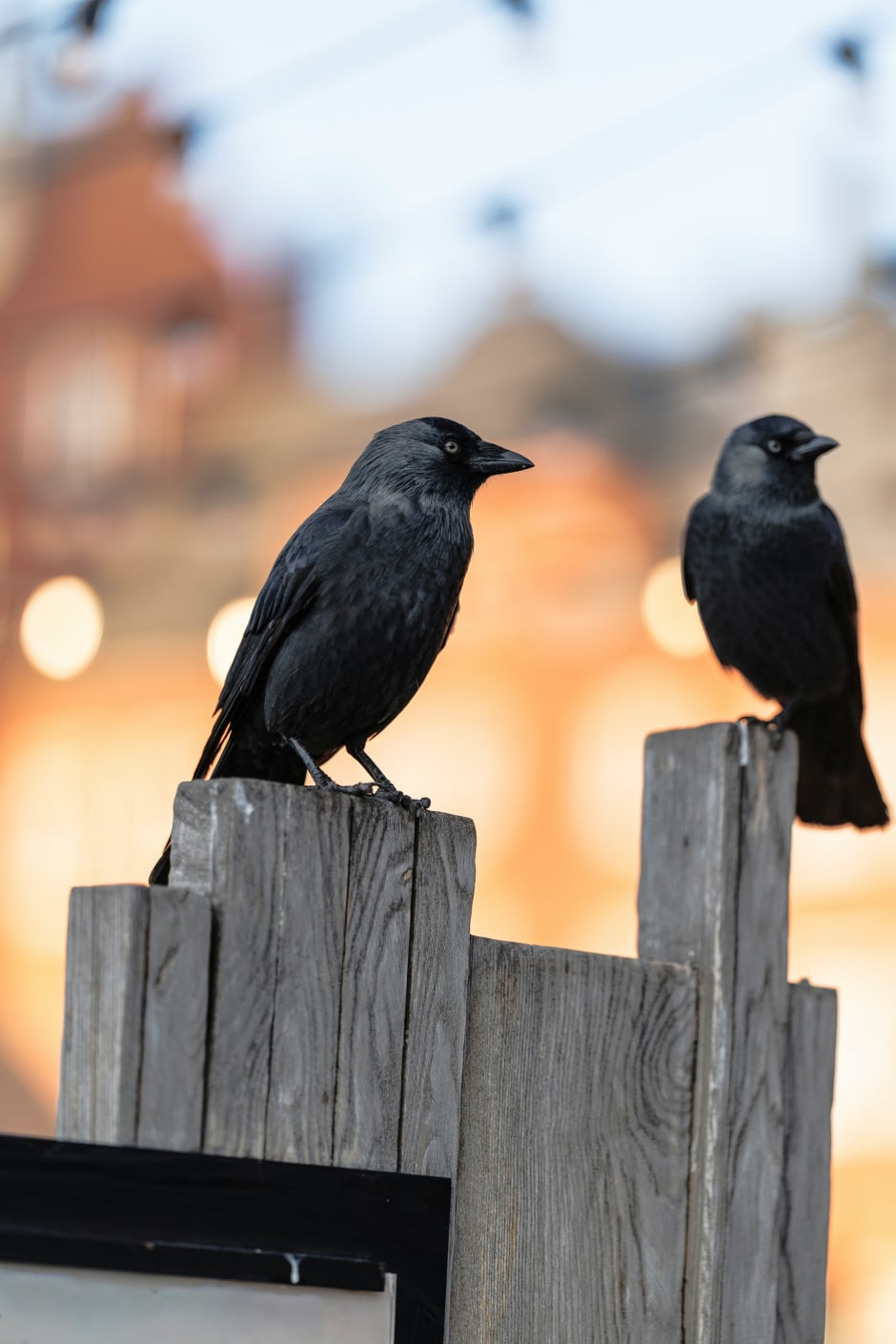
Groups of geese depart when their mutual squawking reaches a climax. Researchers proved that the squawking is the cue for departure by bringing forward the departure time using sound recordings. Small swans also coordinate their departure by calling, as Nolet knows from his fieldwork. They can also be more subtle: they nod their heads when they think it is time to fly on.
Gorillas use so-called “vocalisations” to reach a group decision about the time of departure. “You could see this as a form of democracy, although some votes carry more weight than others,” says Benjamin Robira, evolutionary biologist at the UvA. The voice of the silverback, the leader of the group, is decisive in determining the destination. The dominant females can also push through their opinion on this matter, provided they conspire together.
Cats
Cats do not generally like to gather in groups. “The ‘meeting junkie’ is therefore a very strange concept,” notes animal-human scientist Maarten Reesink. “Cats are solitary animals which, with the exception of the lion, do not hunt in groups.”
The only situation in which cats are forced to consult with each other is when they depend on the same food source. This applies to cat colonies, domesticated house cats that live in the wild and depend on rubbish dumps, restaurant waste and fish markets. Reesink: “In such cases, cats form matriarchal groups without alpha females. Males circle around them.”
According to Reesink, little research has been done into how cats reach decisions. “They probably do not do this by meowing, because cats – contrary to what the Dutch movie Minoes suggests – do not meow to each other. My guess is that they communicate a lot through scent. But how does that work? I haven’t come up with a research design for that yet.”
Stickleback
Marion Nicolaus, a researcher from Groningen who studies the behaviour of sticklebacks, believes that too little is known about fish to be able to speak of democracy. “We are only now beginning to understand communication between fish. How they make decisions in a group is still a step further.”
Which fish swims at the front of a shoal is mainly determined by physical characteristics such as size and swimming ability. However, knowledge about behaviour of fish is growing. Nicolaus: “The antisocial fish swim at the front more often; they are the better swimmers and less afraid of danger. At the back you find the more social fish, with lesser swimming abilities.”
Lost
Fish ecologist Rob Kroes also thinks democracy among fish is a bit far-fetched. However, he is immediately reminded of a Norwegian study on herring that migrate from northern to western Norway to spawn. The older herrings largely pass on the route to the younger fish through social learning. Due to overfishing, the younger herrings now have to manage without their parents and lose their way. Kroes: “I do see an analogy with the composition of our current House of Representatives.”
Nevertheless, we should not take the animal kingdom as our starting point when tinkering with our democracy, according to evolutionary biologist Robira. “The concept of democracy – that every vote is equal – is a construct of our human culture. With apes, it works slightly different. Humans have the ability to reflect on our own actions and therefore have all the tools we need to be democratic. It is therefore up to us to rise to the challenge and act accordingly.”
From 28 April, a new edition of Folia will once again be available in purple distribution racks. The free print magazine will be disposable on all campuses from that date onwards, featuring democracy as its central theme.