UvA aims to prevent PhD delays with tracking system
From 2027, the UvA will also start using a central PhD tracking system, Hora Finita. This digital system – which has already been adopted by seven universities – records every stage of the PhD process. It forms part of a broader plan to improve the supervision of PhD students at the UvA.
1. What is the situation regarding PhD candidates at the UvA?
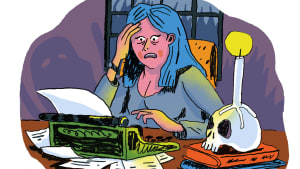
One of the main problems PhD candidates face is the delay of the PhD proces. Only 13 per cent of PhD candidates manage to complete their PhD within the agreed four years, according to data on PhD candidates who started a PhD programme whilst employed at the UvA between 2013 and 2018. Around half of PhD candidates complete their thesis whilst on unemployment benefit after their employment contract has expired.
Poor supervision is one of the causes of delays at Dutch universities, concluded the Dutch PhD Network (PNN) in a report last year. An UvA-wide audit concluded at the end of 2024 that the supervision of PhD candidates at the UvA requires more “centralised management” and that there is an “urgent need” to implement a central PhD tracking system, which provides insight into the progress of all PhD programmes at the UvA.
2. What has become of that advice?
Since 2025, the UvA has been working under the banner “Promotie Volg” (English translation: Promotion Track) to improve the supervision and progress of PhD programmes. Promotie Volg consists of three components: updating the UvA PhD Regulations, improving the provision of information, and implementing the PhD tracking system, Hora Finita. Elske Gerritsen, Director of Academic Affairs at the UvA: “All three elements are interlinked, and we intend to tackle them simultaneously. The recommendations from studies by PNN, the CPC and the audits are being incorporated into this.”
Hora Finita is a digital PhD tracking and registration system that records every stage of the PhD process: from registration with the PhD Committee (CvP) to the submission of the thesis. This should make it easier for PhD candidates and supervisors to locate all information and documents relating to the PhD. The idea is that this will also give the UvA an overview of the progress of all its PhD candidates in a single system.
3. Seven universities have already switched to Hora Finita since 2019. Why is the UvA only switching now?
One of the reasons for this lies in the UvA’s decentralised organisation: each faculty registers PhD candidates in its own way. Many PhD candidates are registered in SAP, the UvA’s staff database. But that does not provide a complete overview: external PhD candidates – who are not employees of the university – are not included there, for example. Furthermore, there is no scope in SAP to record additional information about the PhD programme. For some of these steps, the student information system SIS is now used. Previous attempts in 2015 to integrate SIS, SAP and the digital learning environment Canvas came to nothing.
The size and diversity of the UvA also play a role. Gerritsen: “There are almost five thousand PhD candidates enrolled at the UvA. Moreover, the PhD process in medicine, for example, is organised very differently from that in the humanities. That makes it complicated to introduce a single system that works for the entire UvA.”
4. Will Hora Finita prevent PhD candidates from running over their time?
That depends on how the system is set up and used. Gerritsen: “Hora Finita can act as a nudge for PhD candidates and supervisors alike, as it reminds users to complete mandatory steps, such as registering their PhD with the CvP. If the steps haven’t been recorded, the supervisor cannot proceed further in the system either.”
At the same time, Hora Finita is just one link in the whole chain, adds Ivar Klinkenberg, director of educational logistics at the Executive Board: “Of course, you hope that the system will help PhD candidates complete their programmes more quickly, but I think the issue of PhD candidates running over time is more complex than simply saying: ‘Let’s throw a system at it and the problem will be solved’.”
Gerritsen: “From a policy perspective, we will certainly look seriously at whether we can steer towards the timely completion of PhDs. And steps have already been taken in this regard. For instance, the PhD regulations stipulate that a PhD candidate must always have two supervisors. And a maximum of 70,000 words has been set for the thesis to prevent a PhD from becoming a life’s work but rather remaining a test of competence.”
Philine vom Baur, chair of the CPC, agrees. “It may be beneficial for PhD candidates that a centralised system is now being introduced, provided it does not entail additional regulatory burdens. But completing a PhD remains an individual journey. Whether a PhD candidate can complete their PhD on time therefore depends on a great many factors: the research material, the availability of research subjects, supervision and personal circumstances. That will not be resolved by a single system.”
5. When will all UvA PhD candidates be able to register with Hora Finita?
The tender process for Hora Finita was completed last year. The UvA is currently working with the supplier on the technical integration and design choices for the PhD tracking system. This is being done in consultation with Academic Affairs, educational logistics and the faculties. The CPC is also consulted regularly.
“It goes without saying that the training and supervision plan, the courses the PhD candidate is taking and the progress reviews will be included,” says Gerritsen. However, whether a review stage will also be included – as recommended by the audit – namely a meeting one year before the PhD is completed in which a binding schedule is established for the remainder of the PhD programme, will be the subject of discussion in the coming period.
The CPC has already indicated that it wishes to record the hours a PhD candidate spends on teaching in the system. Vom Baur: “This will provide greater oversight to ensure PhD candidates do not spend more than the agreed time on teaching. After all, 70 per cent of PhD candidates work more hours than specified in their contract. ‘Promotie Volg’ is an opportunity to change that.”
From 2027, all UvA PhD candidates are expected to be registered in Hora Finita. And that is not the end of the story. Klinkenberg: ‘Even after 2027, we will continue to monitor how the system works for PhD candidates and supervisors and where there is room for improvement.’