How we forgot the first prime minister of the Netherlands

He was once (albeit for less than two months) the first prime minister of the Netherlands, but today even his descendants have forgotten him. In his biography De vergeten minister-president: Gerrit Schimmelpenninck (1794-1863) (The forgotten prime minster Gerrit Schimmelpenninck, ed.), UvA PhD candidate and historian Hans Verbeek seeks to paint a picture of Schimmelpenninck’s life. “His ideas are now political reality.”
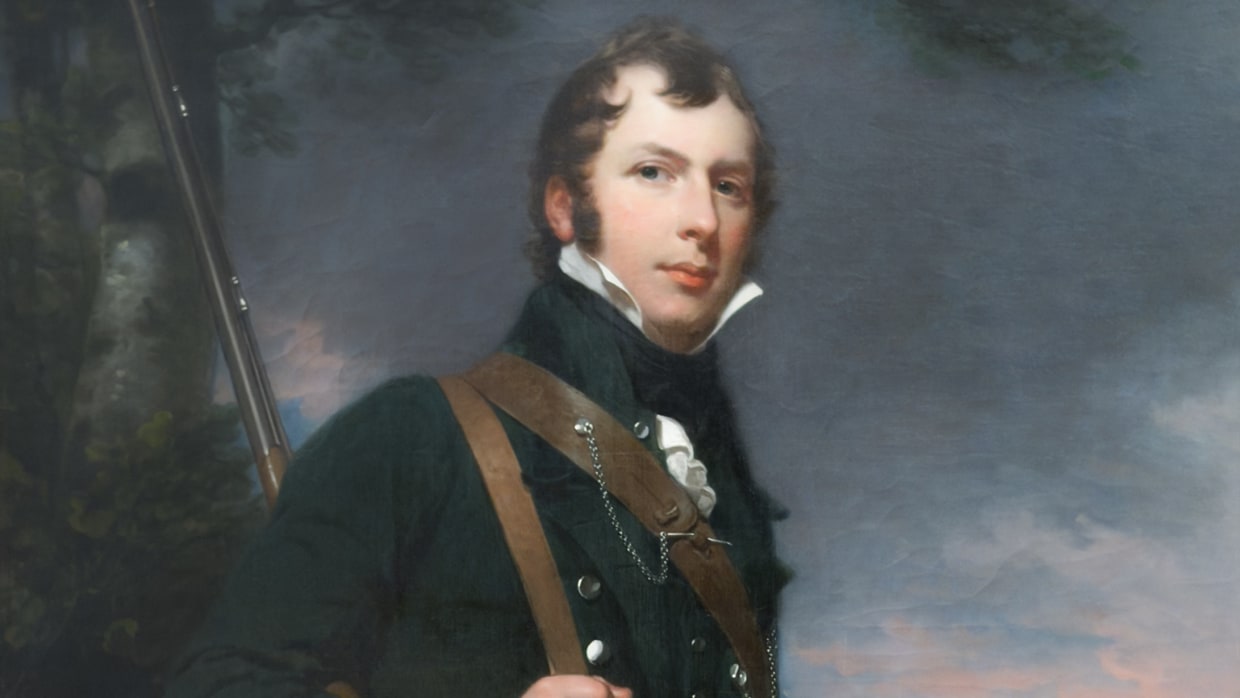
Who was Gerrit Schimmelpenninck, Thorbecke’s great enemy in 1848? We are all familiar with Johan Rudolph Thorbecke’s constitutional revision of 1848 and the accompanying reforms that formed the basis of the political system we know today. His lesser-known opponent, who at the time held competing ideas about the new constitution, has been forgotten. The story of count Gerrit Schimmelpenninck shows that history is the chronicle of the victors.
Who was Gerrit Schimmelpenninck?
“At his core, he was Thorbecke’s main opponent in the debates over the 1848 constitutional revision. In historical accounts, he is portrayed as the conservative count who opposed change, in contrast to the reform-minded Thorbecke. Schimmelpenninck described himself as a liberal, and that is also reflected in his view of the constitution. The image of him as a conservative must therefore be revised.”
“Schimmelpenninck looked down on other people, including the king. And certainly on Thorbecke, whom he considered merely a theorist, an armchair scholar. And that was absolutely no compliment. Schimmelpenninck came from the elite and truly saw himself as a man of practice. He therefore thought to know it all better.”

What did Schimmelpenninck want that was different from Thorbecke?
“Schimmelpenninck was a strong advocate of the British model. A strong prime minister, ministerial responsibility, and a ceremonial, non-political role for the king. It was particularly on that last point, as well as the position of the Senate, that he differed most from Thorbecke. He wanted to transplant the British model one-to-one into the Netherlands.”
“Just like Thorbecke, he wanted a directly elected House of Representatives. Schimmelpenninck even wanted more members in the House than Thorbecke’s constitutional committee. But the Senate was very important to Schimmelpenninck. He wanted the British system of the House of Lords in the Netherlands as well. Men who, on the basis of proven administrative qualities, would be appointed for life by the king. He believed that the Senate should truly become a kind of higher appellate body with respect to decisions made by the House of Representatives and should serve as a buffer between the Royal House and the House of Representatives. He foresaw that, if Thorbecke’s plans were implemented, the House of Representatives (as the representative of the people) would find itself in direct opposition to the king should the Senate be dissolved. According to Schimmelpenninck, such a situation had to be avoided at all costs. His greatest fear was that in that instance the monarchy would be endangered.”
“In Schimmelpenninck and Thorbecke, you see two different concepts of what politics is pitted against each other. Thorbecke was a man of political discourse; he didn’t mind if ideas clashed. Schimmelpenninck came from the elite of the local gentry and viewed politics more as an administrative function and the creation of social harmony.”
Why have we forgotten him?
“History is often written by the victors. Another historian referred to this as “Thorbeckian historiography.” Consequently, there was little room in the historiography of the nineteenth century for anyone other than Thorbecke. Of course, he played the most significant role, but there were certainly other men around as well.”
“In addition, Schimmelpenninck grew up in the shadow of his much more famous father, Rutger Jan Schimmelpenninck, who was Grand Pensionary of the Netherlands. Several biographies have already been written about him. Little to nothing is known about Gerrit’s existence. Not even by the Schimmelpenninck family itself. My husband is a Schimmelpenninck, a direct descendant. They knew Rutger Jan, but they knew almost nothing about Gerrit. That is conspicuous.”
Why was he appointed by King William II as the first prime minister?
“In 1848, there was social unrest throughout Europe. Monarchies were being overthrown and revolutions were breaking out. In The Hague, there was a fear that this revolutionary atmosphere would spread to the Netherlands. Schimmelpenninck was living in London at the time, where he served as the Dutch ambassador. The king decided to bring him back to the Netherlands. He wanted to use him as a buffer against the reform-minded clique surrounding Thorbecke. The king believed that with Schimmelpenninck, he was bringing in someone who could guarantee the preservation of the current system.”
“The king clung to him, putting Schimmelpenninck in a position to make demands. He made three: he wanted to draft his own constitution, choose his own ministers, and, as prime minister, become chairman of the Council of Ministers. Previously, this position rotated; Schimmelpenninck wanted to assume it permanently.”
King William II personally brought Schimmelpenninck to the Netherlands. Why did he ultimately choose Thorbecke instead?
“The king was under immense social and political pressure to implement more reforms. The king was extremely indecisive, but in May 1848 he ultimately chose to follow Thorbecke’s line. That also marked Schimmelpenninck’s immediate exit. So he was prime minister for only two months. Formally, the position of prime minister wasn’t incorporated into the constitution until 1983.”
“It was also a clever move by Thorbecke. He had already made significant progress with the constitutional committee and had sent those plans to the state printing office. They were already out in the open before the Council of Ministers could even respond.”
“I would go so far as to call Schimmelpenninck the first failed prime minister. That was partly due to the circumstances, but also to his own overconfidence and arrogance. He simply didn’t have the qualities to seek support; his ego was too big to form coalitions. He overlooked the fact that you still need support from others to implement plans.”
Would the Netherlands have looked different if Schimmelpenninck had won the battle?
“That’s hard to say. But in practice, we see that many of his ideas from back then have ultimately become political reality today. We now have a prime minister who leads his own cabinet and a king who plays no political role and fulfills only a ceremonial role, such as on King’s Day.”
“But his proposal could really only work with a two-party system like the one England had at the time. Then you could be sure the prime minister could rely on a parliamentary majority. That didn’t exist in the Netherlands back then. So his ideas were actually ahead of their time.”
You write that Schimmelpenninck failed as a politician; was he successful in any other capacity?
“He was a diplomat and served as director of the Dutch Trading Company for ten years. Little has been written about Dutch diplomacy during that period. How did they operate? What did they do? It was precisely through access to his private correspondence that I was able to gain a very clear picture of Schimmelpenninck the diplomat. In his letters, you see that he very often tells The Hague: “Leave that to me.” As a diplomat, he was successful and managed to defuse several sensitive issues between England and the Netherlands, such as slavery.”
How did he himself look back on his political career?
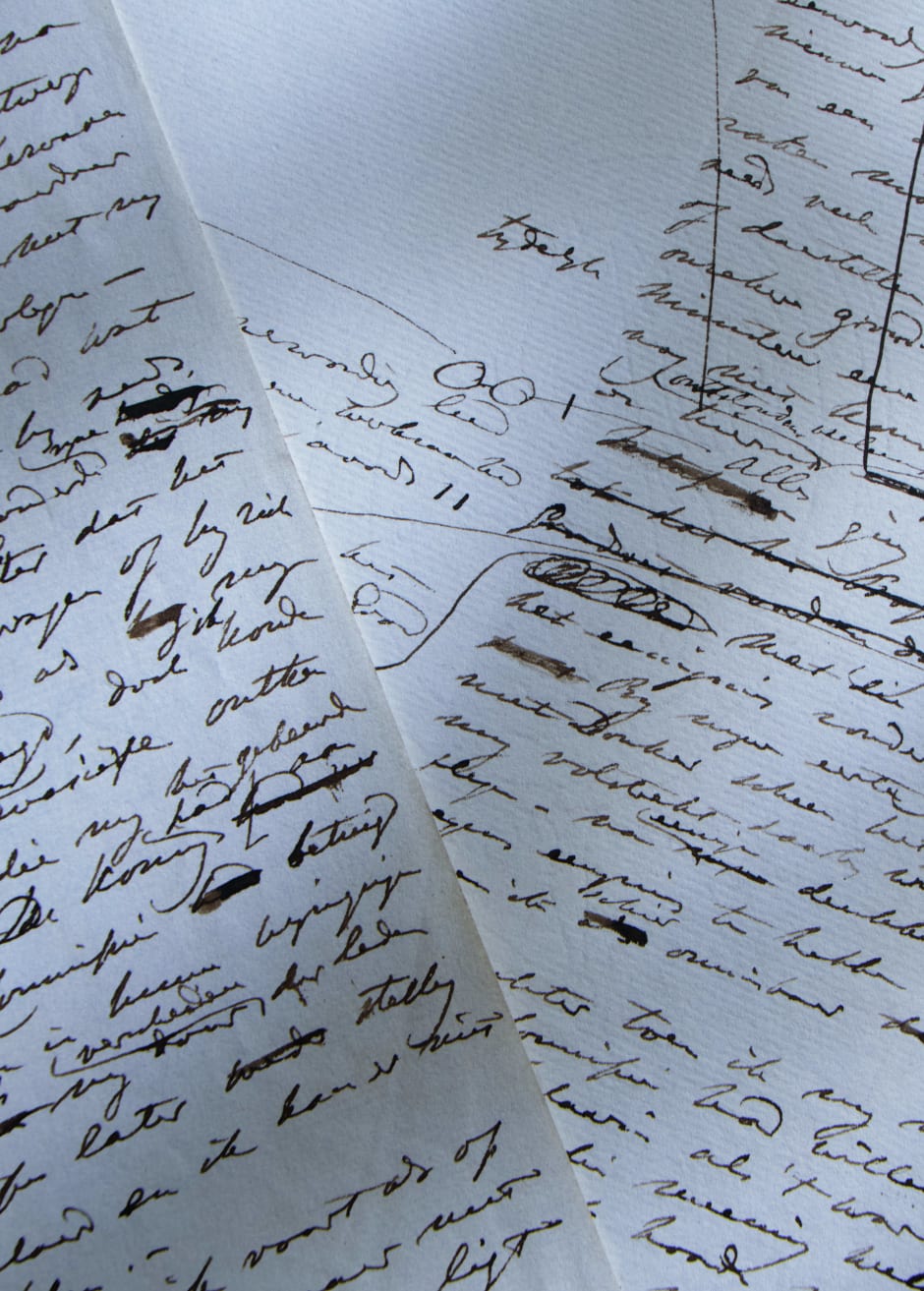
“In his political memoirs, you see that he mainly criticizes others. You see wild handwriting and many cross-outs; there was a lot of emotion in it. That’s fantastic to see. But he never thought it was his fault; it was always the fault of others or the circumstances. He also thought the king was a weak figure. Schimmelpenninck certainly lacked a bit of self-reflection.”
Hans Verbeek will defend his dissertation, titled De vergeten minister-president: Gerrit Schimmelpenninck (1794-1863), on Wednesday, April 8. The defense will take place from 2:00 to 3:30 p.m. in the auditorium of the Old Lutheran Church. The biography will also be published as a book and will be available starting April 8.