
With new book young researchers aim to break through the cynical mindset in academia
Whilst universities are still breathing a sigh of relief at the reversal of the cuts, academics from the Amsterdam Young Academy (AYA) warn in the book Fixing Academia against a return to business as usual. “The academic funding landscape has become a rat race that leads to more losers than winners.”

Working in the evenings, at weekends and during holidays, spending weeks on grant applications with minimal success rates and going through endless rounds of revisions just to get an article published. For many academics, this is daily reality, not to mention the problems faced by first-generation academics and non-Western academics.
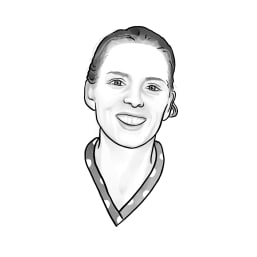
That has to change, say scientists from the Amsterdam Young Academy (AYA). In the book Fixing Academia, a kaleidoscopic collection of personal essays, nine problems are addressed and the authors propose solutions. Folia spoke with UvA researcher and AYA co-chair Micha Heilbron.

Micha, the cuts to higher education have just been reversed. Why did you want to write this book now?
“This book could have been written at any time, as the problems facing the academic world are fairly timeless. We are living in strange times: in recent years, dark clouds of cuts and uncertainty have hung over the universities. With the new minority government, those dark clouds seem to be lifting. There is certainly a sense of relief at universities: can we return to business as usual? And I think this book shows that this is absolutely not in the interests of academics, and particularly not for young researchers.”
What exactly is wrong with universities?
“One of the main problems is the extreme competition among researchers when applying for funding. Researchers spend a great deal of time and energy competing with other researchers of a similar calibre for grants with low success rates, sometimes as low as 6 per cent. The academic funding landscape has become a rat race that leads to more losers than winners.”
“That competition also means that arbitrary differences at the start of your career – whether or not you get that one publication in that journal or that one grant – have major consequences for the rest of your career. This is described by the Matthew effecta sociological phenomenon describing how the rich get richer..”
“Furthermore, we are stuck with a publication system where researchers do the work and commercial publishers walk away with huge profits, as described by VU researcher Berend van der Kolk in the ninth chapter. We perpetuate that system because we still attach value to publications in certain journals.”
Aren’t we already aware of these problems?
“Yes, but just because we’re aware of them doesn’t mean anything will change. Universities are conservative institutions that perpetuate problems out of a kind of inertia or inability to act. At AYA, we want to remain critical of the system and show that change is possible.”
What change are you proposing?
“We could, for example, break the Matthew effect in grant applications by adopting a more lenient selection process – based on a CV rather than a 40-page grant application – followed by a lottery. After all, determining whether someone belongs to the top 20 per cent is easier than determining whether someone is ranked 13th or 14th out of a thousand candidates. This reduces the focus on excellence, because if you secure your first grant partly through a lottery, that also has less of an undeservedly positive impact on your next grant.”
“Another option is to provide more research funding via the first-stream funding. At present, researchers often have a position at the university but no money for research. The starting grants for early-career researchers were intended to change this, but they have since been scrapped. In Chapter 3, UvA alumnus Dion Kramer argues in favour of a smaller basic grant for all researchers, which they can spend as they see fit. That also gives the faculty more autonomy. Then we can discuss more often which topics are important to research, rather than asking, ‘Is Pietje more excellent than Gerda based on their CVs?’”
Who should bring about this change?
“That’s a good question. And an easy one to ask, because it raises the question of whether this is even possible. Whether it’s about the publication system or the grant system, you think there’s a sort of control room from which everything is managed, but ultimately that control room turns out to be empty. So we need to change the system from the bottom up.”
Meanwhile, researchers are still dependent on publications in prestigious journals.
“Yes, but there is also another way of publishing emerging, and it is up to researchers to make use of it. In the life sciences, there is the eLife foundation, which publishes articles without a paywall (open access, ed.). They publish all articles they receive and include reviews from other researchers alongside them. Some researchers are turning away from this, but a large proportion of biologists still make use of it. In physics, they have been working for some time with self-organised scientific conferences instead of scientific journals. Although there are certainly snags involved.”
Such as?
“Well, the question of how we select remains, of course. If there is no commercial publisher to do the selecting, who then determines what is of high quality, how we select, and on the basis of which criteria? No alternative will be a panacea.”
“Nor are there any quick fixes. We also recognise that Fixing Academia is perhaps a little overconfident. The problems are simply too complex for that. However, they do want to show that solutions are possible. Because the cynicism in the academic world that ‘this is just how the system works’ is, after all, rather depressing. If this book is trying to do anything, it is to break through that mindset.”
Dion Kramer & Berend van der Kolk, Fixing Academia: Reflections from a New Generation of Scholars (VU University Press, 2026), ISBN: 978 90 8659 918 9. Price: €14.95 paperback. Also available free online.