75 years of Moluccans in the Netherlands: “A great desire for a space for dialogue”

Exactly 75 years ago, 12,500 Moluccan KNIL soldiers and their families arrived in the Netherlands. How does that colonial past continue to shape the lives of Moluccans in the Netherlands? UvA political scientist Jessica Soedirgo is investigating this for the first time in collaboration with the Moluccan community. “Moluccan identity is much broader than just the colonial past.”

Jessica, what again was the story of the Moluccan community in the Netherlands?
“I get that question a lot. Many Dutch people know very little about the experiences of the Moluccan community in the Netherlands. During the Dutch war in Indonesia, some Moluccans fought in the KNILRoyal Dutch East Indies Army, the Dutch colonial army. When the Netherlands lost the war and Indonesia became independent, many of these soldiers did not want to join a unitary Indonesian state and wanted to form their own independent state. This was a problem for Indonesia.”
“To resolve the problem, the Dutch government then came up with the idea of temporarily relocating the Moluccan KNIL soldiers to the Netherlands. Time in the Netherlands was supposed to be temporary, but that situation became permanent and now the fourth generation of Moluccans is growing up in the Netherlands. On 21 March 1951, the first ships arrived in the Netherlands. That was exactly 75 years ago.”

What did that move mean for the Moluccan KNIL soldiers?
“Upon their arrival to the Netherlands, the KNIL soldiers were dismissed from active duty. That was not only humiliating, but it also had major consequences for their income and position in society. They arrived in winter and were housed in camps, including former concentration camps, under difficult, often degrading conditions. This resulted in many painful memories and traumatic experiences that are not often discussed. With our research into the impact of the colonial past on the Moluccan community in the Netherlands, we want to initiate a conversation about this.”
How are you approaching this?
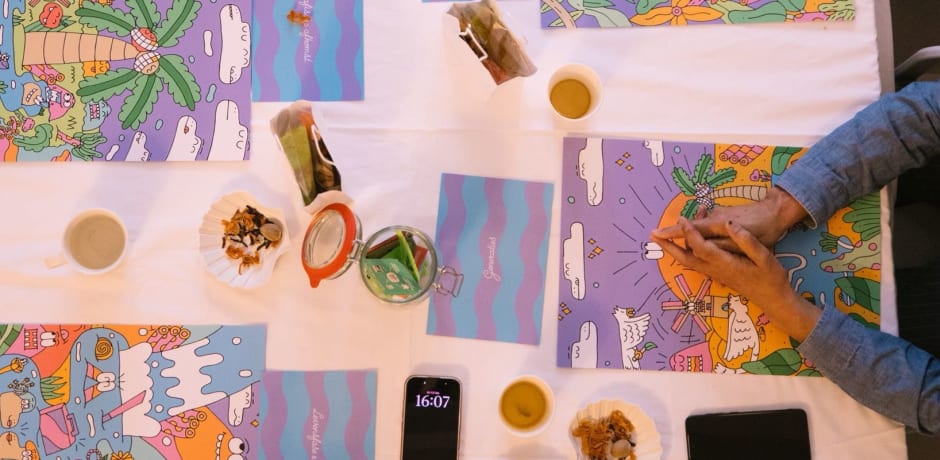
“We asked the Moluccan artist Lars Bogaers to developed conversation cards that went viral within the Moluccan community. There appears to be a great interest and desire among Moluccans for a place to talk about these issues. Our research focuses on conversations about the colonial past, but we also encountered a certain weariness with these conversations. It was as if Moluccan identity consisted solely of this. That is why the conversations also cover culture, family and other personal experiences. We have organised two pilot sessions with the cards and have eight focus groups planned until July.”
Many books have already been written and documentaries made about the Moluccan community in the Netherlands. What makes this research different?
“There are certainly documentaries on this topic, but some sources date back to the 1990s or tell a one-sided story, often full of clichés. There is also academic work on the Dutch Moluccan community, such as the work of emeritus VU professor Fridus Steijlen, who spent decades researching the history and identity of the Moluccan community in the Netherlands.”
“What makes this research special is our collaboration with members of the Moluccan community. The research team also includes researchers of Moluccan descent, such as Ph.D. candidate Charissa Leiwakabessy and external researcher Abigail Koopmans. Abigail and Charissa are also of Moluccan descent, and without their knowledge and the ability to speak Bahasa Ambon (the Moluccan language, ed.) fluently, we couldn’t have done it.”
What do you hope this research will add to science and the national debate?
“Many Moluccan stories have not yet been told, while at the same time, many key figures in academic research have retired in recent years. It takes time for people to speak openly about traumatic experiences, which can have an impact from generation to generation. Stories from the fourth generation are still largely unknown.”
“Much of the academic literature is in Dutch, and it is time that the experiences of Moluccans be known outside the Netherlands. Indonesian researchers I have spoken to, for example, have never heard of it.”
“I hope that it will ultimately contribute to the recognition of the experiences of Moluccans in the Netherlands and their commemoration. It also coincides, purely by chance, with the commemoration of 75 years of Moluccans in the Netherlands, which may be a reason to share stories now.”