UvA researchers launch school for evolutionary biologists in Ukraine

Since Russia’s invasion of Ukraine, science has also been affected by the war. Ten researchers, including UvA biologist Oleksandr Maistrenko, have therefore launched a biennial programme for evolutionary biologists in Ukraine. “Science ultimately works best when you can exchange ideas across national borders.”
The full-scale war in Ukraine has been going on for more than four years. In addition to the devastation caused by the war in the country, science is also suffering the consequences. Many Ukrainian scientists have lost their research facilities and funding, joined the army or had to move to safer regions in Ukraine or even leave the country. The research that is still being conducted is progressing more slowly. Power outages mean that laboratories cannot always be used, and young male researchers face travel restrictions because they may be called up by the army.
Fundamental
UvA biologist Oleksandr Maistrenko has seen a decline in the presence of evolutionary biologists at international conferences. “Evolutionary biology is a fundamental field, and it has always been difficult to obtain funding for it in Ukraine. But since the outbreak of the war, it has become even more difficult for students and young scientists to gain international experience in the field. That’s how we came up with the idea of setting up a school for evolutionary biologists in Ukraine.”
That is why Maistrenko, together with ten other, mainly Ukrainian researchers, started a school for this generation of evolutionary biologists: the Ukrainian School in Evolutionary Biology (USEB). Recently, the researchers described in a publication in the journal Nature Ecology & Evolution that maintaining the skills of the next generation of Ukrainian scientists is “one of the most urgent challenges”.
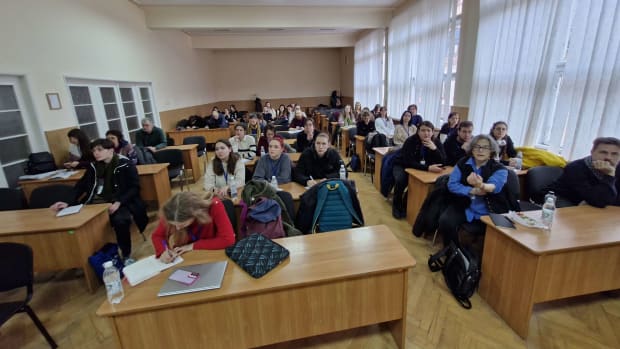
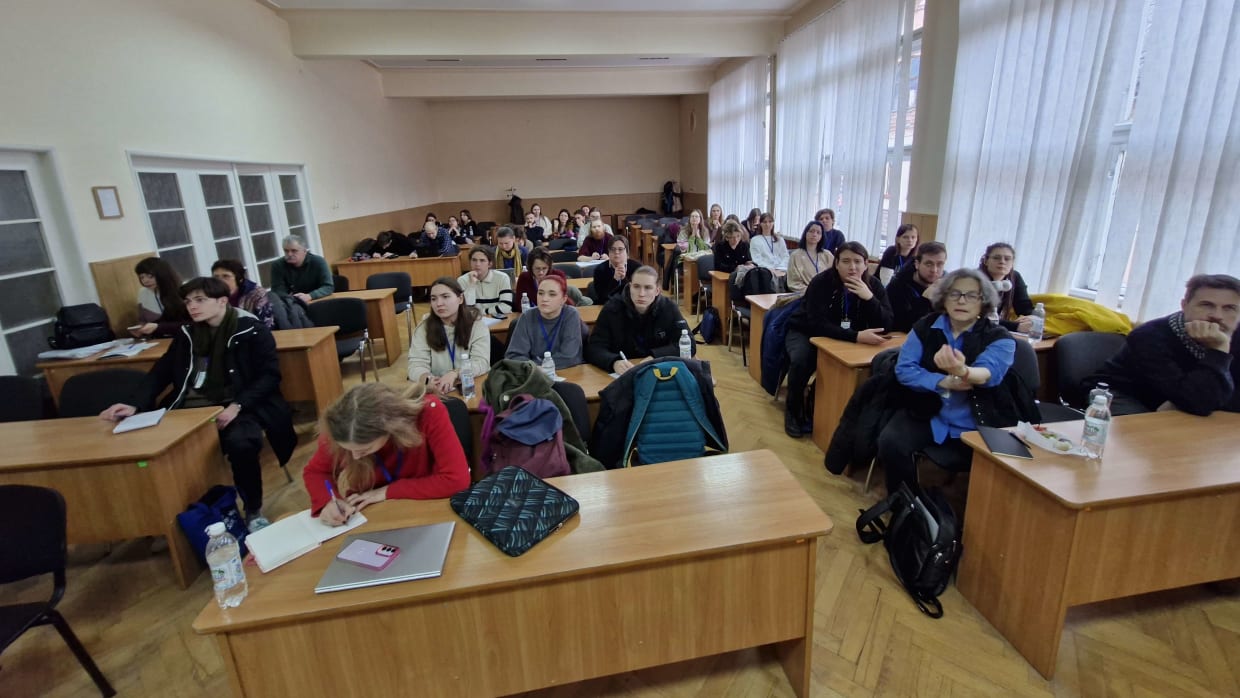
The researchers’ goal is to organise a five-day training meeting every two years for young Ukrainian biologists with international speakers. In January 2025, the first meeting took place at Uzhhorod, a Ukrainian city near the Slovakian border. And was organized jointly by the the University of Uzhhorod and the Karazin Kharkiv National University. A total of 168 students and young researchers from Ukraine participated in the programme, both in person and online, along with 44 from abroad. “We didn’t expect to attract such an international audience right away,” says Maistrenko. “But that is the goal. Ultimately, science works best when you can exchange ideas across national borders.”
Network
And so the researchers want to expand the school further. Maistrenko: “In addition to the meeting in 2027, we also want to organise monthly lectures. And offer students and researchers the opportunity to present their work to each other. In this way, we want to create a network where evolutionary biologists can come together informally to exchange ideas about science and related topics. Now, but certainly also after the war.”