UvA Phd-candidate: “Without a legal basis, the Restitution Committee for Nazi-looted art remains vulnerable”

In recent years, there has been regular criticism of the policy on the restitution of artworks looted by the Nazis. The Dutch Restitutions Committee would benefit from a solid legal basis, argues legal scholar Tabitha Oost, who will defend her PhD thesis on the subject at the UvA this Friday.
Recently, another painting by Jewish Amsterdam art dealer Jacques Goudstikker turned up in Argentina. The painting had been missing since the Second World War and came to light when a real estate agent innocently posted a photo of it on the internet. This does not mean that the painting is now back in the hands of its former owners: rather, it is the start of a long and protracted legal process.
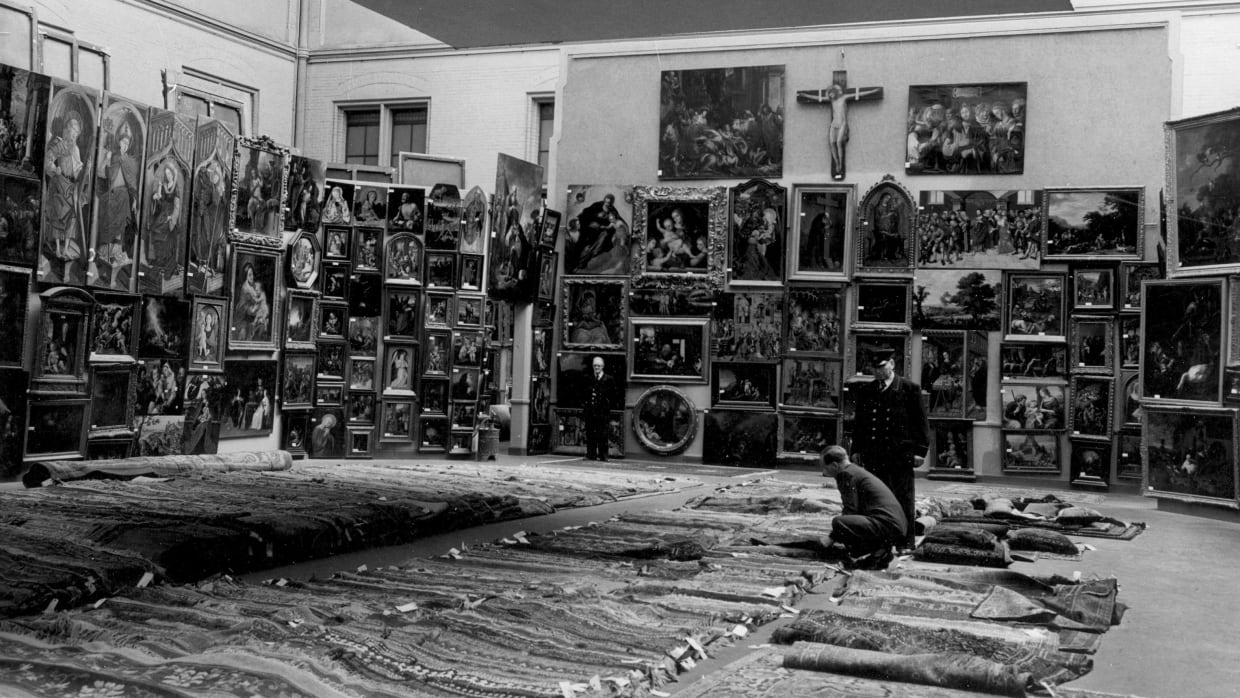
During the Second World War, the Nazis looted an estimated 5 million works of art, a fifth of all the art treasures in the world. After the war, 80 per cent of the Dutch art looted by the Nazis was returned to the Dutch state. Yet a large part of that art is still not in the hands of its former owners or their heirs.

Tabitha, why is it that a large part of the looted Nazi art still hasn’t been returned?
“It’s a bit more nuanced than that. Several European countries were restituted immediately after the Second World War, but certainly not everything. Already during the Second World War, it became clear that art was being looted on a large scale. In 1943, a declaration was drawn up that served as the basis for restitution shortly after the war. However, there were a number of hurdles. For example, the post-war systems of legal redress made no exception for Jews and other groups who were victims of systematic persecution.”
“In addition, the deadline for reclaiming works of art expired in 1951. Much of the art belonged to Jewish families, but heirs often did not know that anything had been stolen because family members had died and there was no proof of ownership. In addition, the Dutch government also charged a small fee for administrative costs. As a result, much of the art remained in storage or was even sold.”
“It was not until the late 1990s that awareness grew about the fate of Jews and other persecuted groups and the implications this had for the restitution of looted art. Then came the realisation that in cases of great injustice, more attention must be paid to the position of the victim, regardless of whether the law allows it or not. In 2001, the Dutch Restitutions Committee was finally established, an independent group of experts tasked with addressing unresolved claims in an accessible manner.”
And was the law changed for that purpose?
“No, the Netherlands opted for a policy-based approach. When the Restitutions Committee recommends restitution, the artwork is in principle returned. But you cannot enforce that through the law.”
In your thesis, you describe that the shift from a legal approach to a moral approach to Nazi-looted art also has a downside. What is it?
“I call this the paradigm shift in dealing with Nazi-looted art: from a strictly legal approach to a more victim-oriented approach. This development applies not only to the Netherlands, but to the whole of Europe. This shift is part of a broader development in law. It is also visible in the issue surrounding colonial looted art, and in the aftermath of the Dutch childcare benefits scandal (Toeslagenaffaire red.), where the Equal Restitution Foundation was created out of frustration with the strictly legal and slow approach taken by the Tax and Customs Administration itself.”
“Back to those restitution committees: the downside is that this paradigm shift has put pressure on the functioning of the restitution committees. The committee finds itself in a constant balancing act: it must be accessible and flexible, which has made it vulnerable at the institutional level.”
What are the consequences of that?
“The objective was never properly considered: is it about dealing with loose ends of post-war legal redress or about actually resolving historical injustice? The Dutch Restitutions Committee was originally established for five years, but it soon became apparent that this was insufficient. No consideration was ever given to the long term. Moreover, the files became increasingly complex, which also made the committee’s work more difficult. The first rejections of restitution requests followed, which quickly led to criticism.
“Another source of confusion was the Restitution Committee’s dual remit. Initially, the committee was only concerned with the Dutch Art Property Collection (NK collection), the collection of artworks that fell to the Dutch state after the Second World War. From 2005 onwards, the committee also had to assess art in the possession of, for example, municipalities and museums. This was subject to a different policy, which took into account the importance of maintaining the work for the current owner and the public interest in maintaining the work.”
“This led to unfair situations in which claimants were able to recover a work from the NK collection on the basis of the same evidence, but not another work in the possession of a municipality.”
“A number of claimants became increasingly sceptical as a result of incidents like these. The Restitutions Committee’s procedure was perceived as unclear, and for a long time the committee itself consisted largely of the same people. This made the committee vulnerable and unable to defend itself effectively against criticism, for example in the area of alleged partiality.”
What is your advice?
“If you really want these committees to play a role in recognising historical injustice, then the committee must have a legal framework for this. There should be a law that establishes the committee’s purpose: to recognise historical injustice. The role of such a committee must also be clearly defined — what it can and cannot do. Finally, a clear procedure, describing the handling of a claim step by step, is of great importance.”
“In terms of content – for example, the question of whether an art object was lost voluntarily or not – I believe that you should not create additional rules, in order to give space to the victim’s perspective. But in order to make the committees resilient, they must be well organised institutionally.”
Tabitha Oost will defend her PhD thesis The art of restitution: pursuing justice through restitution committee for Nazi-looted art on Friday 17 October at 2 p.m. The defence will take place in the Aula (Old Lutheran Church).