Joyeeta Gupta: “Without justice , we cannot solve the climate crisis”
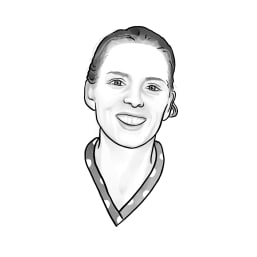
Joyeeta Gupta, then a PhD student and now a professor, was one of the first to write about climate justice. Since then, she has been respected worldwide, won a Nobel Prize and finally received recognition for her research on justice in the climate crisis with the Spinoza Prize. She has one more dream: a global constitution.

Indian-origin Joyeeta Gupta (60) and her Dutch husband have just decided that, after her ERC grant, she will retire early when the call comes. She has won the Spinoza Prize, the Dutch equivalent of the Nobel Prize. Gupta did not hesitate for a moment what she wants to do with the one-and-a-half million euro prize money: work on a global constitution, an idea she has had since her PhD thesis in 1997. This could end inequality between countries, Gupta hopes. A global constitution could also help share the burdens of the climate crisis equally.
Folia speaks to her, in Dutch, on a sunny November day at her home in Wateringen, a typical Dutch village between The Hague and the greenhouse area. Once inside, a different world unfolds: the room is painted with warm colors and is full of handmade figurines, tapestries and painted, wooden panels. “Handicrafts,” says Gupta. Taken from her travels, most of them from India. There is tea and chocolates on the table.

What all came your way after winning the Spinoza Prize?
“A lot, it was so bizarre to win the Spinoza Prize. I never thought my work had caught the eye of the UvA. I came in as a professor, one of so many. I have always been in my own international bubble.”
“The Spinoza Prize is really a prize for science, not for impact. Twenty, thirty years ago, when I wrote about justice in climate change, I was told it was too normative and I should stick to empirical research. And maybe that was good advice. I did not use the word justice for a while then and simply noted that there is inequality problem between the Global North and Global South, substantiated with facts. That I have now won this prize precisely for my work on climate justice is great recognition.”
“Since the Spinoza Prize, I have to show up somewhere in the Netherlands almost every week, for social debates, lectures, lunch talks at ministries, you name it. That’s because of my topic: climate, water, and the global constitution, that’s what everyone wants to talk about.”
What should we do about climate change?
“An earlier paper I wrote shows that rich people may be able to buy everything, but they cannot afford everything. After all, everything you buy has an impact on the environment. So it makes no sense to donate ten euros a month to poverty alleviation if your consumption behavior is damaging the earth. We calculated that damage, looking not only at safe limits, the limit after which nature on earth reaches a so-called tipping point after which there is no turning back, but also at equitable limits.”
You speak of ‘equitable limits’. What do you mean by that?
“The effects of climate change are felt most strongly in poorer countries. That is where most extreme weather events, floods and earthquakes take place. At the moment, we seem to have accepted as humanity that it is okay for tens of millions of people to be victims of climate change. Therefore, as researchers, we want to set 1 degree Celsius warming as a just limit because at that point, 1 per cent of the world's population is already being harmed.”
And what does that mean?
“That rich countries will have to downsize, tighten ones belt a bit. There is limited space. The richest four per cent of the world already accounts for 26 per cent of the pressure on the limits that are acceptable on climate change globally. At the same time, giving only the poorest access to water, food, healthcare, education and housing - and I’m talking about a 15-square-meter house, three light bulbs and a fridge, 100 liters of water and 2,500 calories - causes 26 per cent more CO2emissions than we already have. That calculation really did shock us, too.”
Doesn’t drastically reducing climate change go against democratic principles?
“I get that reaction more often. Just like the comment that our economy must continue to grow at all costs to free up money for subsidies for renewable energy. But that doesn’t work for climate change. You can make a profitable business plan for renewable energy and plant proteins like meat substitutes. But how do you make a profitable plan of closing the fossil industry? These are ‘non-bankable’ projects, our research shows. That is, companies and investors are not going to solve it but the government has to step in.”
“I often get told: I don’t believe in that justice story. But then people have not understood the story because without justice you cannot solve all these problems. It is not a normative story but pure science. The fact is: 78 per cent of fossil fuels are in developing countries. Fact is: they have all the technology to extract those resources. And the fact is: rich countries ARE losing control. And maybe, with a justice approach, you can entice them not to tap the resources. So you will have to.”
On the global constitution: you are now a year and a half in. How are you proceeding?
“We have put out a request for essays to 30,000 people worldwide, asking them to write down in a thousand words what they would like to see in a global constitution. The first deadline is February this year, the second February 2026. From February, three PhDs will start working on the ideas.”
“One PhD project will focus on the relationship between private and public law. Often contracts of loans and investments governed by private law are stronger than international climate and biodiversity agreements. The other PhD student looks at the environmental impact of new technology and the third deals with space for nature, environmental problems and inequality. For example: globally, we aim for 50 to 60 per cent nature. We are now at 45 per cent. The question is, where should that happen?”
How can all world leaders ever agree on one constitution, if at climate conferences we don’t even manage to agree on one agenda item?
“That is also a very difficult process. To get countries to negotiate it, you have to have a good contact at a country to get the issue on the agenda. And make sure the majority of countries eventually vote in favor.”
“That is why I want to focus on a very good constitution, based on three PhD projects, which is not necessarily feasible but desirable. I see it as a code of conduct, like Hammurabi’s code, one of the oldest recorded codes of law from the Babylonian era. We don’t chisel it in stone, but draw up a guideline that can be referred to later. Where possible, I try to incorporate it into policy already. Parts of it I have already put on the agenda at the UN, but the whole is not going to work. A global constitution is like a cathedral, which will be built when I am no longer here.”
This interview appeared in the winter paper edition of Folia, which can be found everywhere on campus this week.