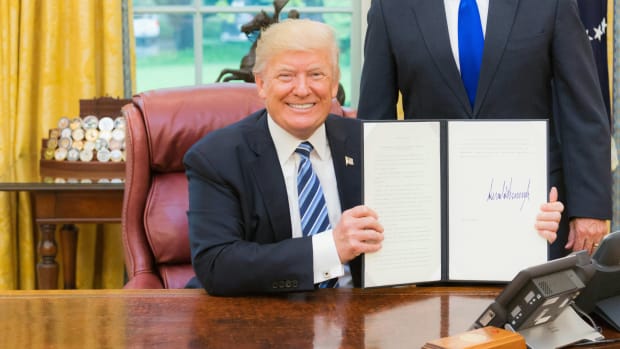
Trump withdraws from WHO: “This also increases health risk in the Netherlands”
Meanwhile, the United Nations also confirmed that Donald Trump is withdrawing from World Health Organisation (WHO). The scientific community is reacting with shock, but what exactly does the decision mean? Five questions to physician microbiologist and professor at the Amsterdam Institute for Global Health and Development (AIGHD) Constance Schultsz.
What makes the WHO so indispensable?
“WHO is the only health organisation operating globally with a mandate from the United Nations. And thus the only organisation that can make agreements on health issues at global level. This could include combating infectious diseases like corona or polio, but also chemical threats or cancer control, for instance. The WHO has an active advisory role: it shares information, advises and coordinates. Countries ultimately make the decisions themselves. The WHO also works on global programmes, such as previously eradicating smallpox and now polio.”
How does the World Health Organisation work?
“WHO not only works at the international level but also at the regional and country level. Its headquarters are in Geneva, and there is also a WHO office in every participating country. Through those countries, WHO can request data, for example, to see if there are any major international threats.”

“She also has a role in vaccine development. For example, they coordinate data collection on which flu virus variants are circulating around the world, ensuring that flu vaccines with the right composition are made on time every year. They also try to support countries in their healthcare systems.”
Why is Trump leaving the WHO?
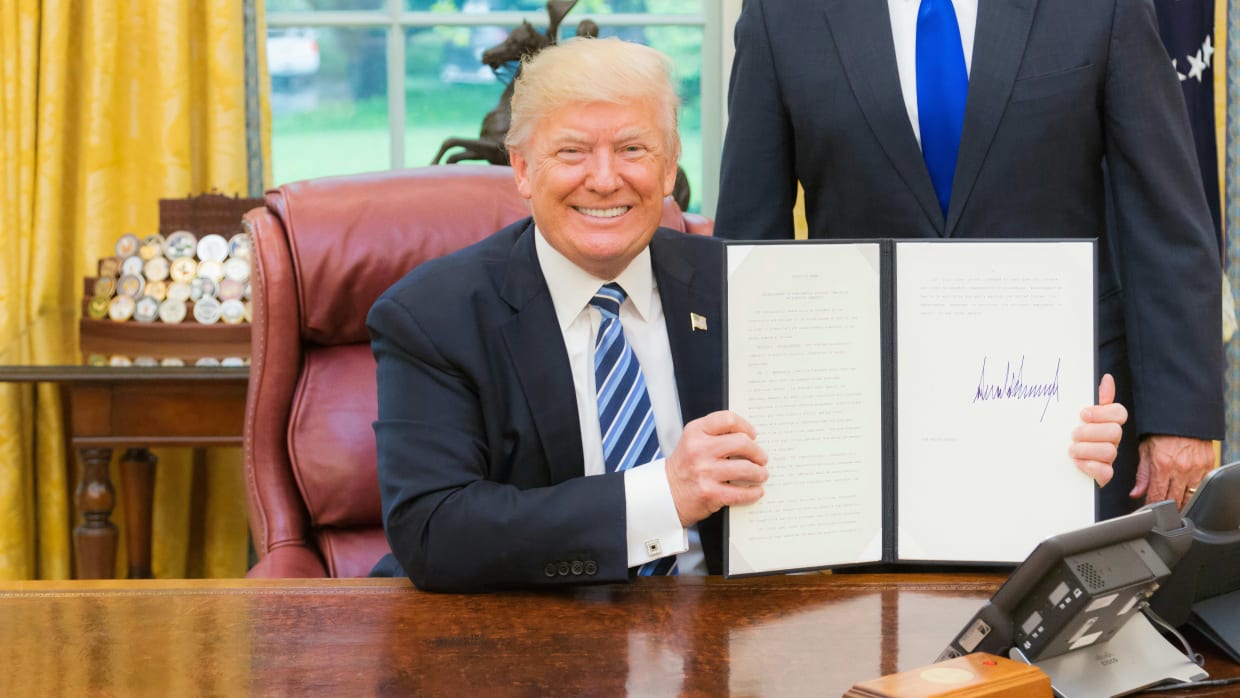
“As he writes in his decree, the WHO would not be decisive enough and would have made a mess of things during the corona pandemic and danced to China’s tune, freely translated. He also thinks the WHO should become more effective and efficient, something it has been working on for years.”
What will happen if the US leaves the WHO by 22 January 2026?
“For WHO, it means the budget will be smaller. The US contributes over $1.2 billion US dollar annually, almost a fifth of the total budget. And so the World Health Organisation will have to cut activities sharply. Unless other parties or countries come forward. China could potentially fill that gap, and then you might wonder if America is better of than it is now, from an American perspective.”
“The world is worse off with this decision. WHO collaborates a lot with US health institutes and knowledge institutes so we are missing US expertise.”
“For the US, it will mean that they are unlikely to get certain data from WHO. So it potentially weakens their national knowledge institutes as well. An organisation like the Centers for Disease Control and Prevention (CDC) is very active internationally, with the idea of protecting the US from health threats. But if the collaboration with the WHO is no longer there, you may wonder how effective they are any more.”
What are the implications for your work?
“I work on antimicrobial resistance and am on an advisory group from WHO. The Netherlands has a leading role in antimicrobial resistance research and control, but we can only do this properly if there is also international intervention, because resistant bacteria do not respect borders. The moment the WHO has to downsize, something falls away, which also increases the health risk for the Netherlands.”
“I especially hope that this decision by Trump does not inspire Dutch politics. After all, the current cabinet has already made many cuts to the Dutch global health strategy, especially in the area of pandemic preparedness. While it is ultimately a matter of time before a new virus emerges. Scientists worry about bird flu, which is already swirling around in the US. Personally, I hope the EU can play a role, either financially or with diplomacy towards the United States to try to reverse the decision.”