
Better sex but no better chance of pregnancy with online programme

When couples fail to get pregnant for unexplained reasons, their sex life often suffers. Researchers at Amsterdam UMC have been working on an online programme to improve care for these couples. With the big question: does more sex pleasure also result in more pregnancies?

Couples who are fertile but inexplicably fail to conceive after the first year are advised by a doctor to “wait and see” and try again for another six months to a year. This leads to great dissatisfaction. Many couples do not adhere to the six-month “wait and see” policy and start costly fertility treatments earlier, which are not only time-consuming but also risky.

For this reason, researchers from Amsterdam UMC developed the Zin & Zwanger programme in 2015, which, through a website with tips and advice, aims to increase sex pleasure, and thus the chances of pregnancy. The programme was developed together with UvA professor of sexology Ellen Laan, whose mission was to promote sexual pleasure for all genders.
Little attention is paid to sexual functioning and well-being of couples trying to get pregnant, says Felicia Dreischor, who worked as a PhD on the programme. Five questions to Dreischor and her co-supervisor and gynaecologist-sexologist Inge Custers, who joined the interview from a storage room at Amsterdam UMC.
Felicia, what does the Zin & Zwanger programme look like?
“It has become an educational website for couples with information, exercises, and chat opportunities with like-minded people. There is also the possibility to ask questions to counsellors via e-mail. The exercises include touching and communication exercises to increase sexual pleasure. Via the website, we also try to dispel myths such as that you should spontaneously feel like sex. That doesn’t exist, you really need sexual stimuli for that. Or that you should lie down with your legs in the air after sex to increase the chance of pregnancy.”
Eighty per cent of heterosexual couples become pregnant in the first year of trying. An additional ten per cent in the second year. Of the remaining ten per cent, thirty per cent are “inexplicably infertile”, which is about five thousand couples in the Netherlands every year.
To determine how likely couples are to still conceive naturally in the following twelve months, doctors use Hunault’s mathematical model when counselling couples with fertility problems. If the probability is low, below 30 per cent, then fertility treatments can be chosen. If the probability is above 30 per cent, then the couple is advised to “try again”.
Seven hundred couples who fell into the latter group participated in the study by PhD student Felicia Dreischor. Half of them were offered the Zin & Zwanger programme, the other half were not.
“Those myths actually cause sex life to deteriorate. We therefore advised couples precisely not to start timing sex during the fertile periods. But rather to rediscover what brings pleasure. The hypothesis was that more pleasure would lead to more sex.”
“In this regard, communication between couples is also important. A lot of couples were afraid that being conscious about their sex life would create more pressure. But we know from the literature that precisely talking to each other about your sex life leads to more pleasure.”
The Zin&Zwanger programme aimed to increase the chances of pregnancy by 8 per cent. Ultimately, no improvement in pregnancy chances was found. Do you have an explanation for this?
Dreischor: “Our hypothesis was that if we could increase coitus frequency (penis-in-vagina sex) during the fertile period, that the pregnancy rate would increase. That didn’t work, over the whole group, coitus frequency only went down.”
Why is that?
Custers: “Sex, if you have been trying to get pregnant for a long time, becomes completely stripped of all eroticism. There is an association with an act you perform repeatedly because there is a very fervent hope of having a child. If that act is negatively rewarded every time, then the label pleasure, erotic, delicious and horny is replaced by disappointment. Sex then becomes yet another compulsory act.”
Dreischor: “Some of the couples also indicated during the chat sessions or when signing out for the study that they really couldn’t let go of getting pregnant and even that they preferred to wait quietly until fertility treatment started. In addition, the much-mentioned ‘lack of time for the programme’ possibly also plays a role.”
In your view, is the programme successful now that the chances of pregnancy have not increased?
Dreischor: “Yes. We had two goals. Besides increasing pregnancy chances, we also wanted to promote sexual health. The latter did succeed: sexual pleasure and satisfaction improved among women, and we also saw improvements in domains of sexual functioning among men who followed the programme intensively.”
Custers: “In addition, Felicia’s research also shows how difficult patients and counsellors find it to talk about sexuality. Despite the light-heartedness with which we attempted to offer this study, even for social workers dealing with fertility issues it turns out to be incredibly complicated to ask: do you have sex, how is it? Do you still enjoy it? And then also using words like penis, vagina and penetration. We hope this research can also help normalise sexuality.”
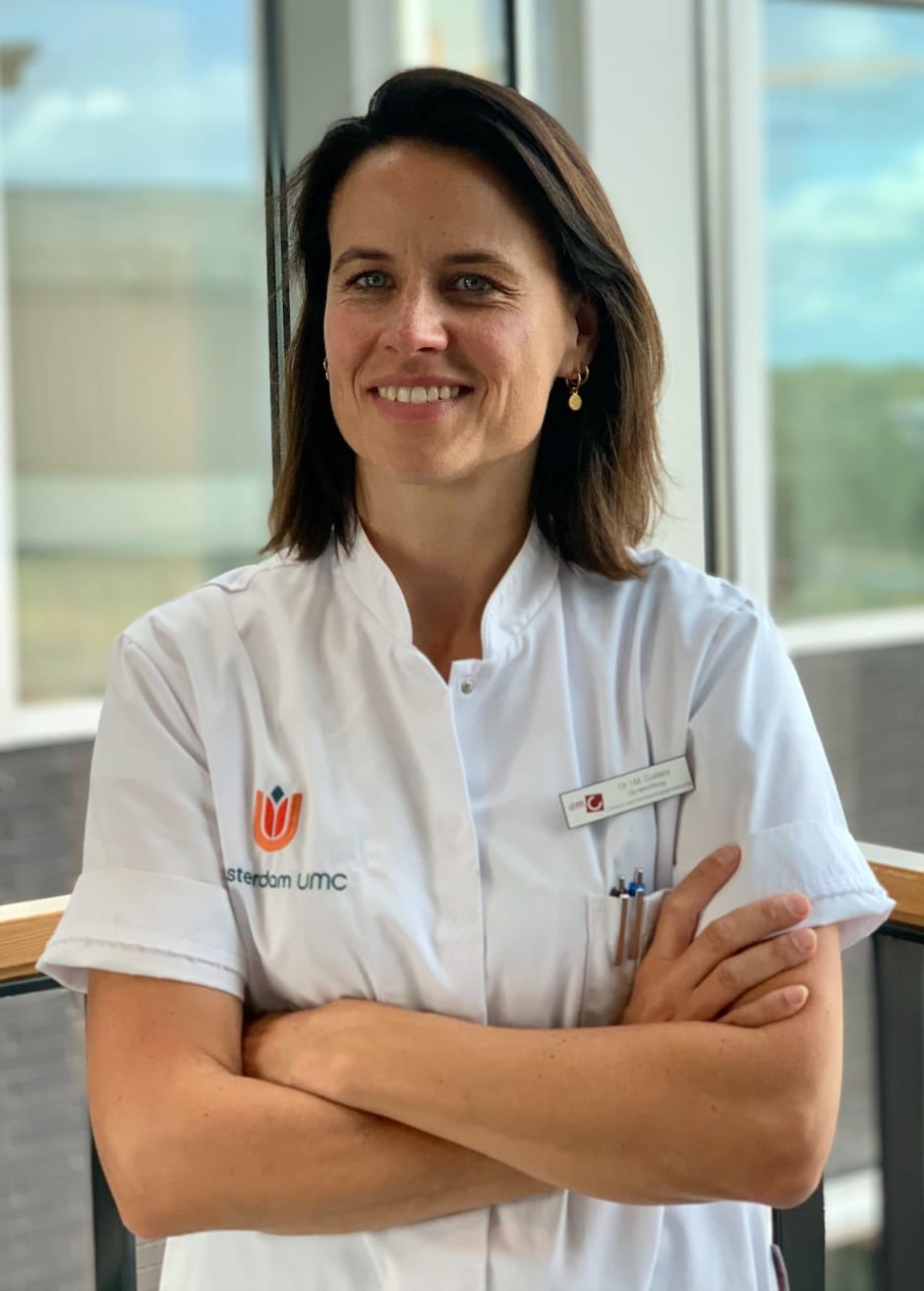
“The study has also provided a lot of new knowledge about sexuality in this particular patient population. In 2014, ‘sexuality in couples in a fertility journey’ was recognised as a knowledge gap within the professional association of gynaecologists. They know all about reproductive techniques, but have no idea what it is like at home and that sexual pleasure during a fertility trajectory sometimes goes completely down the drain.”
In the end, only 57 per cent of couples followed the Z&Z programme. How will you continue to improve the programme?
Custers: “One of the questions is how to offer the programme so that couples stay hooked. Couples still need interaction with a counsellor so part of it will be in the conversation management.”
Dreischor: “Personalising the programme content is also very important for participants, according to our study but also to recent research. In addition, you can also ask whether the chances of pregnancy would have been increased if more couples had stayed on. And it remains interesting to look at the pregnancy chances even after six months, because they remain for this group.”
Felicia Dreischor will receive her PhD on Friday 17 January at 4 PM on her thesis Let’s talk about sex: optimising the management of unexplained infertility. The defence will take place in the Agnietenkapel.