Willemijn van Dolen | When do you choose a human, and when AI?

It’s dinner time, and you’re out of inspiration. Do you ask AI for suggestions or turn to a friend? It makes quite a difference to the experience, as Willemijn van Dolen discovered after delving into the scientific literature. “In experiments where participants were not told whether the advice came from AI or a human, ChatGPT’s advice was consistently rated as more effective, better in quality, and even more authentic than advice from humans.”
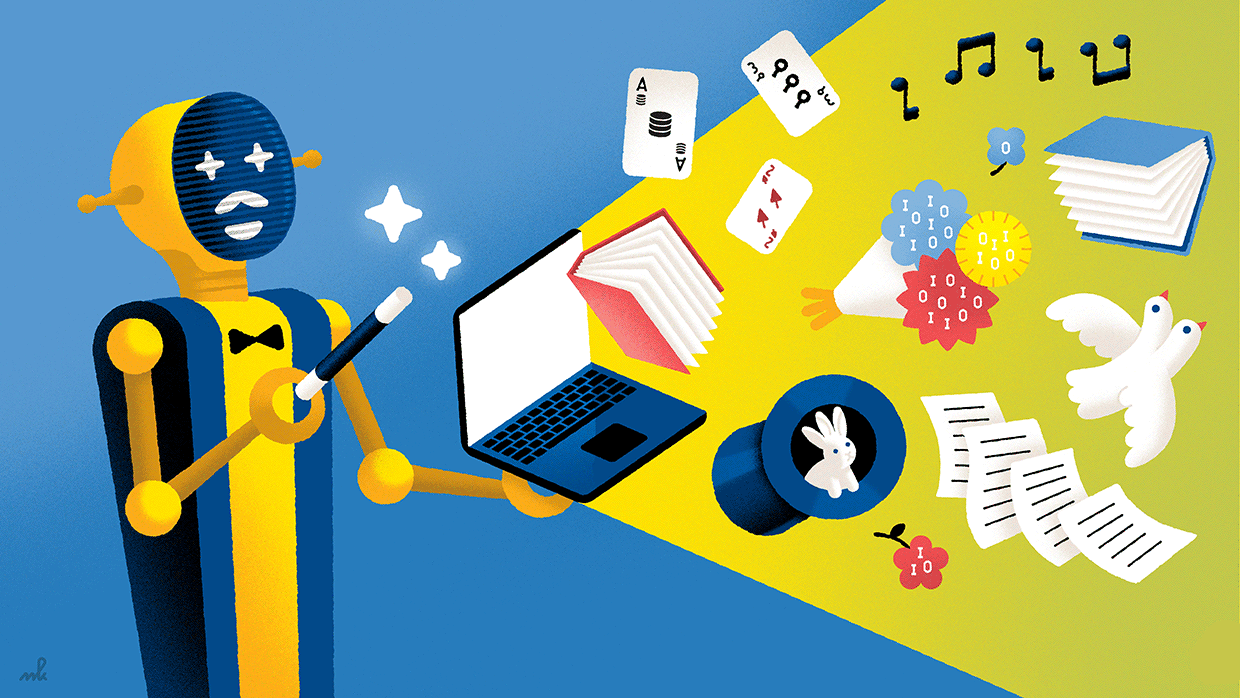
The end of the year is approaching, and for many people, it’s a busy time. Sometimes it gets to 6 p.m. and you suddenly realise: oh yes, I still need to make something for dinner tonight. You take a quick look in the fridge to see what’s left. There’s some cream, celery, pickles, a bit of cheese, sriracha and fish. It’s raining and stormy outside, so a trip to the supermarket doesn’t sound particularly appealing. You think: surely I can make something out of this. But what? You’re not much of a cook yourself, and you see two options: text your culinary-minded friend or throw all the ingredients into ChatGPT.
What would you do? And suppose you asked both. Whose advice would you follow?
Psychological process
It turns out that the decision you ultimately make involves a complex psychological process. Recent research shows that we weigh up two factors when choosing between a human and AI. First, how competent we believe AI to be (capability). And second, how much value we place on a personal approach (personalisation).
We only tend to prefer AI when we believe it is more capable than a human in a particular situation and when we feel that our unique, personal circumstances are not particularly important. But as soon as a decision feels personal and unique, we worry that a standardised algorithm may not adequately take our individual needs into account.
Human touch
So the question is: how personal is cooking? Other research shows that, on a scale from 0 (preference for AI) to 100 (preference for humans), ‘Cooking & Recipes’ scores 54. To put that into perspective, relationship advice scores well over 80. In other words, we consider AI far less suitable for relationship advice. Cooking, however, falls somewhere in between. On the one hand, we recognise the value of a database full of culinary knowledge; on the other, we appreciate the human touch.
The study reveals something else interesting, too. In experiments where participants were not told whether the advice came from AI or a human, ChatGPT’s advice was consistently rated as more effective, higher in quality and even more authentic than advice from humans. But as soon as the label ‘ChatGPT’ was attached to the advice, the ratings dropped.
This suggests that you might follow ChatGPT’s recipe advice, but once you discover that it came from AI, you might enjoy the dish a little less.
Self-esteem
Back to the fish and sriracha. ChatGPT suggests a ‘Sriracha-Brined Fish with Celery Velouté’. It sounds impressive, but also a little contrived. Perhaps it’s better to come up with something yourself? You should have thought of that earlier. The researchers found that the order in which we receive advice also affects our self-esteem. If you start with ChatGPT and then try to come up with something yourself, you suddenly find your own creation less authentic.
Meanwhile, your friend texts back: ‘I can’t make anything tasty out of that. Get some fries.’
Sounds like wise advice.