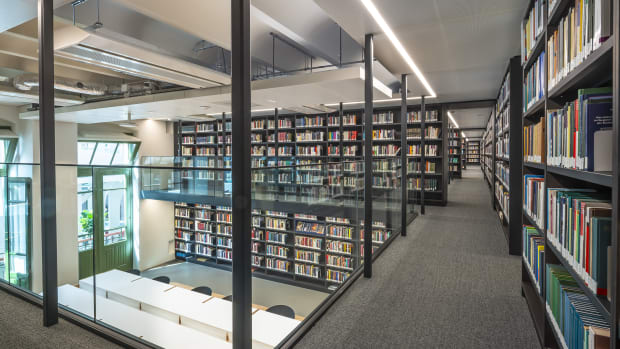
Faculty of Humanities disposes one-fifth of its library collection
A lack of space in the depot and financial concerns have led the Faculty of Humanities to decide to reduce the library collection by twenty per cent. Of the one million books currently held in the stacks, around 200,000 will therefore have to be removed over the coming years.
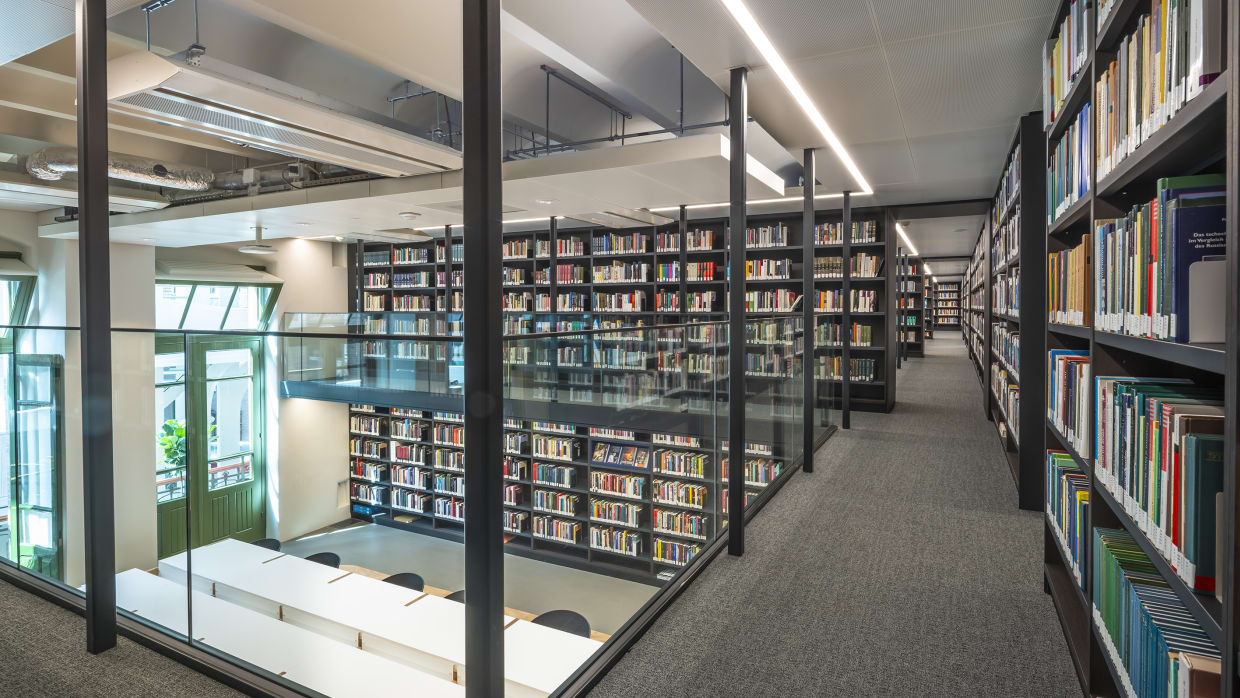
The Executive Committee of the Faculty of Humanities aims to remove – or ‘deselect’, as it is known in jargon – approximately one-fifth of the books from its library collection. This cull would provide the University Library with additional space in its storage facilities and create significant breathing space for the Faculty of Humanities, which pays rent for storage space. It is not known what will happen to the books following the planned deselection.
Saving space and money
Of all the faculties, the Faculty of Humanities, within which literary studies play a central role, has the largest collection of books (around one million). It is therefore here that the greatest gains can be made in tackling the shortage of space in the storage facility.
Furthermore, the FGw has a financial incentive: thorough weeding would save the faculty ‘structural and substantial’ costs in its budget. This is because, at the UvA, faculties are required to pay a fee per square metre of storage space occupied by their collections. In the ‘best-case scenario’, the de-selection at the Faculty of Humanities would free up 280 square metres, which amounts to 20 per cent of the current collection (over 200,000 books). This translates into a saving of 150,000 euros.
De-selection criteria
The question, of course, is which books may remain and, above all, which may not. In any case, the FGw must adhere to the national agreement that a book must be present in the collections of at least two other libraries to be eligible for removal. In addition, there is a national ban on de-selecting publications published before 1901.
The University Library Advisory Committee, a seven-member team of UvA humanities scholars, published a list of additional exemption criteria yesterday on behalf of the Executive Committee. Among other things, titles originally written in Dutch and Frisian, as well as books about Amsterdam, are excluded from deselection. The same applies to titles from the periods 1940–1947 and 1991 to the present. The committee is also protecting specialist publications on Byzantine studies/Modern Greek, Slavic studies and Eastern European studies – disciplines that exist at very few universities outside the UvA – from removal.
Supply and demand
In addition to content-related criteria, demand from students and staff also plays a role in the process. For example, books that have been borrowed over the past ten years are not eligible for deselection – with the caveat that complete borrowing data is only available for the past five years.
Expert review
A trial using the above criteria showed that it was desirable for the final list for de-selection to be ‘reviewed by subject-matter experts from the relevant disciplines’. This role will be fulfilled by the University Library Advisory Committee, possibly supported by its members’ colleagues. Chair Jacques Bos says he ‘has every confidence that the de-selection process will be carried out with due care’. Time will tell whether this substantive review of the ‘approximately 157,000 to 209,000’ titles earmarked for deselection can indeed be carried out.