UvA researchers help children spot deepfakes at NEMO

Children are confronted with AI-generated content on social media every day, and it is not always easy to recognise. That is why they can now take part in the AI Challenge at science museum NEMO, where they will learn to spot even the most convincing deepfakes.
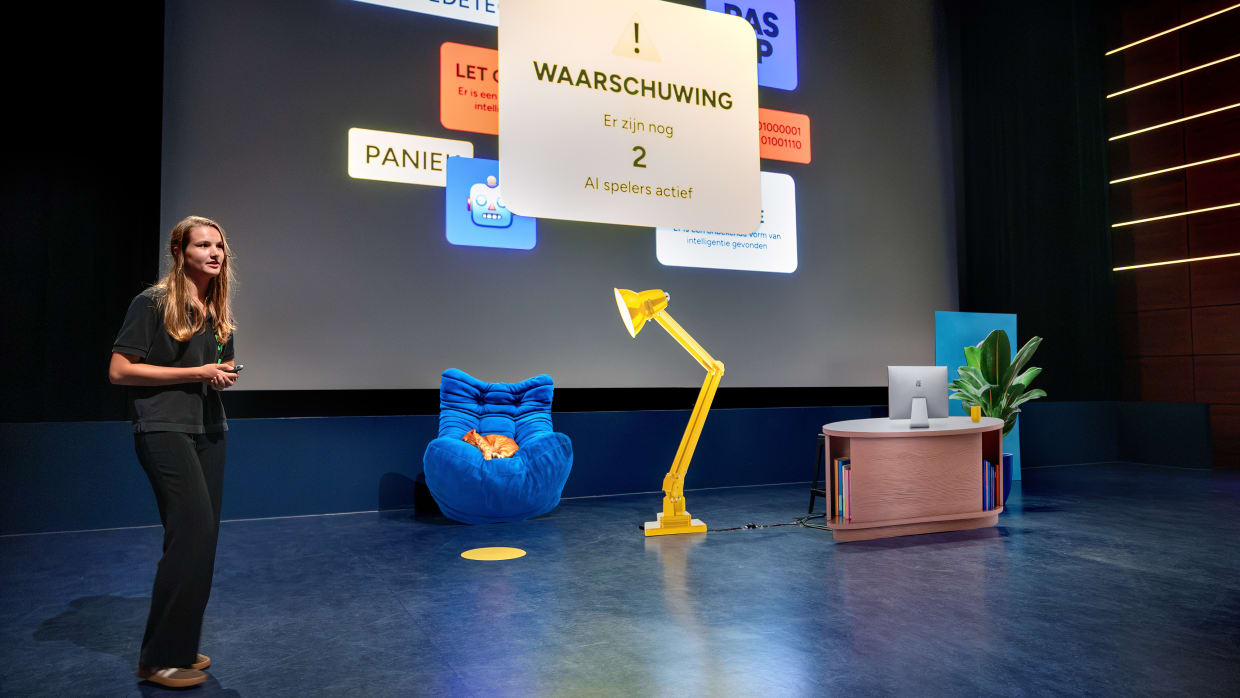
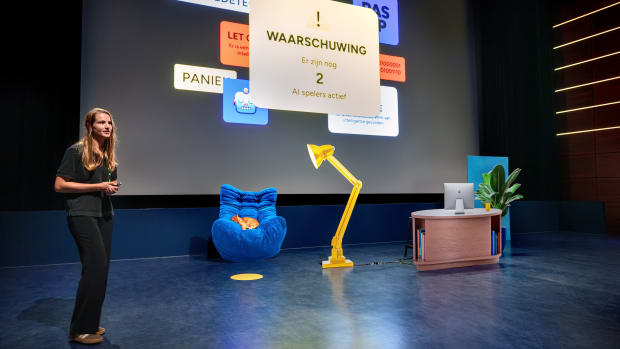
Kai, Milan, Zoë, Naomi, Yuri and Renske regularly meet up to play video games online. Chatting via their webcams, the six teenagers have become a close-knit digital group of friends. Or so it seems. In reality, some of them turn out not to be real people at all, but AI-generated deepfakesA deepfake is a fake video or image created or manipulated using AI.
This unsettling premise is the starting point for the interactive AI Challenge, launched this week at science museum NEMO. During the 20-minute demonstration, which runs three times a day in the museum’s auditorium until 25 October, children are challenged to unmask the AI impostors and improve their ability to spot deepfakes.
The AI Challenge, developed in collaboration with researchers from the UvA and the Netherlands Forensic Institute, seems to be capturing the imagination of the many visitors flocking to NEMO during the autumn holiday. The auditorium hosting the demonstration is packed with parents and children, all more than willing to take on the challenge.
Shadows
During the demonstration, the AI impostors are caught one by one using a series of practical tips. The children in the audience are urged to always check for a source when in doubt about whether they are dealing with a real person or AI online. The presenter also stresses that they should be particularly alert when a video appears to defy the laws of physics. “Pay attention to what the shadows look like, for example. How that works is perfectly logical to us because we live in the real world, but that doesn’t apply to AI.”
To demonstrate this, a shy young boy is invited onto the stage and a large spotlight is directed at him. The fictional shadow shown in the photograph on the big screen clearly behaves differently from the actual shadow on stage, it turns out. Zoë is therefore eliminated fairly easily by the audience, after Kai was also unmasked as a deepfake earlier.
Blood flow detection
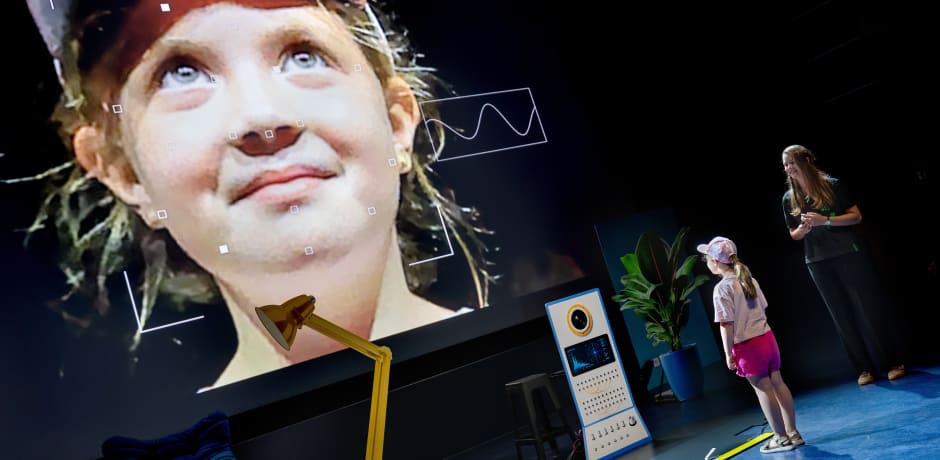
Although the operation has been successful so far, it soon becomes clear that, despite all the practical tips, AI can no longer always be identified with the naked eye. The second part of the demonstration therefore focuses on blood flow detection, a new technology that analyses the very subtle colour variations in a person’s face caused by the rhythm of the heart pumping blood around the body. This makes it possible to check whether blood is actually flowing beneath the skin or whether the images have been generated by AI. It is one of the techniques researchers are developing to identify even highly sophisticated deepfakes.
The article continues below the image.
“There are several other methods we use to detect AI, but blood flow detection is particularly suitable as an example for this demonstration because it is very intuitive to explain,” says Stijn van Lierop, a PhD candidate researching deepfake detection at the UvA who is involved in NEMO’s AI Challenge. “Everyone understands that a computer doesn’t have a heartbeat. I think that’s why it works so well.”
The AI Challenge runs daily until Sunday 25 October at 11:30, 13:30 and 15:30 in NEMO’s auditorium. The demonstration will return during the Christmas holidays.
Cat and mouse
According to Van Lierop, blood flow detection is currently being used “because a heartbeat is something fundamental that AI models cannot always imitate convincingly”. However, the fact that developers of detection techniques are engaged in a constant cat-and-mouse game with increasingly sophisticated AI models complicates matters. “That’s why we need to focus strategically on techniques that can withstand new developments, but it’s also important to raise awareness in society. Consumers need to learn to look at things critically. That’s where it starts. This will help us better defend ourselves against the erosion of trust caused by disinformation.”
Meanwhile, the technique is put to the test in the auditorium, where the children get to see blood flow detection in action. The face of a blonde girl picked out from the audience is projected onto the big screen via a camera. Once the computer has done its work and the analysis is complete, the verdict is in: blood is flowing naturally beneath her skin. She is allowed to return to her seat. The presenter is satisfied: this is a real person, not a deepfake.