
Magazine | From city school to world university

394 years ago, the predecessor of the university, the Athenaeum Illustre, was founded in Amsterdam. In a small chapel on the Oudezijds Voorburgwal, lectures in Latin were given to the children of the city elite. But the founding of the Athenaeum Illustre in 1632, and the two centuries that followed, did not come without a struggle.

Vossius and Barlaeus
Even before the Athenaeum Illustre was founded, there was opposition to the arrival of the distinguished school in Amsterdam. Leiden held the privilegium exclusivum, the exclusive right to a university in the provinces of Holland and Zeeland. They feared the school would become a stepping stone towards a university. The people of Leiden took their objections to the highest court, but without success. Despite repeated attempts to ban the school, celebrations took place in Amsterdam on the 7th and 8th of January 1632. The founding of the Athenaeum Illustre had become a reality. The founders, Gerardus Vossius (1577-1649) and Caspar Barlaeus (1584-1648), took to the lectern and spoke about the prosperity of Amsterdam and the Dutch Republic.
“Magis ac magis floreant Gymnasium, Ecclesia, et Respublica universa!”
“May the school, the church and the entire republic continue to flourish ever more!”
Barlaeus spoke about the wise merchant. In the 17th and 18th centuries Amsterdam experienced a golden age. Trade brought wealth and new knowledge from colonies and other parts of the world flowed into the Republic. This made Amsterdam a centre for culture and science, and the Athenaeum Illustre quickly gained international recognition.
Curious about all the stories behind the Athenaeum Illustre? Listen to the fifteen-part podcast series De Illuster Universiteit (Dutch only) in your favourite podcast app.
Even the famous astronomer Galileo Galilei (1564-1642) considered leaving exile in Italy for Amsterdam to share his ideas about the cosmos. However, the person responsible for this invitation, the first astronomer of the Athenaeum, Martinus Hortensius (1605-1639), did not manage to convince him in time.
Lectures
Lectures at the Athenaeum Illustre were open to the public. They served as preparation for universities in cities such as Leiden, Utrecht and Groningen. It functioned as a form of preparatory school, with emphasis on subjects such as literature, philosophy, national history, classical antiquity and rhetoric.
For a long time only men were allowed to study there. This changed in 1876 when Aletta Jacobs (1854-1929) became the first female student in Amsterdam and completed her medical degree examination.
Reputation
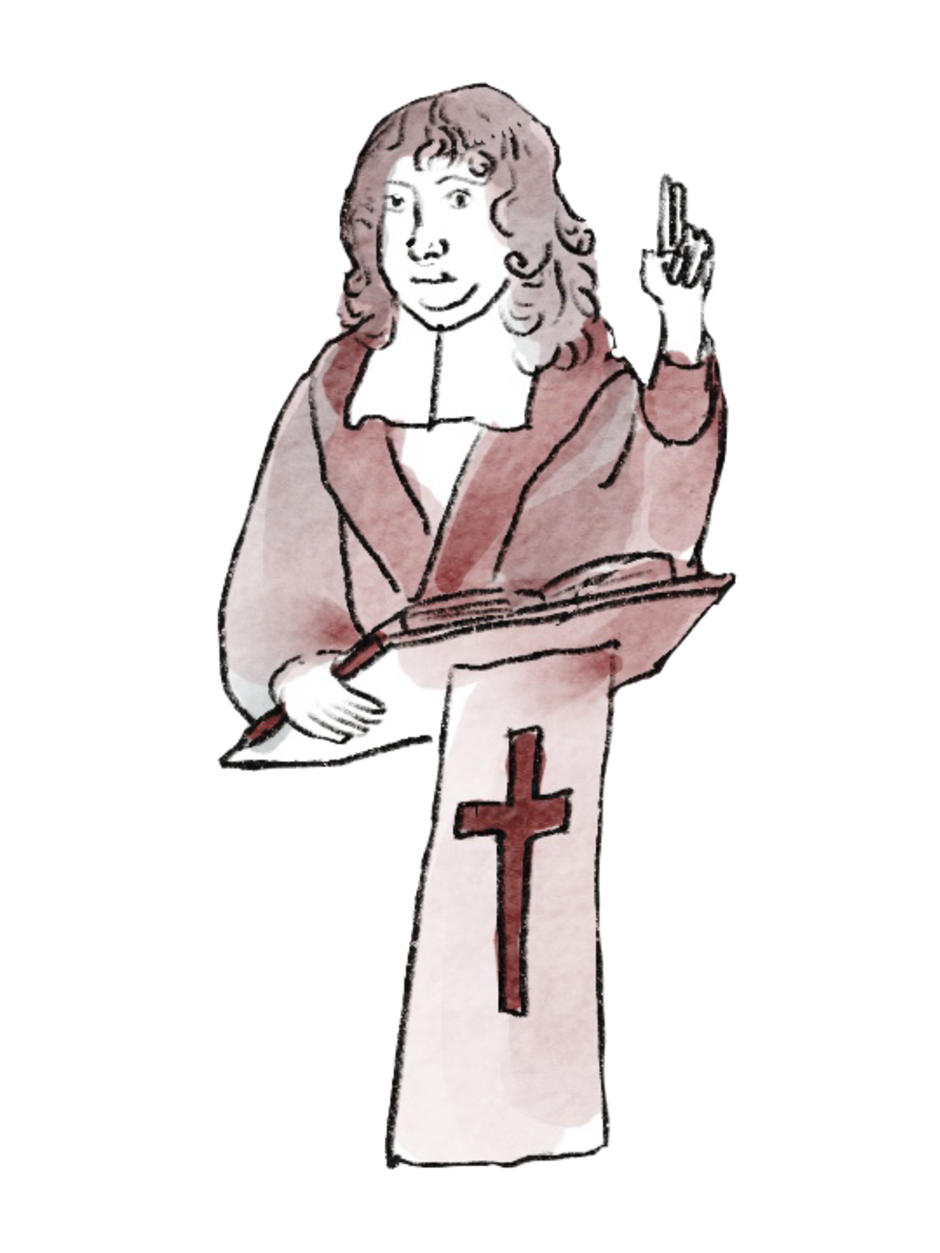
The small school in Amsterdam did not only experience success. Early on, the professor of church history Alexander Morus (1616-1670) became embroiled in scandals. He was accused of sexually assaulting a maid of a fellow professor and was taken to court. He was also accused of “arrogance, deception and visiting prostitutes”. Despite this, the reputation of the Athenaeum Illustre was surprisingly not damaged.
Although this incident ended without major consequences, the reputation of the institution depended heavily on its professors. They were appointed and paid by the Amsterdam city council. However, financial shortages at the end of the 17th century forced cuts. The Athenaeum Illustre suffered as a result. Vacant professorships were not filled, and by 1729 only one lecturer remained, a maritime expert without a degree, Matheus Soeten (?-1733). The institution had reached a low point.
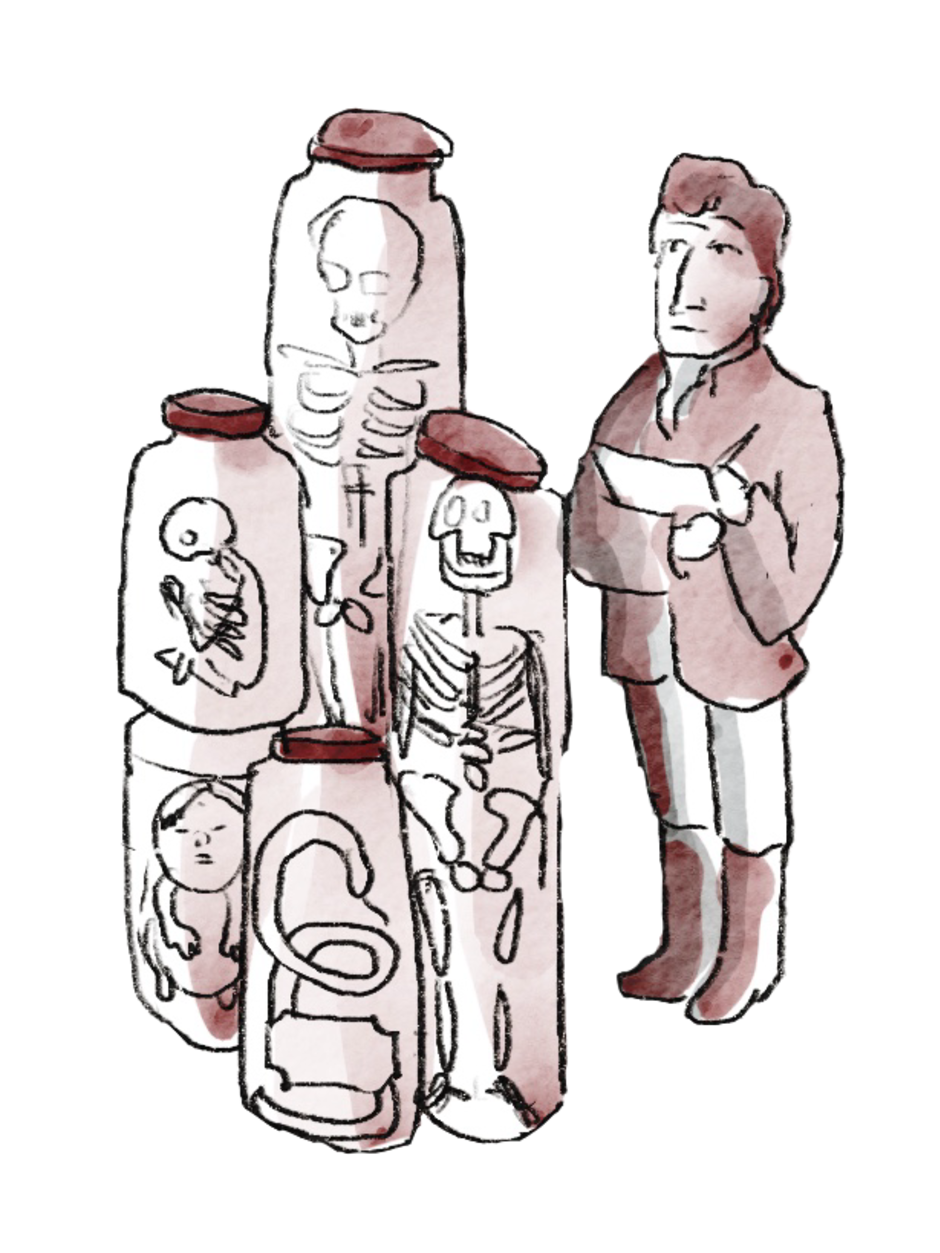
In 1811 the Athenaeum Illustre faced another test. The Dutch Republic no longer existed and came under French influence. A constitution and parliament were introduced and education was reformed, with fewer universities and schools of this type. Several institutions were closed. Without the contacts of the aforementioned Van Swinden with Napoleon Bonaparte (1769-1821), the Athenaeum Illustre would likely have met the same fate.
University of Amsterdam
Over two hundred years the Athenaeum Illustre survived wars, financial crises and political reforms. Yet one ambition remained unfulfilled, becoming a full university.
In the second half of the 19th century, civic pride, political reform and the Higher Education Act of 1876 finally made this possible. The political drive of former law professor Gijsbert van Tienhoven (1841-1914) was crucial. As city councillor for finance, he convinced the Amsterdam city council and secured funding for a new municipal university.
On Monday morning the 15th of October 1877, that centuries old dream finally came true. What began almost two and a half centuries earlier as a small school in a chapel on the Oudezijds Voorburgwal was elevated to the University of Amsterdam. It grew into the largest university in the Netherlands, with more than sixty study programmes and over forty thousand students, of whom more than a quarter come from abroad.