According to these UvA staff members, Ketikoti should be a day off

Should Ketikoti become a national holiday and therefore a day off? At the University of Amsterdam (UvA), this is not currently the case, but many would prefer it to be. For them, making Ketikoti a national holiday would not only be a logical next step in commemorating slavery, but would also be particularly significant for the descendants of those who were enslaved. “A huge acknowledgement of the role that slavery plays in our history.”
On 1 July, we celebrate the abolition of slavery with Ketikoti (literally: broken chains). For many people in the Netherlands, this is an important day, yet it is not a national public holiday – and therefore not a day off work. More and more companies, employees and civil society organisations want to see this change.
Amsterdam councillor Araya Sumter is also in favour of this, and hopes that Rob Jetten “might just have a nice message”, she says in Het Parool. The same goes for Machiel Keestra, Central Diversity Officer, and Mano Delea, a lecturer in modern history at the UvA who specialises in imperialism and emancipation.
Delea himself takes the day off every year on 1 July, the day on which the Netherlands abolished slavery in 1863. “It has two aspects; it is both a commemoration of all the victims and all the suffering caused by transatlantic slavery, and a celebration of freedom and the permanent breaking of the chains.” Like Keestra, however, he does make one small caveat: after 1863, enslaved people were still forced to work for another ten years or so under so-called state supervision. “For many people, 1873 is therefore the true year marking the abolition of the transatlantic slave trade in the Netherlands.” There is also increasing attention these days for the extensive East Indian slave trade, which continued until the early 1820s. 1863 is therefore primarily a symbolic year.
Public holiday
The fact that Ketikoti is not an official day off at the UvA is stipulated in the collective labour agreement. However, under a special arrangement, it is possible to take 1 July as a day off, in consultation with one’s line manager, in exchange for an official public holiday, such as Good Friday. The extent to which this arrangement is used to take time off for Ketikoti is not tracked centrally and is therefore unknown. However, the UvA has stated that, in general, “limited use” is made of the arrangement.
1 July is observed within the community of people of African descent as a day of celebration and remembrance. However, on 30 June – the Day of Reflection – there is also a moment of silence at 8.00 pm. This takes place on Surinameplein and is organised by the 30 June – 1 July Committee. Traffic will be halted for this event. In Suriname, this is already an important day. It follows the same format as the 4–5 May commemoration. On 1 July itself, there is also an official commemoration at 2.00 pm in Oosterpark, attended by Rob Jetten. After the commemoration, the focus shifts to celebration.
A welcome prospect, but Keestra and Delea believe that the idea of Ketikoti as a national holiday is about more than just a day off. It is about recognition: Ketikoti is one of a limited number of public holidays and days of remembrance that have contemporary significance, says Keestra. “If it were to become a national public holiday, that would be wonderful. It would be a huge acknowledgement of the role that slavery plays in our history.” It would also be a logical step, according to Delea. “A great deal of progress has already been made in the Netherlands over the past few decades,” he explains. For example, with the erection of the National Slavery Monument, the establishment of the National Institute for the Dutch History and Legacy of Slavery (2002) and the apologies issued by the Prime Minister (2022) and the King (2023). Delea: “The next logical step is to make 1 July a national day of remembrance or a public holiday.” The Dutch flag will be flown at government buildings; the University of Amsterdam (UvA) is going to fly the flag at the Maagdenhuis, at Keestra’s request. “This is also in line with the UvA’s increasing focus on its own colonial past.”
A national public holiday means a day off for everyone: it is, after all, a day that is relevant to the whole of the Netherlands, not just to the descendants of enslaved people, explains Delea. “Dutch transatlantic slavery was conceived, planned and carried out from the Netherlands, and was part of the Dutch legal system. Consequently, slavery was abolished by the House of Representatives following a parliamentary debate held in 1862.” Slavery was an intrinsic part of Dutch politics, according to Delea, “and drew a distinction between free and unfree people. This changed after its abolition, and this is what we are commemorating and celebrating.”
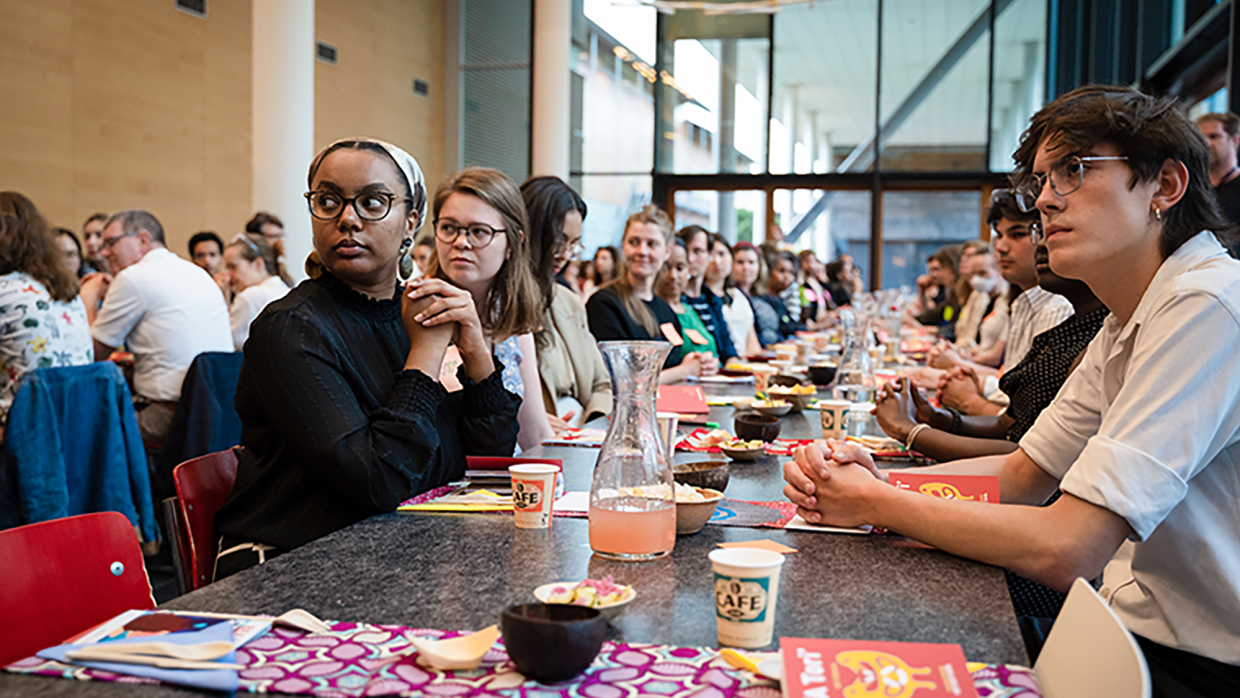
The Central Diversity Office and CREA are organising an event on 1 July centred on Ketikoti. Cultural historian Jennifer Tosch will give a talk on hidden history in the city, followed by a round-table discussion. Afterwards, there will be an opportunity to walk together to Oosterpark, where the official commemoration will take place at 14.00. You can register here.