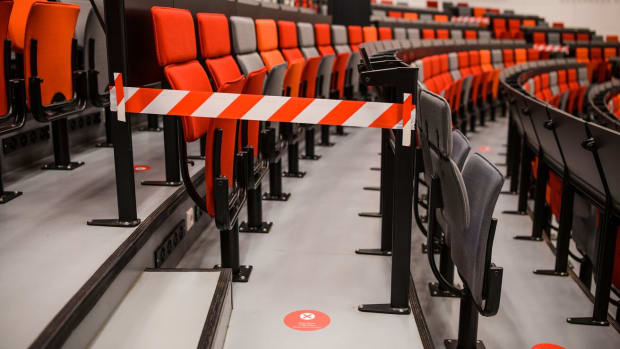
When Covid brought the university to a standstill: “I was desperate to meet new people”

Empty lecture halls, a deserted campus and seminars on Zoom; this week, during the parliamentary inquiry into the coronavirus pandemic, the government’s decision to close education is being evaluated. Various UvA affiliates look back on that period. “I realised how important a social safety net is.”
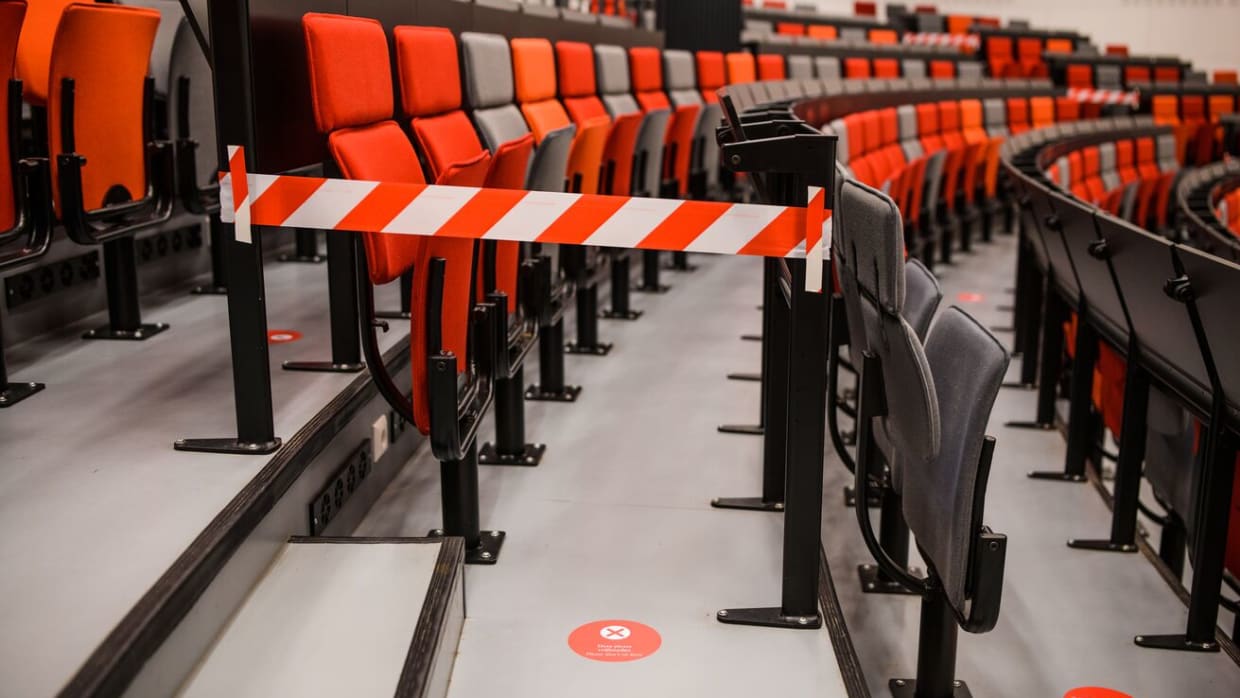
This week, the parliamentary inquiry into the handling of the coronavirus pandemic is focusing on the closure of education. Among those being heard are former Minister of Education, Culture and Science Ingrid van Engelshoven and the Children’s Ombudsperson Margrite Kalverboer, as the decisions made at the time are once again being scrutinised.
The decision to shut down the university in 2020 also caused considerable upheaval at the UvA, as Dutch history lecturer Arjan Nobel still remembers clearly. “I can still recall those first few days very well. On a Thursday there were already rumours circulating about Covid, and less than 24 hours later all lectures were suddenly cancelled. Within a few days we had to switch everything over to Zoom or Teams; it came as a huge surprise.”

Contact with students
Until that point, Nobel and his colleagues had never worked with such programmes. “That led to some hilarious situations, because there were quite a few colleagues who struggled with all the apps they suddenly had to download.” Still, it is not a period he looks back on with much pleasure, the lecturer continues. “Especially in terms of teaching, it was really extremely complicated. The best part of giving lectures is the interaction with students: walking through the room, discussing, asking and answering questions. That simply happens far less via Zoom; it fell flat. We all did a lot to try to make it a bit more enjoyable, but you just missed that contact with students.”
For Annabel Couzijn, the lockdown meant that during the early phase of her studies she had to manage almost entirely without contact with fellow students. The 24-year-old psychobiology student started her bachelor’s degree in September 2020 – right in the middle of lockdown – and had imagined the beginning of student life very differently. “I applied in January, just before the pandemic started. At that point I still thought everything would turn out quite differently. In the end I still chose to start my degree; spending a year at home on a gap year didn’t really appeal to me.”
“Very occasionally we had a tutorial, but otherwise everything was online,” she recalls. “It was a shame that at that point I had no idea what ‘normal’ studying looked like. Making social contacts was also harder from behind a screen, but luckily we were all in the same boat.” She did make an attempt at social contact by organising a picnic for fellow students on the first day of her bachelor’s, “but the people I met there I then didn’t see again for a year. Fortunately, when we later ended up in a course together again, we did become very good friends after all.”
Social safety net
For Siyu Gu (32), the timing of her arrival at the UvA also turned out to be particularly unfortunate. In January 2020, the Chinese researcher moved to Amsterdam to begin her doctoral research; two months later, the university was shut down. “As a newcomer, it was difficult for me. I didn’t really know my colleagues or the professors around the university yet, because for two years I was only able to do research from home. Meetings were all online, and even the Christmas dinner took place over Zoom. It was a very strange experience.”
According to Gu, it was a problem for many other international PhD candidates and students as well that they had no local network in the Netherlands to fall back on during lockdown. “I was really desperate to meet new people again, even though I’m naturally quite introverted. I realised at that time how important a social safety net is. It is just very strange that you work with colleagues for years without ever really getting to know them properly.”
Benefits
Still, according to Annabel Couzijn, there were also advantages to studying from home. “We were given open-book exams all the time, which meant I had to memorise less material. In the first year of my bachelor’s that was definitely an advantage. At the same time, it also meant that in the second year, when we returned to in-person teaching, I suddenly had to learn in a completely different way. I really had to work extremely hard for that.”
Whether the right decisions were made during the pandemic, with the benefit of hindsight, Arjan Nobel does not dare to judge definitively. “Of course, it is easy to talk afterwards. At the time we really knew very little; I still remember that uncertainty well. But with what we know now, some things might have been handled differently, especially when it comes to education. It is therefore good that the government is taking another look, through the parliamentary inquiry, at whether it was the right decision to close schools so quickly.”