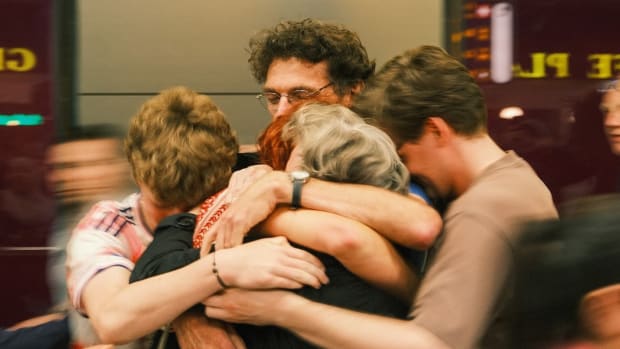
Jesse van Schaik on being captured by Israel: “I was blindfolded and thrown into a van”

UvA student Jesse van Schaik (21) was travelling with a flotilla carrying humanitarian aid towards Gaza when she was detained by the Israeli military on the high seas. After being held for several days, she has now returned to the Netherlands. “It was a kind of game to humiliate us psychologically.”
Jesse, how are you doing?
“It varies. On the one hand, I’m of course very happy that I can see my family again. My parents, sister and brothers were very worried and have missed me a lot. But at the same time, it also feels very strange. Part of me is still in that cell in Israel, which I know is now being used to hold Palestinians again. Physically I’m relatively okay; I’m still dealing with some pain in my shoulder, thumb and wrists. I had marks from the handcuffs I had to wear, and there are now bruises there.”
Can you still recall the moment of the interception?
“Definitely. It was the morning of 18 May. We had expected to be intercepted during the night, so we kept very alert night watches, but that night remained calm. By the morning, we were actually quite relaxed. It seemed like it wasn’t going to happen that day. After my shift I had gone to sleep, but two hours later a military ship appeared on the horizon. At that point it immediately became clear that things were going to go very wrong.”
What did you do then?
“We tried for a few more hours to evade the boats, but at a certain point a motorboat with ten soldiers on board, fully armed with rifles, came towards us. They told us to walk to the front of the boat with our hands on our heads, and threatened to shoot if we didn’t comply. We were held at gunpoint like that for half an hour.”
That sounds extremely frightening.
“It may sound a bit strange, but I was never really scared. I was actually mostly very angry, because we were being illegally kidnapped. I kept thinking: how can you just do this? But I wasn’t afraid, because when I started this mission I knew there was a high chance this would happen.”
Still, I imagine you must have felt very powerless in that moment.
“Yes, but especially later, when we were taken onto a large military vessel. We were sitting in a small open area between four containers, and rubber bullets were fired at us because we kept chanting slogans. One person was hit in the leg, and in two others the bullets grazed their bodies, causing bleeding wounds. The fact that those soldiers were able to silence us so easily really made me feel powerless, and very angry.”
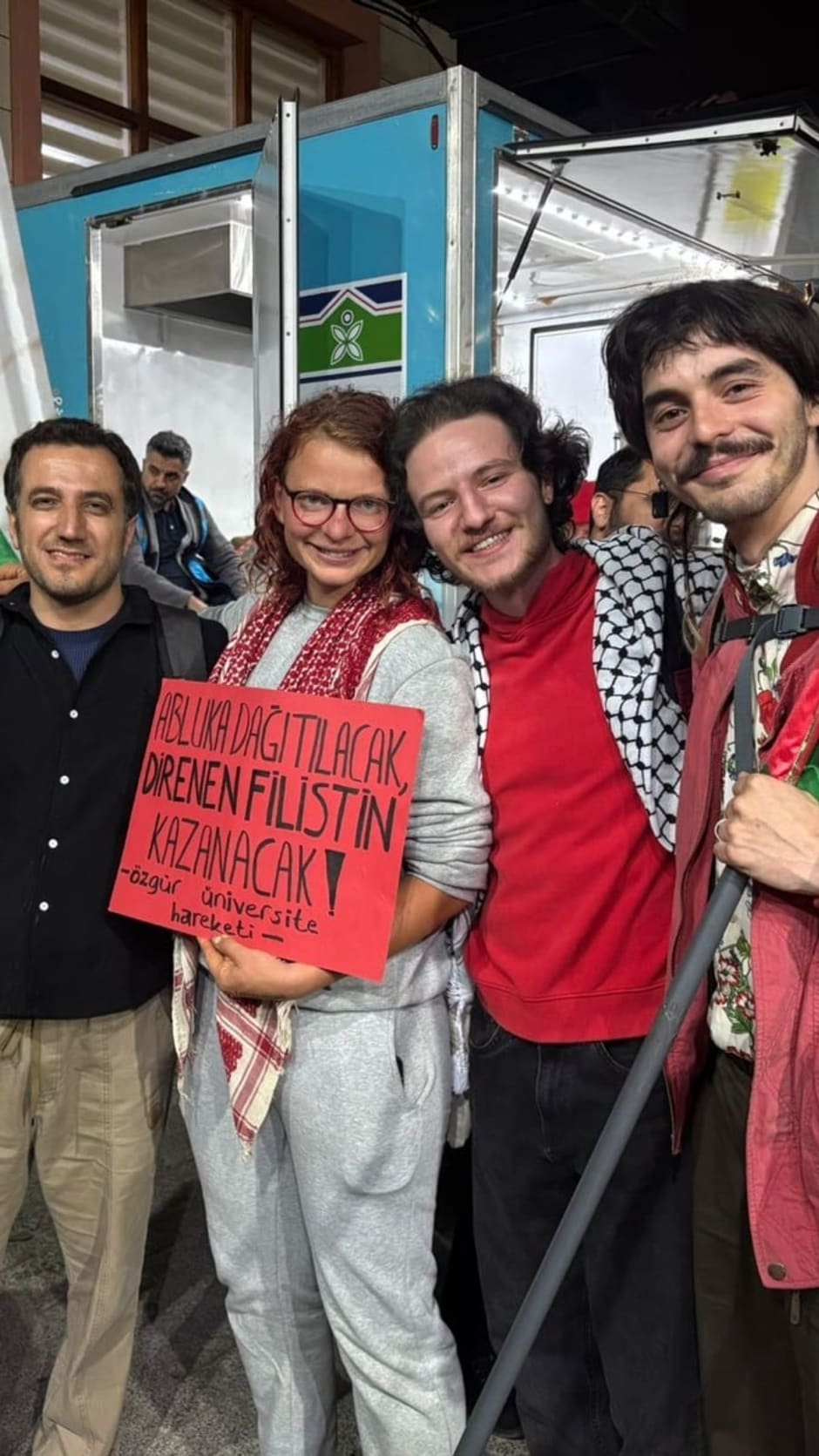
Once you were taken ashore, you were transported to prison.
“That’s right, and it was even less pleasant there. Because I kept chanting slogans, I was pushed headfirst onto a table and my glasses were taken away. It was a kind of game for them to psychologically humiliate us, but we tried to keep resisting. At one point I was handcuffed and shackled, blindfolded, and thrown into a prison van. We drove for about four hours, I think – you lose all sense of time in moments like that – and then I was dragged out of the van again. Together with around 15 to 25 people, we ended up in a cell designed for eight.”
Your fellow activists have spoken in the media about abuse and sexual violence.
“Yes, I was also beaten and kicked. At one point, photos were taken of everyone’s injuries, but in my case my shirt was pulled completely over my head, and they took photos of my breasts, while laughing. They also threatened to spray tear gas into our cell if we made too much noise.”
After a night in the cell, it turned out you would be released. Did you expect that?
“We were relieved, because we really had no idea how things would go. But in hindsight I think Israel just didn’t want any trouble. We weren’t released because they were being kind to us, but because they wanted to get rid of us as quickly as possible. That’s the bitter part: the better they treated us, the less attention there would be on what they are doing to the Palestinians.”
Speaking of which: it has also been said that the aim of your flotilla may have been to get arrested by Israel in order to generate attention and pressure governments into speaking out.
“I understand that line of thinking, but that was absolutely not our intention. We had humanitarian supplies on board and wanted to distribute food in Gaza. There were also doctors and lecturers on board who intended to stay there. Of course there was a significant risk that we would be detained by Israel, but that was never our goal. When I hear that criticism, that the flotilla was just a media stunt, I also think: we really had no other option. The media attention was also our protection.”
But the chance of actually reaching Gaza was fairly minimal, wasn’t it?
“The objective chance may have been fairly small, but at the same time, the chance was there. That’s why we went. But of course we knew there was also a high probability it wouldn’t succeed, which is why we had trained extensively for this scenario.”
It must have been an incredibly frightening situation regardless. What was it like seeing your friends and family again at the airport?
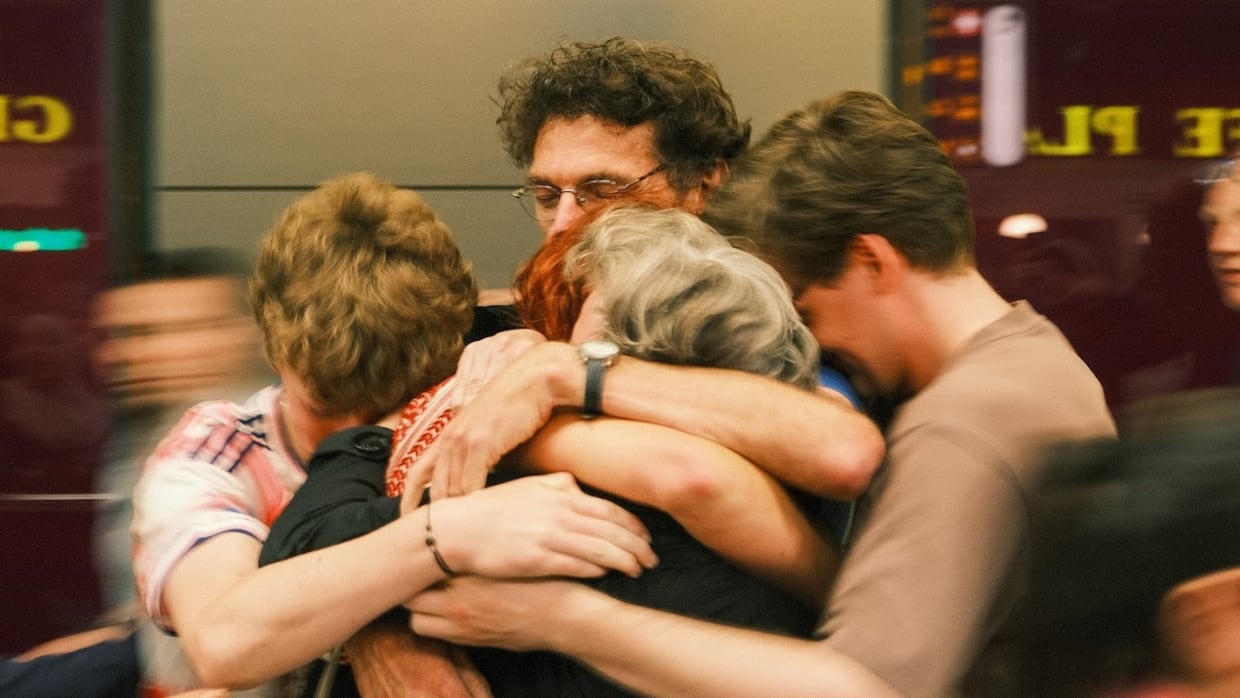
“Very moving. There were about a hundred people there, including many from the UvA, which was very emotional. Our neighbours had decorated our entire street with bunting and balloons. I hadn’t realised how much people had been following and worrying about us. For many, it really brought things very close to home. And yet something still gnaws at me; I have now experienced the imbalance of the world up close. Not long ago I was still in that prison cell, and now I’m just walking around the UvA again. It’s a very strange thought, but it helps me to remind myself that I did everything I could.”