UvA plans to downsize: iconic buildings earmarked for a potential sale

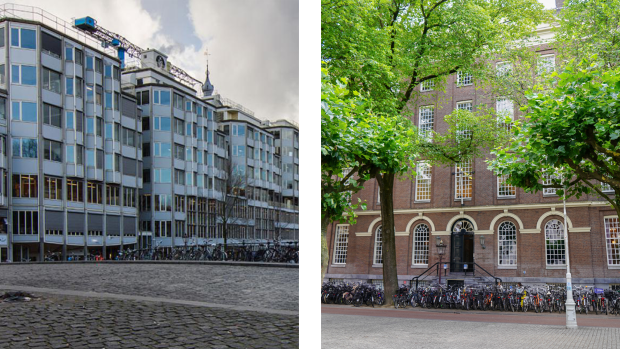
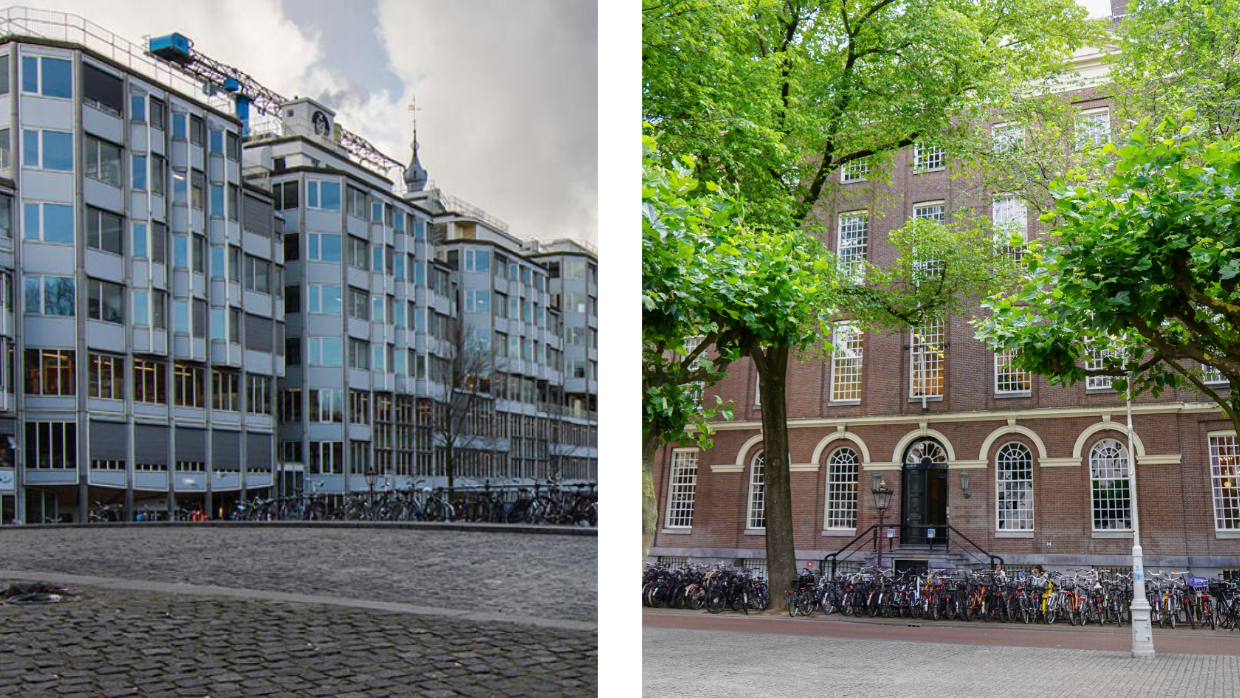
The Maagdenhuis, the University Theatre, and the P.C. Hoofthuis are among the buildings the UvA is considering disposing of. This follows from the new draft Accommodations Plan 2026. In the coming years, the university will have to downsize significantly in order to curb rising housing costs and a looming surplus of space.
“A great place to study and work.” According to the university’s new Accommodations Plan, currently under consultation with the university’s representative bodies, that is what the UvA should become and remain. However, the university faces a major obstacle in achieving this: its finances. The previous Housing Plan proved too expensive for the university, and continuing those plans would not have been possible “without exceeding financing ratios”.
The Accommodations Plan 2026 outlines how the UvA intends to use, renovate, and finance its buildings and campuses in the coming years.
According to the university, the plan is intended to ensure that students and staff have pleasant and suitable places to study, work, and meet each other.
At the same time, the UvA is facing a growing surplus of space: in 2025, the university already has 15 percent more square metres in its property portfolio than strictly necessary. Moreover, that figure is expected to rise above 20 percent by 2035 due to declining student enrolment and more efficient use of available office space.
Disposal of buildings
To reduce this surplus space, the UvA is mainly looking at properties outside its core campuses. The sale of the former University Library building on the Singel – which is expected to be completed around the turn of the year – is already a first example, but other iconic UvA buildings are also being considered for disposal. In the coming years, decisions will have to be made about “the future of other properties,” including the already partially vacated P.C. Hoofthuis, the increasingly underused Maagdenhuis, and the University Theatre on Nieuwe Doelenstraat.
These buildings will initially be placed in the university’s so-called Strategic Real Estate Reserve (SVR). This means they will no longer be used for education or research, but will instead be temporarily rented out to third parties on a cost-covering basis as a flexible buffer, pending a final decision on preservation or sale, or until the university needs the buildings again. Among the other buildings set to enter the real estate reserve in the coming years are the Bushuis/Oost-Indisch Huis complex and the B and G wings of the Oudemanhuispoort, although a sale there does not currently appear to be under consideration.
Revised plans
The university’s limited financial room is also affecting ongoing projects. The planned renovation works at the Oudemanhuispoort and the BG5 building are being scaled back. At the Oudemanhuispoort, a subproject worth €37 million has been scrapped, reducing the estimated costs to around €60 million. At BG5, foundation repairs and a large catering facility have been abandoned, lowering the projected costs from more than €88 million to approximately €50 million.
Nevertheless, the university continues to invest in its other campuses. At the Roeterseiland campus, a USC sports centre is already being developed in the JK building, and a new entrance for the ABC building will also be created. At Science Park, work is underway on LabQ, a specialised research building for quantum technology, while plans are also in place for the construction of a residential tower with 350 to 400 housing units intended for student accommodation.
Consultation
The UvA Accommodations Plan 2026 has now been submitted to the Joint Assembly (GV), which consists of the Central Student Council (CSR) and the Central Works Council (COR). Through the GV, the representative bodies can issue advice on the university’s real estate plans. This consultation period runs until 30 June.
Students and staff can also respond to the housing plans as part of the consultation process. Responses can be submitted until Tuesday 2 June by emailing vastgoed-bb@uva.nl.