“A TikTok queue in the Nine Little Streets has more impact than a Labubu queue on the Kalverstraat”

The Nine Little Streets (Negen Straatjes) have transformed from a neighbourhood for locals into a backdrop for mass consumption. UvA PhD candidate Marije Peute studies how algorithms influence public space in the city: “There’s no point in hating the people in line.”
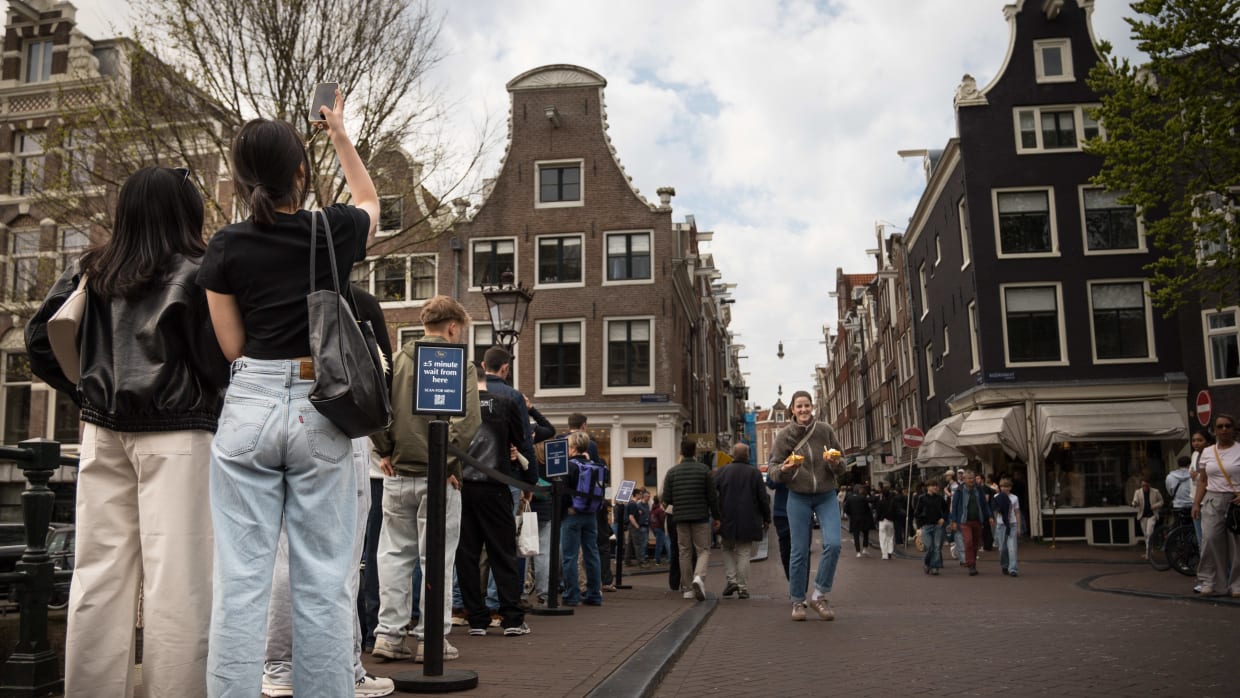
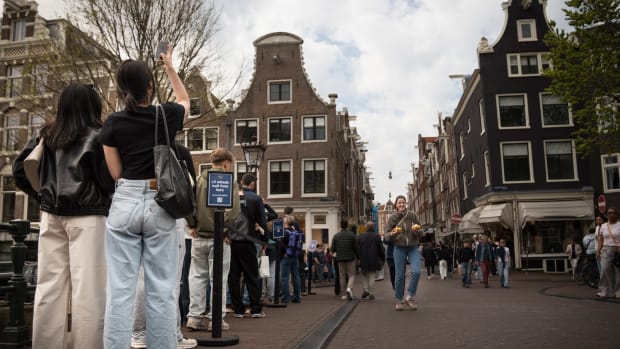
Everyone knows them: the TikTok queues. A line of people outside Fabel Friet, a new pop-up shop, or an event that happened to go viral on social media. UvA PhD candidate Marije Peute studies how media platforms change spaces and spatial relationships. She looks, among other things, at the Nine Little Streets, an area that – much to the dismay of residents and business owners – is plagued by TikTok queues.
Marije, the TikTok queues: everyone seems to have an opinion about them. But what exactly is your research about?
“I look, among other things, at the influence of social media on how places in the city become visible. The Nine Little Streets is one of the case studies, but I also look at, for example, the Dappermarkt. There are no TikTok queues there, but in a different way, there is still a lot of TikTok visibility. TikTok is very accessible, while the aesthetics on, for example, Instagram are much more polished.”
Marije Peute is conducting her PhD research with the Urban Geography research group at the Department of Geography, Planning, and International Development Studies (GPIO) at the UvA. She studies how media platforms transform spaces and spatial relations by creating rankings and shaping perceptions.
What’s actually so problematic about TikTok queues?
“In the case of the Nine Little Streets, online popularity has caused a significant imbalance. The entire neighbourhood has become a TikTok trend. Historically, it’s been a place for retail, where people from across the city could come for good service and a friendly chat. Residents also want to see familiar faces in the shops, which clashes with the mass consumption driven by those TikTok queues. A massive line there has much more impact than a Labubu queue on the Kalverstraat, where the focus is already on the crowd.”
“It’s no coincidence that the Nine Little Streets attract TikTok users’ attention. The small scale and romantic charm of the canal belt draw people who want to take photos for social media.”
It’s easy to grumble about the people in the queue, but who is ultimately responsible? The users, the businesses, or the municipality?
“People often look down on those in the line. Many get angry and say things like, ‘what a bunch of stupid people.’ But that’s not really the point—it doesn’t make sense to hate them. The power lies in permits and policy. Public space in this area is now largely used for consumption, much more than for social purposes.”
“There’s nothing we can do about the fact that most people are on social media like TikTok – it’s just a major societal change. The impact on this neighbourhood specifically is not the fault of platform users. Trends have always existed; the difference now is scale: the TikTok algorithm amplifies attention and makes these places even more prominent.”

What should be done with the Nine Little Streets?
“Quite a lot has already been done in the past with permits, for example, closing takeaway shops. If you look at whether takeaway is allowed or not, that affects turnover. Then you don’t just have queues, but also people consuming in public spaces. That facilitates the mass phenomenon. That’s something the municipality could look into.”
“Each area needs a different approach. On the Zeedijk, for example, there’s a fairly good balance between Amsterdam entrepreneurs, clientele, and tourism. So it is possible.”
“With the Nine Little Streets, things can still work out. It’s a dynamic neighbourhood, and the Nine Little Streets have already undergone a lot of change. It’s a place people care about, which leads to more action being taken by both business owners and residents. The space means something to people, and you can feel that.”