Why Dolle Mina is still needed, according to three UvA students and teachers
Sixty-five years after the founding of the feminist action group Dolle Mina, women’s emancipation is still on the agenda. On the occasion of International Women’s Day, this coming Sunday, 8 March, three Dolle Mina members discuss why the movement is still relevant. “Abortion is still in the Criminal Code.”
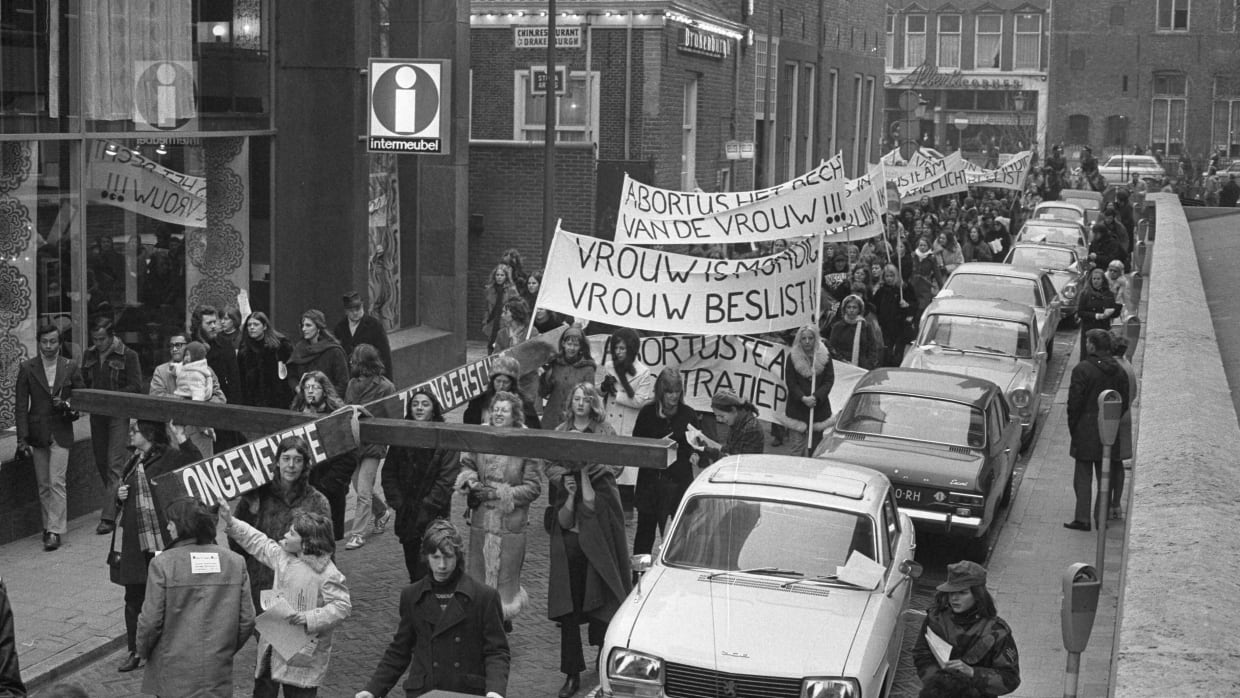
International Women’s Day. A moment to celebrate women, right? Instead of festivities, a protest march is being organised on this day. Women have the right to vote and can work and study, but that does not mean that the fight for equal rights is over. With playful actions, the Dolle Mina’s are still fighting for the emancipation of women.
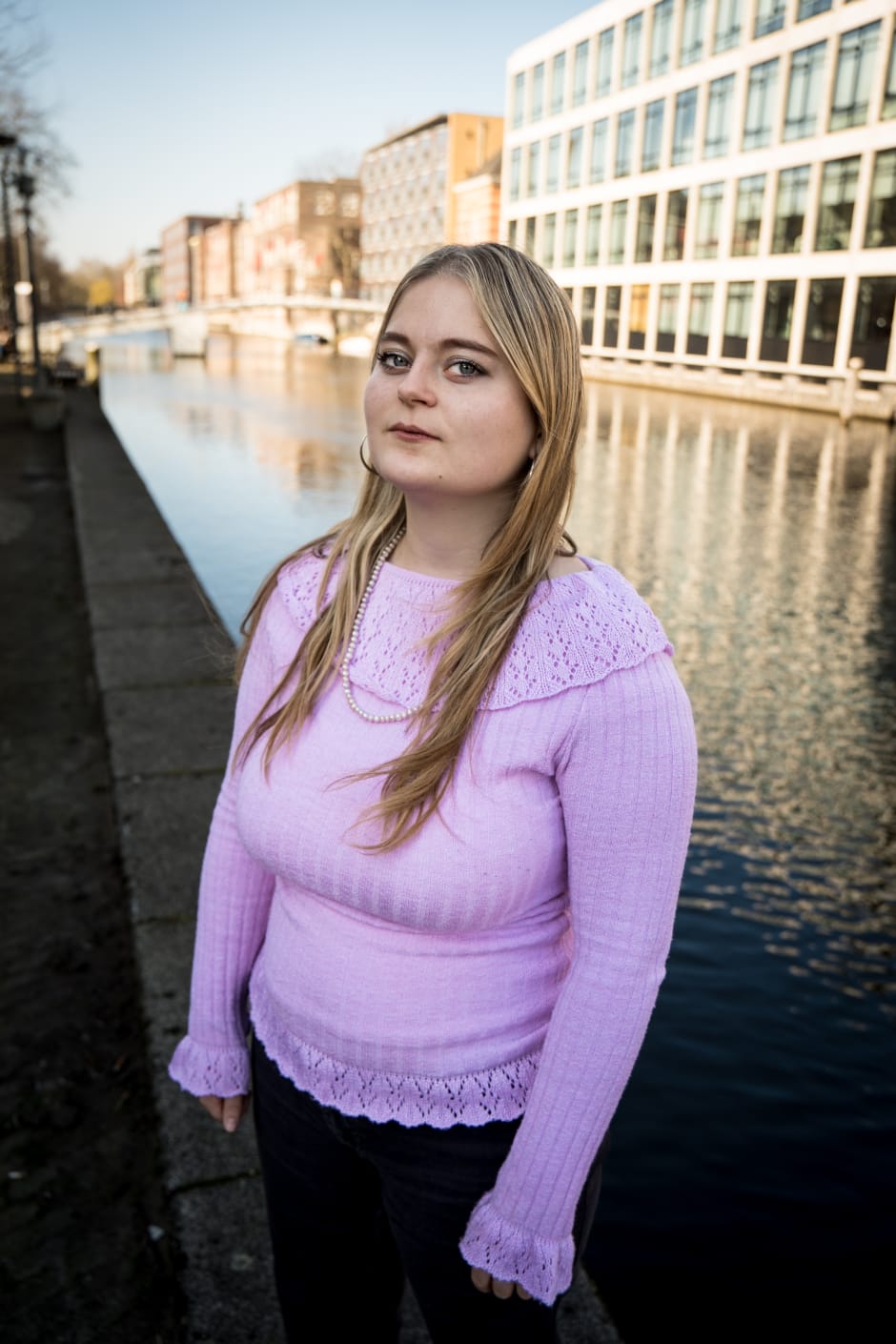
Lara Rademakers (19)
Philosophy student
Dolle Mina since October 2025
Why are the Dolle Minas still relevant?
"Women still can't move around as freely as men and have to adapt to their way of thinking. Women are often objectified and turned into passive beings. I find that unfair. I would like my gender not to have so much influence on what I will achieve later in life, but for my ideas to be taken seriously and not to be reduced to my appearance.
"Many women feel unsafe on the streets. Amsterdam is really my city and I usually feel fine. But when I cycle home after a party, the streets are usually emptied out. There can be strange characters around at night. I can feel in my body that I need to be on my guard.
"Recently, I was walking down my street and saw a man touching himself in front of a window while looking at me. It only caught my attention because something was moving. When I reported it to the police, the officer said, "But why were you looking in the window?" Then I thought, oh, did I do something wrong, when in fact I was just very shocked.
'The Dolle Mina's are less concerned with women taking self-defence courses and more focused on re-educating men and teaching them how to behave on the street."
The Dolle Mina action group was founded in December 1969 by Huub Philippens, Michel and Alex Korzec and their female partners Dunya Verwey, Rita Hendriks and Anne Marie Vankan. With unusual actions, such as burning a corset in front of the statue of Wilhelmina Drucker — after whom the movement is named — they fought for the emancipation of women. Their actions in the 1970s received a lot of media attention. This led, among other things, to more women in politics, better abortion care and greater representation in education.
Fifty-five years after their most famous action, in which women wrote “baas in eigen buik” (boss of my own belly) in large letters on their bodies, Dolle Mina experienced a rebirth last year. The movement is now bigger and more visible than ever.
This Sunday, on International Women's Day, they are co-organising the Feminist March, just like last year. They will start at 12:45 p.m. on Dam Square.
What do you want to achieve with the Dolle Mina's?
"Feminists are often seen as man-haters, like they're just shouting nonsense. They are often still not taken seriously. By spreading awareness and the philosophy behind it, we may be able to change things.
"The Dolle Mina’s are a large group of people and they want hope their member really get involved. For example, we took to the streets of Amsterdam to give the street signs a feminine twist. The environment has a big influence on thought structures, which is why we want to change it. It felt a bit like civil disobedience, which I liked.
"I'm really tired of explaining every time why feminist studies are important and why women should have equal rights. I want everyone to realise how important it is for girls to be able to grow up in a safe and creative world."
Are you joining the Feminist March on Sunday?
"Yes. I think it's a shame that it's still necessary, but it's a celebration of our strength. We won't be diminished by the ideals of patriarchy. I like standing there with all kinds of other people and realising that I'm not alone in this fight."
How diverse are the Dolle Mina's?
"I think there are mainly white women participating at the moment, which has been criticised. They are working on making it more inclusive and giving a voice to other groups as well."
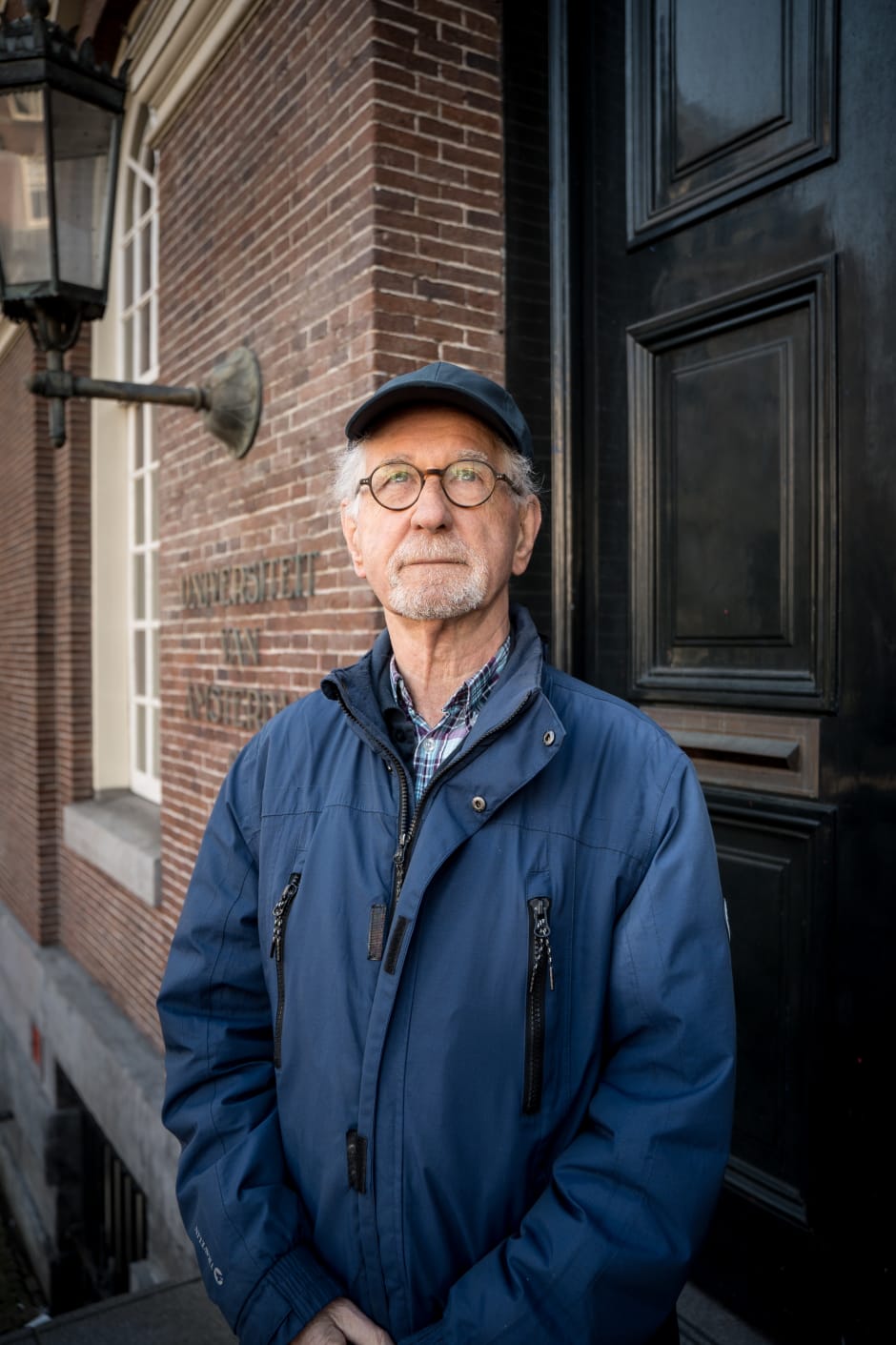
Huub Philippens (79)
Retired social studies teacher
Co-founder of the Dolle Mina’s in 1969
How did the Dolle Mina's start?
"I was at a demonstration in the Lutheran church about the democratisation of the University. Suddenly, people ran into the church and shouted: ’We have occupied the Maagdenhuis, come with us." I stayed there all those days, alongside my wife.
"Afterwards, when we were removed, my wife was fined 150 guilders and I was fined 200. We protested against that inequality. Women eventually had to pay more, but that was what we wanted. Those women were the first to join the Dolle Mina’s. The Maagdenhuis was crucial. The University of Amsterdam is actually at the root of the Dolle Mina movement.
"We carried out a lot of protests back then. I had come up with the idea of blocking men's public urinals with pink ribbons to demand women's right to pee.
"In all university cities, students were calling for equality. It was very much in keeping with the spirit of the times. We were concerned with abortion, with making contraceptives available, with equal pay for equal work. Women hardly played a role in politics at the time, but fortunately that has improved considerably."
The women's movement was founded by three men, including you. What is the role of men in the movement?
"Women sense that things need to change. Men still need to be shaken up a bit before they understand. Because women carry children and initially take on the care of them, men think they can remain absent. They need to learn to make that role equal. Men need to know that there is still work to be done, that there is still room for change.
"During the first meetings with the Maagdenhuis group, I still felt a little awkward standing in the kitchen washing dishes. So it hadn't completely sunk in at that point. I wasn't fully emancipated yet. I became more aware because I was with the Dolle Mina's. Afterwards, I came to the conclusion that men should mainly keep a low profile. I felt that as a man, you had to be of service to the movement."
Why is gender equality so important to you?
"My sister was dismissed when she got married. When I got married, I already held the view that men and women should be equal and that both should take care of the children. I had made those agreements with my wife. The new generation wanted to break all the old patterns. That resistance to the words of your upbringing at that time led you to go in the other direction. Ultimately, you want it to no longer matter whether you are a man or a woman, whatever position you hold, whatever.
Why are the Dolle Mina's relevant (again) now?
"In the Netherlands, a woman is murdered every few days. Women feel unsafe walking alone on the street. You notice it during the bike rides that Dolle Mina has organised about safety on the streets, that all kinds of men become intrusive and start acting annoying. In addition, abortion is still in the Penal Code. That is ridiculous, of course.
“Now you have these Forum voor Democratie [Dutch political party, ed.] men who are adopting Tate's ideas and becoming misogynistic and aggressive again, thinking they have to dominate women. They will always remain a threat.
"Above all, we need a change in mentality amongst men. They are becoming increasingly insecure as women become more successful. They don't know how to interact with women in a positive way.”
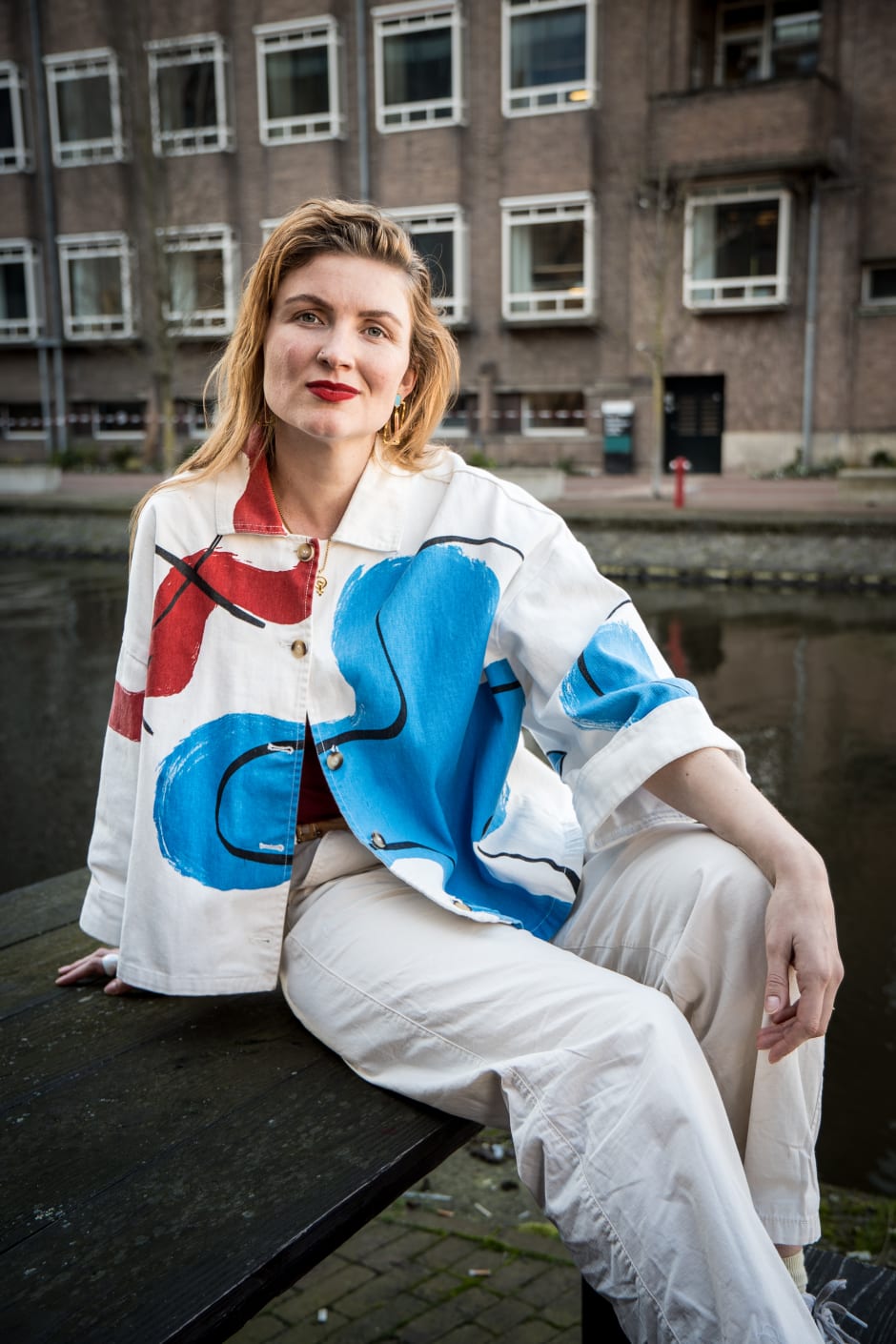
Sophie Nieuwe Weme (29)
Junior teacher in interdisciplinary social sciences
Dolle Mina since August 2025
Why did you join the Dolle Minas?
"I had long felt frustrated about the way things were going with regard to a lot of social issues, mostly inequality. I didn't always find that frustration echoed elsewhere.
"Dolle Mina is an environment here those frustrations are shared. You can be angry about it together. Together, you can turn that anger into something else. I’m in the Dolle Mina kutband, where I can turn all that frustration into activist songs, which has a huge impact.
“I really see inequality reflected in the right to take up space and a place in society. As a woman, you are still often harassed. That is seen as normal. If you say something about it, you are told not to make a fuss. If you don't say anything, you feel bad because you haven't claimed your own space. You can never do it right.”
Why are the actions of the Dolle Mina's important?
"There are still so many things that you assume are fixed for every gender, but which are not the same for everyone. The pay gap, how you move on the street, how you are addressed. All these concrete and less concrete things make it necessary to pay attention to them and actively bring about change.
"We held a counter-demonstration at a pro-life demonstration in The Hague. On one side of the water, they were walking with posters showing intense photos of foetuses and religious-related things. On the other side of the water, we were shouting the whole time: “Boss in your own belly”. On the one hand, there is something that makes you so angry, and on the other hand, you feel super connected to people who are shouting together for an hour and a half just to make their voices heard.
“Something is already changing by creating a sisterhood in which you feel a real connection. That gives you power, so you can handle things better yourself.”
Is there room for everyone at the Dolle Mina's?
"The men who are part of Dolle Mina are feminists. I feel very comfortable aroud them. They can more easily convince other men of the importance of this story. Women are quickly dismissed as angry feminists. That's how it works, at least so far.
“I've seen other Minas who don't identify as women, queer or people of colour feel that there isn't enough room for their voices within the organisation. That it's dominated by the white heterosexual group. Of course, you want it to be a group where everyone feels completely safe and comfortable, so that is a problem.”
What else is needed?
"A lot. One of the most difficult obstacles is that many men become defensive when criticism comes from women. Not wanting to acknowledge that there is an issue is often the issue. This causes conflict: women feel unrecognised in the reality they live in every day and become frustrated. This in turn confirms the men's feeling – the “I'm not allowed to say anything anymore” vibe. The fact that it is not a personal attack still needs to sink in. Only when there is recognition can you talk about how to make things better.
“The responsibility for many things still lies with women, including contraception. When I talk about it with male friends, for example, sterilisation or a male contraceptive pill is a bizarre idea to them. The side effects that a woman has to live with her whole life are a scary idea for them.”