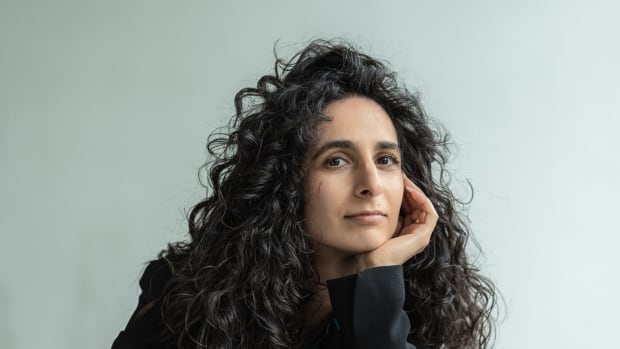
“I want to amplify the voices of the people in Iran”

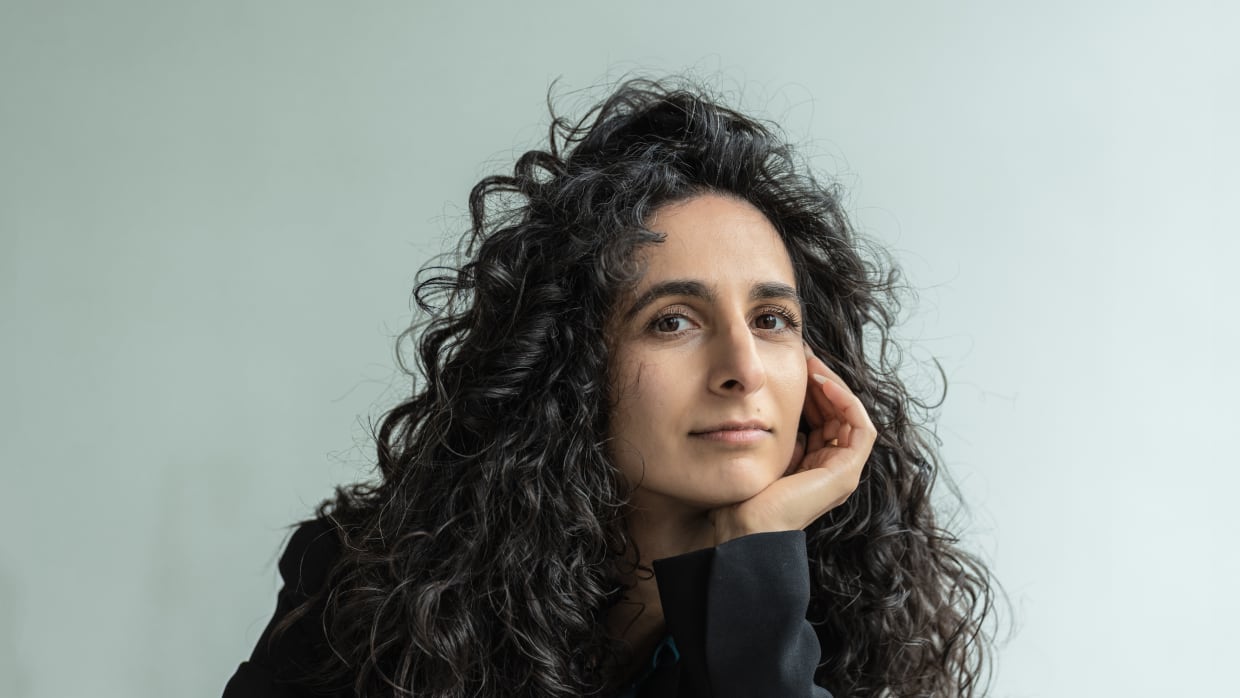
Journalist, UvA alumna and former Foliant reporter Mina Etemad (38) describes in her new book, De Zangvogel (The Songbird), how her past as an Iranian refugee gives rise to feelings of guilt, displacement and responsibility.
You wrote a book in which your Iranian roots play a major role; it could hardly have been published at a more pressing moment.
“I find it difficult to centre myself while so much is going on; at the same time, that is precisely the theme of the book. How do I relate to the people in Iran whom I have left behind? I know that I am better off, I live in greater freedom and safety, and I wish the same for them. It is pure coincidence that I am here now and they are not. That is why, especially at a time when mass killings are being carried out, I feel a sense of responsibility. I must reflect on their stories and make people aware of how life in Iran is currently experienced.”
Etemad fled more than thirty years ago, at the age of six, together with her parents and her sister. Under the Islamic regime, her parents saw no future for the family in Iran. After ending up in an asylum seekers’ centre with her family, Etemad grew up in Soest, where her parents still live.
What made you decide to write this book now?
“As I grew older, certain themes began to play an increasingly significant role in my life. I realised, for instance, that I do not want children, but that raised another question: have my parents then done all that work for nothing? They worked so hard to build a life here, and then I do not pass that life on. Isn’t that a waste of all the effort they invested in me? To put it in very capitalist terms. Because I was grappling with those questions, I wanted to find out for myself how I could nevertheless lead a meaningful life.”
And did you find an answer?
“Yes, I think my life can be meaningful. On the one hand by telling the stories of Iranians; on the other, I find a sense of purpose in connecting with animals.”
Is that also where the title of the book, The Songbird, comes from?
“It is certainly related. My name, Mina, means myna: a songbird from the starling family that is very good at mimicking sounds. By imitating predators in the forest, it creates a safe environment for itself. In the same way, I want to amplify the voices of the people in Iran. Like a songbird, I want to let their voices echo.”
I read that you have said this is a book about displacement. Do you often feel that way?
“Yes, although displacement is a difficult concept. I was six when I left my safe surroundings. The house where I grew up felt very secure, and I was well cared for, so leaving it created a profound sense of loss. In the Netherlands, my parents quickly had to look for work and learn the language, which meant they were not always emotionally available. All of that led to a feeling of displacement.”
“I still experience it now, for instance when I see videos of people in Iran celebrating their birthdays. I strongly feel that I would like to be there, with them, even though I do not know those people at all.”
What can you do to counter that feeling of displacement?
“There is not really anything to be done; I have to learn to live with that feeling. What helps is talking to people who share similar experiences. Other Iranian-Dutch friends understand me well. That is valuable.”
How do you relate to the people who remained in Iran?
“I feel a certain sense of guilt towards them. I have the feeling that I left them behind. That can be difficult, because it makes me feel that I ought to do something and ensure that things improve for them. At the same time, that sense of guilt makes me feel deeply connected to the people in Iran. I like to keep them in mind in everything I do.”
Mina Etemad studied Dutch Literature at the UvA and worked for several years as a video editor for Folia. She subsequently worked on the VPRO programmes Nooit meer slapen and Mondo, among others. Etemad now works as a freelance journalist, podcast maker, and theatre and dance critic for de Volkskrant.
What would you like to do for them?
“With my book, I try to tell their stories. I focus on the decades-long resistance that has existed since the establishment of the Islamic regime in 1979, as well as the protests of 2022. I try to put a human face to that movement.”
Does it bring you any relief that, with this book, you have finally been able to act on that sense of guilt?
“To some extent, yes, but I am aware that it is only something small. It is not as though this truly changes anything. Still, I hope at the very least that people will look at Iranians with a slightly more empathetic perspective, and that we will be willing to stand together and fight for their rights. It is also simply gratifying to complete something, to have something tangible. Perhaps my book contributes something, but it does not compare to what people there are going through.”
Mina Etemad, The Songbird: On Iran, Displacement and a Sense of Guilt That Never Fades. (Thomas Rap, 2025). ISBN: 978 94 004 12 552. Price: €22.99.