Women’s network FNWI: “Science faculty at the UvA still an old boys’ network”

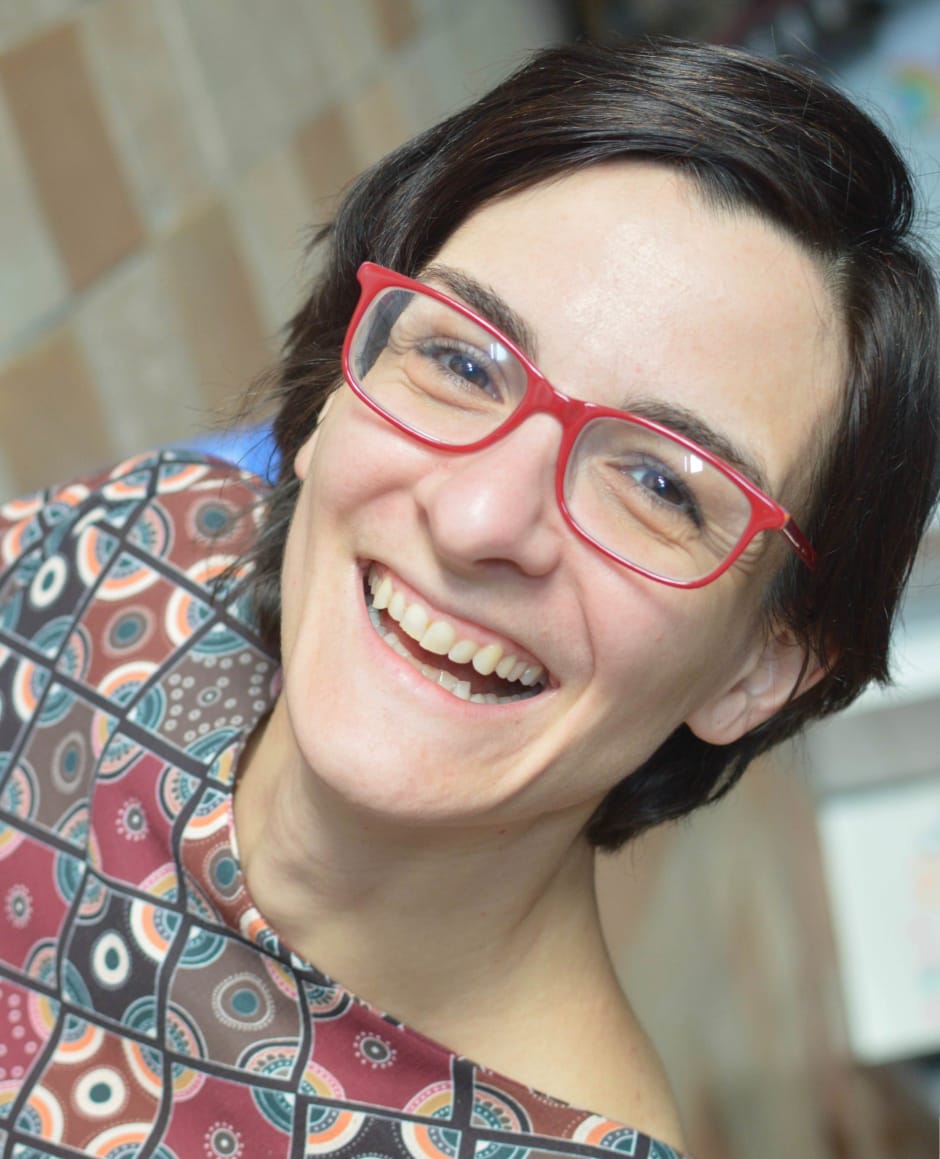
Although the International Day of Women and Girls in Science is marked on 11 February, there is, according to Alessandra Candian – board member of the women’s network Women in the Faculty – little reason for celebration. “The numbers do not lie. Something is preventing women from becoming professors at the FNWI.”
Although a female dean was appointed several months ago, the percentage of female professors at the FNWI is stagnating, as became clear at the end of last year from the annual monitor published by the LNVH. For years, the UvA has been languishing right at the bottom of this list with around fifteen per cent, compared with other Dutch universities. And, coming just ahead of the International Day of Women and Girls in Science, this is a thorn in the side of Alessandra Candian, Assistant Professor of Astrochemistry at the UvA. “When it comes to female professors, we really have a problem. The cause is not easy to disentangle, but the numbers do not lie. Something is preventing women from becoming professors at the FNWI.”
Candian is a member of the women’s network Women in the Faculty (WiF), a platform established within the UvA’s science faculty to address gender inequality and other diversity-related issues. “With WiF, we are trying to find out what exactly is going wrong,” she explains. “What we see, for example, is that many departments are still strongly focused on an old way of doing science, in which you are essentially always working and have little time left for a life outside work. As soon as you have children or become a caretaker, that can become complicated.”
Old boys’ network
According to Candian, the FNWI is also still very much an old boys’ network. “There is a lack of clear frameworks and rules around promotion, and in practice women suffer more from this than man. Women are underestimated and are more likely to be given organisational tasks rather than strategic or scientific ones. That does not help when it comes to promotion. When many men occupy positions of power, the system perpetuates itself. Women are then less likely to be considered.”
At the levels below professorship in the academic hierarchy, the UvA has had mixed success in correcting gender imbalances. The percentage of female assistant professors (UDs) and PhD candidates at the FNWI is approaching forty per cent. Although this still places the UvA among the lowest-scoring universities in the country, these figures are relatively hopeful. At the same time, the overall percentage across the entire faculty – counting all academic staff together – has been fluctuating between 30 and 34 per cent for ten years. According to Candian, it is therefore wishful thinking to assume that this problem will resolve itself.
“When hiring new assistant professors, we have been very careful. There is a training the UvA offers to recognise one’s own biases and to genuinely arrive at the best candidate. That has led to more female assistant professors being appointed. But when it comes to higher positions, where promotion is involved, there are no such clearly defined rules. That procedure needs to become much clearer; only then can you really take diversity into account in a structural way. We have been waiting for improvement for years, but progress seems only to be slowing down. This problem will not disappear on its own.”
Candian also sees a role in this for society at large. “There is a deeply rooted idea that women should mainly concern themselves with social issues, and that science subjects are not for them. That is an image imposed by society. Boys get Lego, girls get dolls. It is simply a matter of exposure and practice; gender demonstrably has no influence whatsoever on talent for science subjects. Role models, however, are essential in this.”
WiF
To ensure that such role models reach positions where they can genuinely have an impact, Candian and the other WiF members are working tirelessly to improve the position of women at the FNWI. “With WiF, we work together with the dean and HR to identify what problems exist. We organise workshops on how to get promoted, but we also build connections with men in powerful positions, we need those allies too.”
The skewed gender ratios at science faculties have been a source of discomfort for some time. In response, UvA researchers Mimi den Uijl, Noor Abdulhussain and Lotte Schreuders founded the initiative Sisters in Science in 2021. Through events and media appearances, they aim to challenge the stereotypical ideas that surround the field.
In recent years, WiF has achieved several concrete results. A nanny fund was set up, making money available for researchers to pay for childcare when attending international conferences. The women’s network also ensured that a dedicated breast pumping room was introduced at the faculty. “They are small steps, but we hope they will make the FNWI a more pleasant workplace for women,” Candian says.
On 11 February, the International Day of Women and Girls in Science, WiF is organising a conversation with anthropologist Hülya Kosar-Altinyelken, who conducted research into discrimination within the UvA. “It is good that there is a day that draws attention to this issue,” says Candian, “but one day is not enough if no one cares anymore during the other 364 days. We really need to address this in a structural way.”