Rector seeks solution to eroding public support for science during Dies Natalis
How can trust in universities be restored? In light of declining support for science, Rector Magnificus Peter-Paul Verbeek made a case for academic citizenship this afternoon during the celebration of the 394th Dies Natalis.
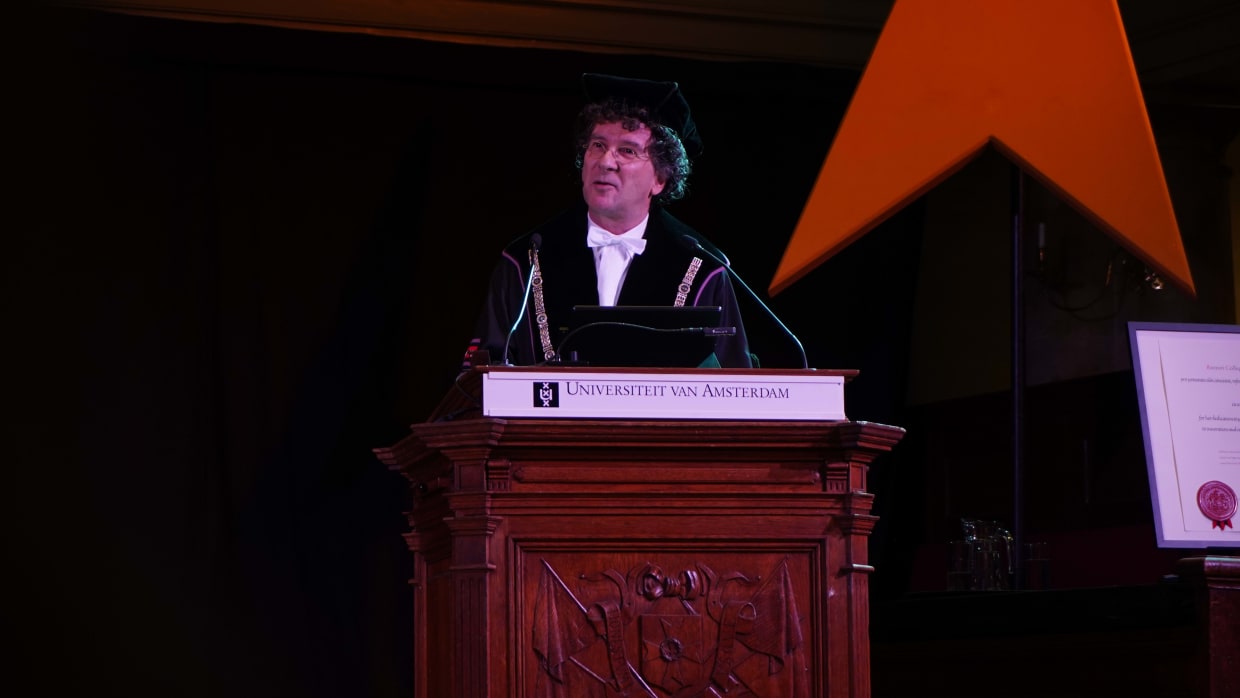
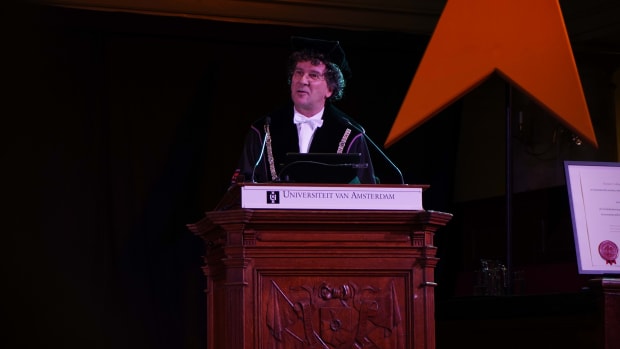
In times of rising populism and geopolitical tensions, science can no longer count on a self-evident basis everywhere. Political and social support for universities has been crumbling in recent years, so this afternoon, during the celebration of the dies natalis, Rector Magnificus Peter-Paul Verbeek made a plea for “academic citizenship”. Which should restore confidence in science.
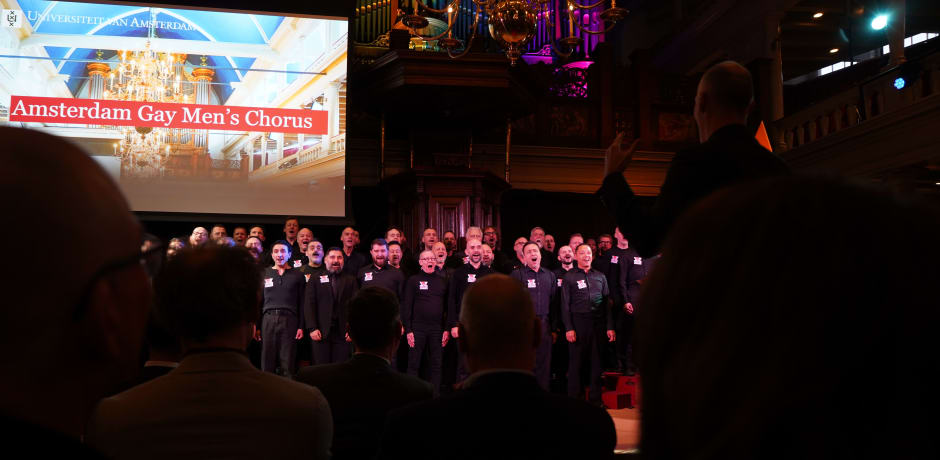
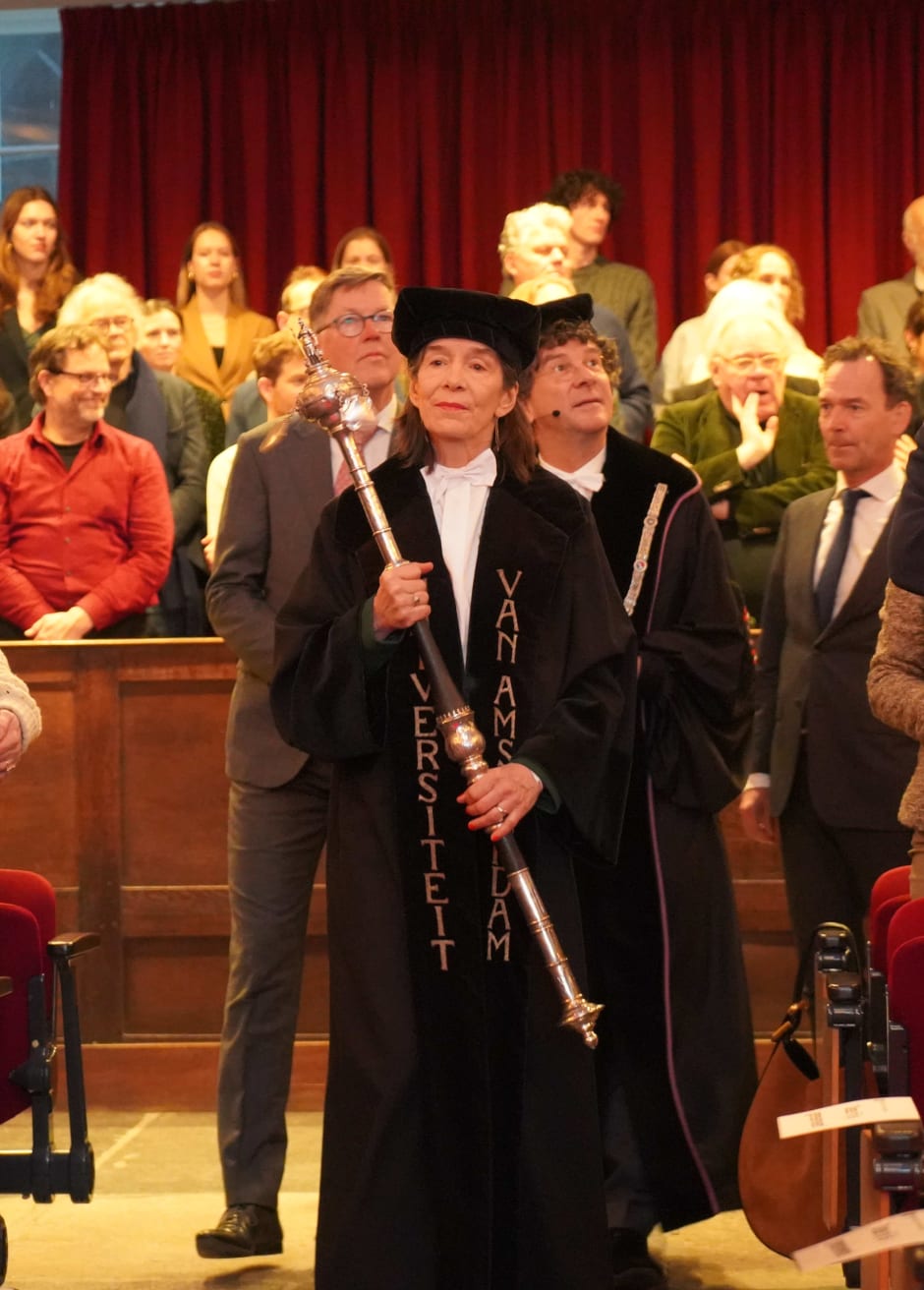
The dies natalis took place in a packed Aula of the University of Amsterdam in the Old Lutheran Church and was preceded for the first time by an explanatory film about the history of the University of Amsterdam and what a dies actually is. Apparently, during the university’s 394th anniversary, it was time to explain concepts such as “toga” – the centuries-old garment worn by professors – and “honorary doctorate”, an academic title for people who have made an exceptional contribution to knowledge, culture or society, to the younger generations.
In the Netherlands, too, political parties are increasingly interfering in science, Verbeek said during his speech, immediately identifying the problem: universities should become less international – later in his speech, Verbeek actually made a case for the international university – and allow fewer protests, use Dutch as their working language again and, above all, do things that really benefit society.
The fact that science and society are high on the UvA’s agenda was also evident last year from the return of UvA physicist Robbert Dijkgraaf as a university professor at the UvA. In his new chair, he wants to bridge the gap between science and society, both within the Netherlands and, above all, internationally.
Academic citizenship
And so the rector’s annual address culminated in a reflection on the raison d’être of universities. This mission coincided nicely with a presentation of the new educational vision, which revolves around “academic citizenship”: as an academic, you are always and inevitably part of and contribute to society.
According to Verbeek, education that revolves around academic citizenship is an important step towards greater support for universities. Research by UvA psychologists shows that when the distance between scientists and society decreases, trust in science increases.
This educational vision is based on the new Institutional Plan 2027-2032 on what the university should look like in the coming years. In countless preparatory discussions and meetings, three core values of the university were defined. The UvA is “curious” to understand the world, “engaged” with the world and “unconventional” in its own Amsterdam way, which can sometimes be headstrong.
Three profiles
The university exists for science and for society, Verbeek continued. And connecting the two is quite an art. If the emphasis is placed too much on society, the question arises as to whether the university is still scientific enough. And if the emphasis is placed too much on science, the social mission is quickly jeopardised. Social engagement and fundamental research must therefore coexist.
To make this possible, the UvA will work with three profiles in education: a scientific, a social and an entrepreneurial profile. Verbeek likes to see this as a “translation” of Recognise & Appreciate[a national programme that assesses academics not only on publications but also on other values such as education, leadership and science communication] (Erkennen en Waarderen) into education. How exactly these profiles will take shape will become clear in the coming months.
Demonstrating
Citizenship should also be part of the new academic education, Verbeek concluded, referring to the demonstrations of the past year. Citizenship in the sense of “being part of a democratic society in which people with different views live together and treat each other with respect, and who want to continue to make a free society possible”.
According to Verbeek, there is still room for improvement in this area. The right to demonstrate must also be given full scope at universities, Verbeek said, “but protests must be organised in such a way that there remains room for differences of opinion, especially when it comes to highly charged issues”.
Petra de Sutter
Traditionally, honorary doctorates are also awarded on the dies natalis. One of the honorary doctors, Rector of Ghent University Petra de Sutter, withdrew as a candidate for an honorary doctorate last week, after controversy arose over her inaugural speech at Ghent University, in which she used a fake quote from Albert Einstein generated by AI.
As a result, multimillionaire and TomTom executive Corinne Goddijn-Vigreux was the only honorary doctorate recipient this year. She was awarded the honorary doctorate by the University of Amsterdam “for her pioneering work at the intersection of technology, entrepreneurship and society”. The University of Amsterdam also collaborates with the Dutch location technology company TomTom in the Atlas Lab, which was funded by TomTom and the Dutch government.