Prominent Amsterdammers make way for colonial past in revised canon
How did Amsterdam become the city it is today? The Canon of Amsterdam explains this through stories and events. To mark Amsterdam’s 750th anniversary, the canon was revamped. Which stories remained, which were added and why? A committee of experts led by UvA historian Paul Knevel was involved in the process.
Paul, what is a canon, in your opinion?
“A canon is one of many ways of thinking about history. It is not a comprehensive history but a concise overview: in fifty short chapters, also referred to as ‘windows’, it invites the reader to reflect on an event or place in history and how that influences the choices we make today.”
The introduction of the Canon of the Netherlands, the very first canon, which was created in 2006 under the leadership of historical literary scholar Frits van Oostrom, caused a kind of canon fever in the country. Provinces, municipalities, associations and cities started creating their own canons; Amsterdam could not stay behind. It’s canon appeared in 2008.
Over time, that canon fell into oblivion. Moreover, critics found the canon too stuffy: it describes neat events without any street noise or dissent. In addition, since 2008, new historical research has been conducted on virtually all themes.
In honour of Amsterdam’s 750th anniversary, a nine-member committee, including Paul Knevel (public history) and UvA professors Bart Wallet (Jewish studies) and Geertje Mak (gender history), set about creating a new canon. The revamped canon has been available digitally since 6 November, and from 14 November, stickers with QR codes linking to a podcast about the canon will appear in various locations throughout the city.
“We see the canon as a piece of music with multiple voices that can reinforce and challenge each other. We believe that the canon – if you don’t set it in stone and say ‘you must learn this by heart’ – can be a wonderful invitation to reflect on who and what has made Amsterdam what it is today. That is one of the reasons why we are leaving the fiftieth window open for the people of Amsterdam themselves to fill in. After all, a canon in the 21st century is not a museum piece but work in progress.”
The canon of Amsterdam underwent a major overhaul. Twenty-seven new windows were added. The Atheneum Illustre (the predecessor of the University of Amsterdam), the murder of Theo van Gogh and Johan Cruijff made way for colonial city, Rembrandt city and Dolle Mina. How did the committee arrive at these choices?
“There are no hard and fast criteria for these kinds of things, but we did take a number of factors into account that we considered important. First of all, we wanted the canon to do justice to new perspectives in research. We also looked at history from four dimensions. Life in the city, including the non-human aspects, such as water and ecology. Power, and its counterpart: protest and citizens’ initiatives. Mechanisms of inclusion and exclusion. And as the fourth dimension: Amsterdam and the outside world. We also wanted to show the long term and added four windows on water, ecology, death and the built environment.”
Does ecology belong in a canon, or is it a way of putting climate change on the agenda?
“No, putting it on the agenda sounds very coercive. We do hope to show that human interaction with ecology also has a history, even if people didn’t think about it. For a very long time, nature was at the service of humans. Trees were planted along the canals as decoration, but there was also the idea that the trees could compensate for unpleasant odours. Of course, we choose topics that are important, but ultimately it is up to the user to judge for themselves.”
How does the new canon address the colonial past?
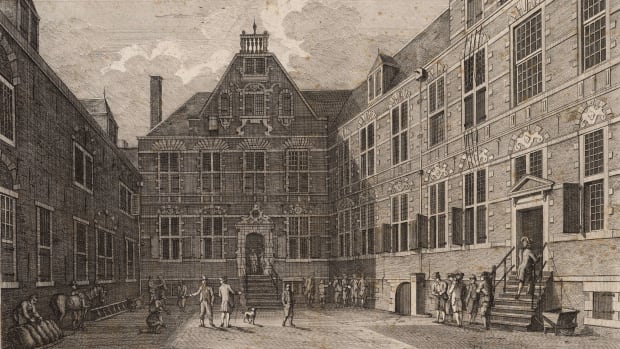
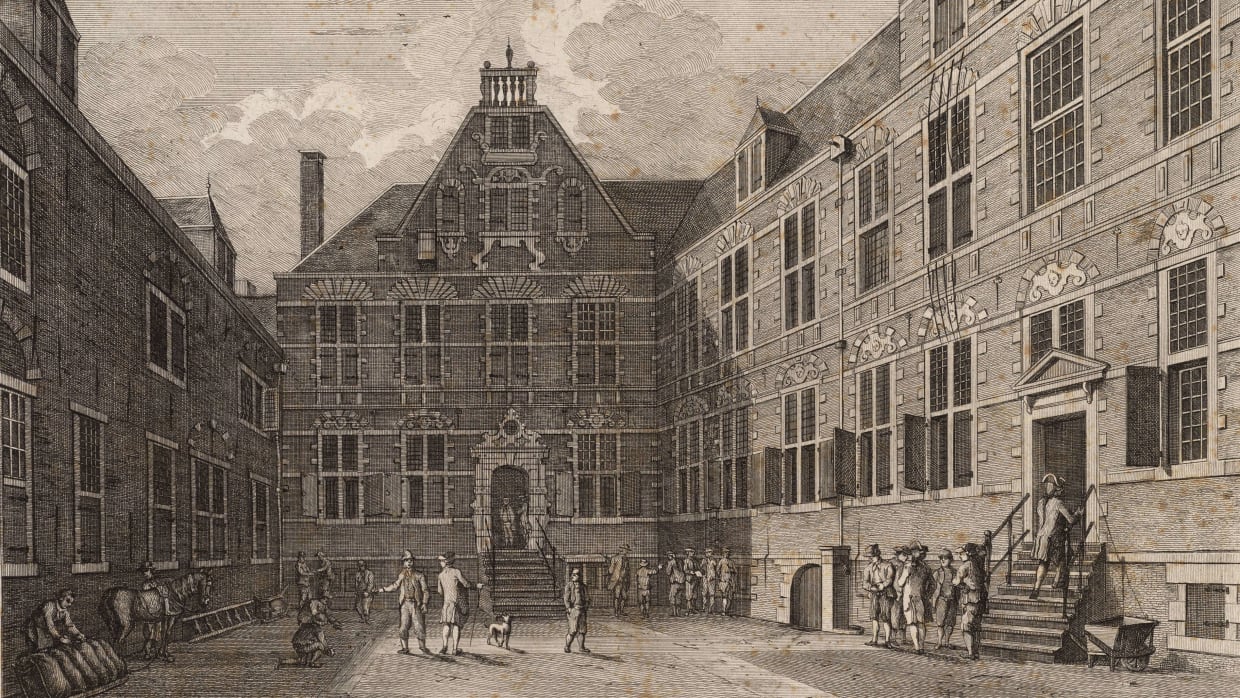
“We wanted to show how colonial history is interwoven with the city of Amsterdam. In the old canon, one window was about the VOC, as if it were a separate page in the history of the city. We want to show that the colonial world permeates all aspects of the city. That is why we did not choose the founding of the VOC as a window, but the East India House. But you can also see the intertwining in buildings such as the Bazel and the Colonial Institute (now the Wereldmuseum, ed.), in facade stones, in employment and in the many sugar refineries in the city.”
The committee chose not to highlight individuals, but to tell a broader story. Is that appealing?
“That’s difficult for me to assess. I understand that it’s easier to say: these are the heroes. But that’s exactly the kind of canon we didn’t want to create. People can play an important role in history, but they never do so entirely on their own, and their actions are always connected to a broader theme. When you put someone on a pedestal, you mainly encourage veneration.”
So no Johan Cruijff, but Ajax in the canon? A change that a Parool journalist took issue with.
“Cruijff has been incredibly important for football in Amsterdam and beyond. But he didn’t do it alone. The beauty of Ajax is that Ajax is bigger than Cruijff alone. It is an Amsterdam football club and therefore a reflection of Amsterdam. So when you say Ajax is Cruijff, you are also excluding all the generations that came before and after him. Other players can also play a very inspiring role. That is a choice that will undoubtedly be criticised.”
What choices were discussed?
“We discussed it at length, but broadly speaking, we actually agreed within the committee: the discussion was mainly about emphasis and details. I think the discussion needs to get underway now. There have already been some negative reactions, but these are largely along the lines of ‘this has been left out’ and ‘that has been included, which is a disgrace’. However, there have also been numerous constructive suggestions for the fiftieth window. That is what we are aiming for: a discussion based on content. On the street, at the kitchen table, and in the community centre.”
With the removal of the Atheneum Illustre, is there enough attention for the role of the University of Amsterdam in Amsterdam?
“The UvA certainly plays a major role in Amsterdam and is also intertwined with the colonial past. The knowledge gained by the VOC and the WIC in the colonies was collected, published and taught at the university’s predecessor. Barlaeus, one of the first professors at the Atheneum Illustre, wrote a plea for the conquest of Brazil.”
“After the Second World War, Amsterdam also became a student city. Students played an important role in the culture of the 1960s and 1970s, and that continues to this day. So there is certainly room for more. That fiftieth window can definitely be filled with stories about the University of Amsterdam.”